
Most people have at least a few moles. They often develop during our childhood and teenage years. As we grow into adults, sometimes they can become an aesthetic or health issue that means mole removal is either wanted or necessary.

While most moles are harmless and usually nothing to be worried about and can be left alone, but in some instances, removal may be necessary for health reasons.
If you notice any changes in the appearance of your mole, visit your doctor and they will investigate whether it is a cause for worry. If they are concerned, they may arrange for the mole to be removed in order to be analysed.
In other cases, there are no health concerns, but people may wish to have mole removal for cosmetic purposes.
TO BOOK YOUR PERSONALISED MOLE REMOVAL CONSULTATION WITH OUR EXPERIENCED, FRIENDLY DERMATOLOGISTS
When Do Moles Need to Be Removed?
Moles may need to be removed for investigation if they are suspected to be cancerous. This is known as a biopsy.
A physician may wish to perform a biopsy if you have a mole that has recently appeared (especially if you are older than 20), changed colour (particularly if it has multiple colours or shades), gotten larger or changed shape.
Moles with irregular borders may also need to be removed for testing, as well as those that are itchy or bleeding.
If the biopsy confirms that a mole is cancerous, a full excision of the mole and the skin around it will likely need to be performed to ensure there are no cancer cells remaining.
Moles can also be removed for cosmetic or comfort reasons. Some find that moles in inconvenient places such as the armpit are constantly being rubbed, so may opt to have them removed to reduce irritation.
Many people also do not like the appearance of their moles, particularly if they are raised or in prominent places such as the face. Cosmetic mole removals will usually not be covered by the NHS and will need to be treated privately.
When Is a Mole a Serious Health Concern?
Most moles are not a health concern, but they can occasionally be indicative of melanoma, a type of skin cancer. If melanoma is suspected, your mole may need to be removed for investigation.
If you are concerned about a mole, get in touch with your doctor and they will take a close look at the size, shape and texture of your mole and ask you about any changes you have noticed.
They will then decide if a biopsy should be performed. If you have a biopsy, your doctor will send the sample off to be analysed, which will confirm if the mole is a concern or not.

Is It Worth Getting a Mole Removed?
If a mole is suspected to be cancerous, it is highly advisable to have it removed for investigation.
If this confirms melanoma, it may then be necessary to have a more comprehensive removal procedure to eradicate any cancerous cells around the area of the mole.
As it is a health concern, this will be covered by the NHS, so it is certainly worth going ahead with.
If you want a mole removed for cosmetic reasons, you will usually need to get this done privately. This may be worth the cost if the appearance of the mole bothers you and it would be a confidence boost to have it removed.
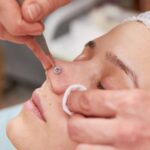
There are several ways to remove a mole for cosmetic purposes. The main ways are: laser removal (for small moles), shave removal and surgical excision (if the mole is deeply rooted).
These procedures are all relatively quick and straightforward, with little to no downtime, so may be worth undergoing if you are keen to remove an unsightly mole.
Is it Safer to Get a Mole Removed or Leave it?
If a physician thinks a mole could be cancerous, it is much safer to get it removed than to leave it.
This will allow it to be sent for lab testing to see if it indicates cancer. If it does, it is highly recommended to follow your physician’s advice on fully eradicating the cancer.
Your doctor may suggest having a more thorough excision of the mole and the skin surrounding it to remove any remaining cancer cells. It’s important to act quickly as melanoma can spread to other parts of the body if left untreated.
A non-cancerous mole is safe to be left alone, but you may wish to have it removed for cosmetic reasons.
Removing a mole for cosmetic reasons is a relatively safe procedure, with minimal risks involved.
The main risks of this treatment are infection of the surgical site and potential scarring if the mole has to be surgically excised.
Summary
In most cases, moles are nothing to worry about. However, there are a few tell-tale signs, such as change in size, that indicate a mole needs to be investigated for melanoma.
If you notice anything different or unusual about your mole, see a doctor who will likely refer you to a dermatologist. If you want to see a dermatologist as soon as possible, we are available for private consultations.
They may arrange a biopsy if they are concerned, and a full removal may be needed if cancer is confirmed.
If your mole is not cancerous, but you do not like its appearance, it is fairly straightforward to remove it. However, as this is cosmetic, it will usually be a private clinic procedure.
What to expect after mole removal? Click to read more about mole removal.
TO BOOK YOUR PERSONALISED MOLE REMOVAL CONSULTATION WITH OUR EXPERIENCED, FRIENDLY DERMATOLOGISTS