
When most people think about acne, they picture oily, shiny skin with enlarged pores. Dry, flaky skin and breakouts seem like a contradiction, two opposite problems that surely cannot exist at the same time. Yet at Linia Skin Clinic, we see clients every week who are dealing with exactly this combination: dry, tight, sensitive skin that is also prone to persistent blemishes. If you recognise yourself in that description, you are far from alone, and more importantly, there are real, effective solutions available to you.
This guide will walk you through everything you need to understand about acne on dry skin: why it happens, what makes it so tricky to treat, which ingredients and habits help (and which ones make things worse), and how to build a skincare routine that genuinely works for your skin type.
Can You Really Get Acne on Dry Skin?
The short answer is yes, absolutely. Contrary to popular belief, acne is not reserved only for those with oily skin. Anyone can experience acne breakouts, including individuals with dry skin. (CeraVe)
The longer answer requires understanding what acne actually is. Acne develops when hair follicles become blocked with a combination of dead skin cells, sebum (the skin’s natural oil), and bacteria. Anything that clogs your pores can cause breakouts. While sebum is a common culprit, it is not the only one. This is a crucial distinction. Dry skin creates its own unique set of conditions that can absolutely lead to clogged pores and breakouts, even if your skin never feels greasy.
The misconception that acne only belongs to oily skin types has led many people with dry skin to either dismiss their breakouts as something else entirely, or reach for the wrong treatments. Both mistakes can prolong the problem and make the skin significantly worse.
Why Does Dry Skin Cause Acne? Understanding the Mechanisms
There are several distinct ways in which dry skin can contribute to or worsen acne breakouts. Understanding these pathways helps explain why treating acne on dry skin requires a completely different approach to treating acne on oily skin.
The Overcompensation Cycle
Dry skin has a habit of overproducing oil to compensate for a lack of lubrication, which in turn can lead to clogged pores and acne. This is one of the most important things to grasp. When your skin lacks moisture, it does not simply stay dry and leave it at that. The skin is a smart, adaptive organ, and it responds to dehydration by signalling the sebaceous glands to produce more oil. The result is a paradox: skin that feels dry and tight on the surface, but is simultaneously generating excess sebum underneath, creating the perfect conditions for blocked pores.
Dead Skin Cell Buildup
Dry skin tends to shed dead skin cells unevenly. Rather than sloughing away naturally as part of the skin’s normal renewal cycle, these dead cells can accumulate on the surface and within the pores. Breakouts are catalysed by C. acnes bacteria, which naturally lives in the skin and feeds on the skin’s oil. However, there are other substances this bacteria feeds on, including dead keratinocytes, which may be in surplus on dry skin. In other words, the dead skin cell buildup associated with dry skin actively feeds the bacteria that cause breakouts.
A Compromised Skin Barrier
Dry skin typically means a weakened or damaged skin barrier, the outermost protective layer of your skin. When this barrier is compromised, the skin becomes more vulnerable to environmental irritants, bacteria, and inflammation. Inflammation is a key driver of acne, particularly the red, swollen, painful type. A healthy skin barrier is your skin’s first line of defence against the triggers that cause breakouts.
The Treatment Paradox
Some acne treatments, like those with benzoyl peroxide or salicylic acid, can cause dryness or flaking, especially when overused or applied incorrectly. This increased dryness is one of the reasons why some people give up on their acne routine. The treatments designed to fight acne are largely formulated for oily skin types. When applied to already-dry skin, they can strip away the little moisture that remains, damaging the skin barrier further and ultimately making both the dryness and the acne worse.
Dry Skin vs Dehydrated Skin: An Important Distinction
Before diving into treatment, it is worth clarifying a distinction that often causes confusion, even among skincare enthusiasts. Dry skin and dehydrated skin are not the same thing, and treating them identically can lead to suboptimal results.
Dry skin is a skin type, largely determined by genetics. It refers to skin that does not produce enough sebum and therefore lacks the lipids it needs to retain moisture effectively. It tends to feel rough, tight, and sometimes flaky or itchy.
Dehydrated skin, on the other hand, is a skin condition that can affect any skin type, including oily skin. It refers specifically to a lack of water content in the skin. Excess oil production is often influenced by genetics and hormones, while skin dehydration is caused by a lack of water in the skin. These are separate issues that require different solutions.
Why does this matter? Because the products and ingredients that address dryness (lipid-rich moisturisers, ceramides, fatty acids) are somewhat different to those that address dehydration (hyaluronic acid, glycerin, water-binding humectants). Many people with acne-prone dry skin are actually dealing with both simultaneously, and a well-rounded routine needs to account for each.
Common Triggers of Acne Breakouts in Dry Skin Types
Knowing what triggers your breakouts is essential for preventing them. For people with dry skin, certain triggers are particularly relevant.
Pore-Clogging Skincare Products
In an attempt to combat dryness, many people reach for rich, heavy moisturisers. While the instinct to hydrate is correct, some moisturisers contain ingredients that block pores. For the most part, avoid heavy skincare products. This includes oil-based lotions, moisturisers, and sunscreens. They can leave behind residue that clogs pores. The solution is not to avoid moisturising, but to choose the right type of moisturiser.
Harsh or Inappropriate Cleansers
Using a foaming cleanser that strips the skin, or washing too frequently, can rob dry skin of what little sebum it has. This triggers the overcompensation cycle described above and disrupts the skin barrier, creating the conditions for breakouts. Only wash your face once a day. While washing helps remove irritants from your skin, overwashing can rob your skin of moisture.
Environmental Factors
Cold weather, low humidity, central heating, and air conditioning all reduce the moisture content of the air and, by extension, of your skin. These conditions are particularly common in the UK, especially during winter months. A good practice would be to use a humidifier during the winter or in dry climates. Instead of scalding hot showers, aim for lukewarm water, no longer than ten minutes.
Hormonal Changes
Hormones play a significant role in both sebum production and skin hydration levels. Hormonal fluctuations during puberty, the menstrual cycle, pregnancy, and the perimenopause can all contribute to breakouts, regardless of skin type. For those with dry skin, hormonal shifts can simultaneously trigger excess oil production while leaving the skin surface feeling parched.
Stress
Stress increases the production of cortisol, a hormone that in turn stimulates the sebaceous glands to produce more sebum. For dry skin types, this can temporarily tip the balance towards excess oil production and blocked pores, even when the skin’s overall moisture levels remain low.
Ingredients to Look For and Ingredients to Avoid
Getting the right ingredients into your routine is perhaps the single most impactful step you can take. The skincare market can feel overwhelming, but a clear understanding of what works and what does not will help you make confident choices.
Ingredients That Help Dry, Acne-Prone Skin
Hyaluronic Acid is a humectant that draws water into the skin from the environment and from deeper skin layers. It is lightweight, non-comedogenic, and suitable for all skin types. For dry skin with acne, it provides essential hydration without any risk of clogging pores.
Niacinamide, also known as Vitamin B3, is a multitasking ingredient that addresses several concerns simultaneously. Niacinamide can help regulate oil production without drying the skin, while hyaluronic acid and glycerin draw water into the skin to restore hydration. It also reduces redness and inflammation, making it particularly useful for the red, irritated blemishes that often appear on dry skin.
Ceramides are lipid molecules that form a natural part of the skin barrier. When skin is dry, ceramide levels are often depleted. Replenishing them through skincare helps repair the barrier and reduce the sensitivity that can trigger breakouts.
Glycerin is another humectant, similar to hyaluronic acid in that it draws moisture into the skin. It is gentle, effective, and works well alongside other hydrating ingredients.
Retinoids, including adapalene and tretinoin, are among the most evidence-backed treatments for acne. They work by increasing cellular turnover and preventing pores from becoming blocked. If you use a retinoid like adapalene or tretinoin, reduce your use of benzoyl peroxide and salicylic acid and maximise your retinoid use. Retinoids can initially cause some dryness, so it is important to introduce them gradually and pair them with robust moisturising.
Azelaic Acid is an underrated ingredient that tackles acne by reducing inflammation and killing acne-causing bacteria, but without the same drying effect as benzoyl peroxide or salicylic acid. It is gentle enough for sensitive, dry skin and has the added benefit of fading post-acne pigmentation marks.
Ingredients to Approach With Caution
Benzoyl Peroxide is highly effective at killing acne bacteria, but it is also one of the most drying and potentially irritating active ingredients available. If you have dry skin and want to use benzoyl peroxide, start with the lowest available concentration and apply it only to individual blemishes rather than across your whole face.
Salicylic Acid is oil-soluble, which means it penetrates pores and dissolves the debris that causes blockages. However, it can exacerbate dryness on already-compromised skin. Start with lower-strength medications. Whether you are using over-the-counter or prescription acne medications, begin with the lowest strength available. Slowly increase to daily use as your skin tolerates it.
Alcohol-Based Toners and Astringents aggressively strip oil from the skin surface. For dry skin types, this is counterproductive, as it triggers further oil overproduction and worsens the breakout cycle. Dry skin is irritated skin. Any time you irritate your skin, you risk getting more acne. American Academy of Dermatology Avoid products containing denatured alcohol, witch hazel used as a toner, or any product that leaves your skin feeling tight and stinging.
Fragrances and Dyes are common irritants that can inflame already-sensitive dry skin. Look for fragrance-free formulations wherever possible, particularly for products that remain on the skin rather than those that are rinsed off.
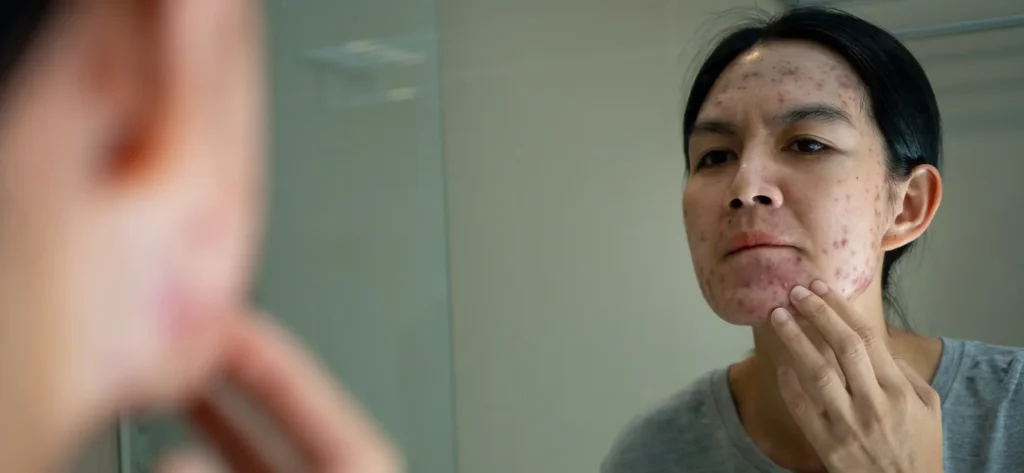
Building a Skincare Routine for Dry, Acne-Prone Skin
A well-structured routine is your most powerful tool. Here is how to approach it.
Morning Routine
Begin with a gentle, non-foaming cleanser. A creamy or micellar formula that does not strip the skin is ideal. Avoid anything that leaves your skin feeling tight after rinsing.
Follow with a hydrating serum. Hyaluronic acid or a niacinamide serum at this stage will deliver moisture and calm any redness or inflammation before you apply further products.
Apply your moisturiser while your skin is still slightly damp to lock in hydration. Choose one that is labelled non-comedogenic and is free from heavy oils and potential pore-blockers.
Finish with SPF of at least 30. This is non-negotiable. Sun exposure worsens acne, delays healing, and intensifies post-acne marks. In addition to protecting your skin from ultraviolet rays, sunblock reduces skin inflammation and dark spots that remain after the acne is gone. Look for a lightweight, mineral or hybrid SPF that will not feel heavy on the skin.
Evening Routine
Cleanse again in the evening, using the same gentle cleanser. If you have worn makeup, a micellar water or oil cleanser used first, followed by your regular cleanser, ensures a thorough but non-stripping cleanse.
Apply any targeted acne treatments in the evening. You can reduce the drying effect by applying an oil-free moisturiser to cleansed skin before applying an acne medication. The moisturiser creates a protective barrier to reduce the drying effect. It also helps to spot-treat acne. This technique, sometimes called buffering, makes active ingredients gentler on the skin without necessarily reducing their effectiveness.
If you are using a retinoid, apply it after your moisturiser, or as directed by your skincare professional. Start with two nights per week and gradually increase frequency as your skin adapts.
Finish with a second application of your moisturiser to seal everything in overnight. Night is when skin does much of its repair work, and having adequate hydration available supports this process.
Lifestyle Habits That Support Clearer, Healthier Skin
Skincare products are only one piece of the puzzle. Several everyday habits have a meaningful impact on both dryness and acne.
Stay hydrated by drinking enough water throughout the day. While topical skincare addresses surface moisture, overall hydration plays a role in skin cell function and repair.
Use a humidifier if you live or work in an environment with dry air. Particularly during the colder months in the UK, indoor heating significantly reduces ambient humidity, which directly affects skin moisture levels.
Wash your pillowcases regularly. Pillowcases accumulate oil, dead skin cells, and bacteria over the course of a week. Sleeping on the same pillowcase night after night transfers all of that back onto your skin.
When working out, use a clean towel to gently pat sweat from your skin. Source: American Academy of Dermatology Rubbing or wiping aggressively can irritate skin and trigger breakouts. The same principle applies when drying your face after cleansing: always pat rather than rub.
Avoid touching your face throughout the day. Your hands carry bacteria and environmental pollutants that can transfer to the skin and contribute to breakouts.
Eat a balanced diet. While the link between diet and acne is more complex than often presented, there is evidence that high glycaemic index foods and dairy may contribute to breakouts in some individuals. A diet rich in vegetables, whole grains, and omega-3 fatty acids supports overall skin health.
When Should You See a Professional?
If you have dry skin and are still having trouble treating your acne, you may need to see a dermatologist. They can prescribe acne medications and help you find the best types of products for your skin.
There are certain situations where professional intervention is particularly important. If your acne is leaving scars or persistent dark marks, a dermatologist or qualified skin clinician can offer treatments to address both the active breakouts and their aftermath. If over-the-counter products have not produced any improvement after six to eight weeks of consistent use, prescription options may be more appropriate. If your acne is painful, cystic, or covering a large area, home treatment alone is unlikely to be sufficient.
At Linia Skin Clinic, we offer thorough skin consultations designed to look at your skin holistically. Rather than prescribing a generic routine, we take the time to understand your skin type, lifestyle, triggers, and history before recommending a tailored plan. For clients with dry, acne-prone skin in particular, this individualised approach makes an enormous difference to outcomes.
Common Mistakes to Avoid
It is worth highlighting the most frequent errors we see clients with dry, acne-prone skin making, so that you can sidestep them entirely.
Over-treating the skin is perhaps the most common mistake. Using multiple active ingredients at once, or applying acne treatments twice daily when once was sufficient, leads to significant irritation and worsening of both the dryness and the acne. More is not better. Using too much acne medication can increase dryness and other side effects.
Skipping moisturiser because the skin has broken out is another very common error. Moisturiser does not cause acne when it is correctly formulated. Skipping it leaves the skin dehydrated, triggers further oil production, and makes the skin barrier more vulnerable.
Trying a new acne treatment every week or so can irritate your skin and cause breakouts. You want to use a product for six to eight weeks to determine whether or not it is working. Constantly switching products prevents any single treatment from having a meaningful effect and introduces repeated rounds of potential irritation.
Scrubbing the skin with physical exfoliants is also inadvisable for dry, sensitive skin. The mechanical friction irritates the skin barrier, worsens inflammation, and can spread bacteria across a wider area.