Specialist Skin Clinic on Harley Street
Platelet Rich Plasma Treatment
Discover PRP Treatment at Linia Skin on Harley Street. Harness your body’s natural healing to rejuvenate skin and restore a youthful glow.


- 70,000+ Patients
- Personalised Care
- 5-Star Rated
- Real Results
16+ yrs of advanced dermatology & aesthetics
Platelet Rich Plasma
PRP is an innovative non-surgical treatment that can be used for a wide range of ailments, helping to relieve pain and naturally promoting the long-lasting healing of various conditions from musculoskeletal issues, reduction of scarring and the promotion of hair growth.

What areas can be treated with PRP?
- Crinkling skin around and under the eyes
- Cheeks as well as the whole of the face
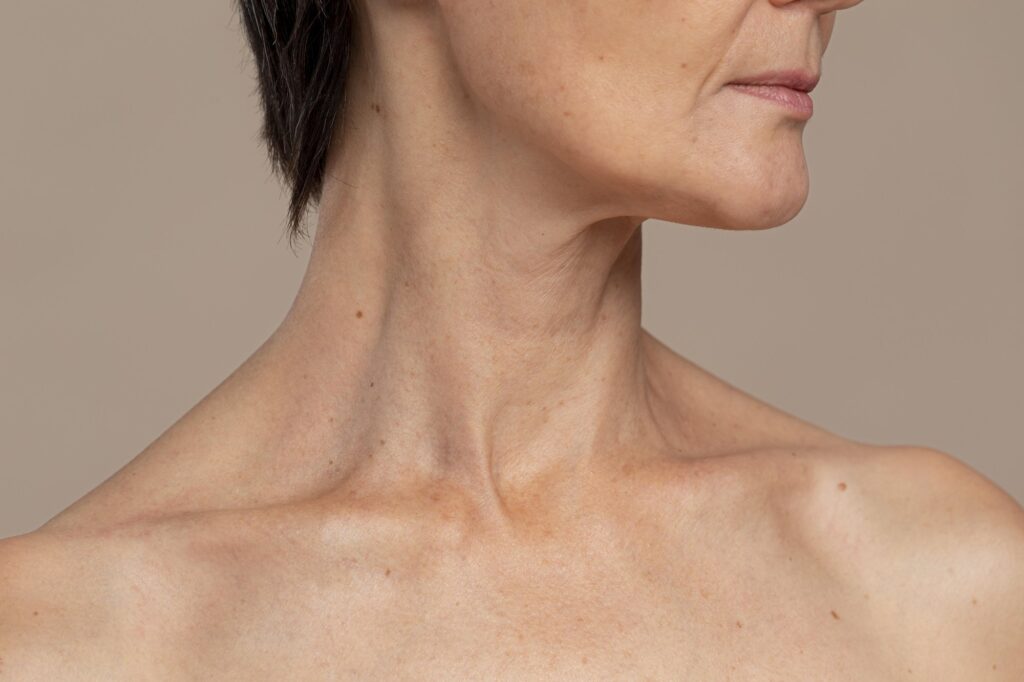
- Neck
- Jaw line
- Chest and décolletage
- Back of hands and arms
- Stimulate hair growth on scalp
- And many other body areas
PRP Treatment at LINIA Skin Clinic
Here at LINIA Skin, we are proud to be able to offer our clients this innovative, simple and pain-free treatment in a safe and welcoming environment.
A single PRP treatment usually lasts around 30-45 minutes, allowing you to easily fit it into your busy schedule while helping you recover quicker. And while responses to treatments can be seen after just one PRP treatment most patients find that they require between 2-3 sessions, though our expert team will be able to provide you more information on exactly how many sessions you will require based on your needs at your consultation, and tailor make a personalised treatment plan for you.

How does PRP Treatment work?
Platelets are small blood cells primarily known for their role in clotting. However, they also contain a wealth of growth factors and cytokines that are essential for tissue repair and regeneration. PRP therapy involves drawing a small amount of the patient’s blood, which is then centrifuged to separate the platelet-rich plasma from other blood components. The resulting PRP solution contains a high concentration of platelets—typically 3 to 5 times greater than that found in normal blood.
Key growth factors in PRP include:
- Platelet-Derived Growth Factor (PDGF): Promotes cell proliferation and collagen production.
- Vascular Endothelial Growth Factor (VEGF): Stimulates blood vessel formation (angiogenesis).
- Transforming Growth Factor-Beta (TGF-β): Enhances tissue regeneration and reduces inflammation.
- Insulin-Like Growth Factor (IGF): Supports cell growth and repair.
When injected into damaged or injured tissues, these growth factors initiate a cascade of biological processes that attract stem cells, stimulate cell division, and promote the formation of new blood vessels, ultimately accelerating healing.

The PRP Procedure: What to Expect
The PRP process typically involves the following steps:
Blood Draw: A small sample of blood is taken from the patient, usually from the arm.
Centrifugation: The blood is placed in a centrifuge, which spins at high speed to separate the platelets and plasma from other blood components.
Preparation: The concentrated PRP is extracted and prepared for injection.
Injection: The PRP is injected into the target area using imaging guidance (e.g., ultrasound) to ensure precision.
The entire procedure takes about 30 to 60 minutes, and patients can usually resume normal activities shortly afterward.
Future Directions in PRP Therapy
As research into PRP continues, its potential applications are expanding. Scientists are exploring the use of PRP in combination with other therapies, such as stem cell treatments, to enhance its regenerative effects. Additionally, advancements in PRP preparation techniques and standardised protocols may improve its consistency and efficacy.
Emerging areas of interest include:
Neurology: PRP’s potential to repair nerve damage and treat conditions like peripheral neuropathy.
Cardiology: The use of PRP to promote heart tissue repair after myocardial infarction.
Oncology: Investigating PRP’s role in supporting tissue healing after cancer treatments.

Benefits of PRP Therapy
PRP therapy offers several advantages over traditional treatments:
- Autologous Treatment: Since PRP is derived from the patient’s own blood, there is minimal risk of allergic reactions or infections.
- Minimally Invasive: PRP injections are performed in an outpatient setting and involve minimal downtime.
- Natural Healing: PRP leverages the body’s own healing mechanisms, making it a safe and natural alternative to surgery or pharmaceuticals.
- Versatility: PRP can be used to treat a wide range of conditions, from sports injuries to cosmetic concerns.
- Reduced Recovery Time: PRP can accelerate healing, allowing patients to return to normal activities more quickly.
Risks and Limitations
While PRP therapy is generally safe, it is not without potential risks and limitations:
- Side Effects: Common side effects include pain, swelling, and bruising at the injection site. These symptoms are usually mild and resolve within a few days.
- Variable Efficacy: The effectiveness of PRP can vary depending on factors such as the patient’s age, overall health, and the condition being treated.
- Cost: PRP therapy can be expensive, and it is not always covered by insurance.
- Lack of Standardisation: There is currently no universal protocol for PRP preparation and administration, which can lead to inconsistent results.
- Limited Research: While PRP has shown promise in many areas, more large-scale, randomised controlled trials are needed to establish its long-term efficacy and safety.
Before & After
We’ve helped thousands of patients achieve smoother, clearer skin. See some of our recent acne treatment results below.



Questions & Answers
Some common questions we get asked about PRP treatment
Why Choose Linia Skin Clinic?
Located in London’s renowned Harley Street, at LINIA, you can expect to find professional Dermatologists and Aesthetic doctors who will work with you to ensure your needs are met.
Choosing LINIA means you’ll see the best doctors in their field, whatever procedure you are looking to have performed.
We don’t stop at just your treatment – our experienced nursing and management team are dedicated to making sure that you’re comfortable pre-treatment as well as aiming to deliver the best aftercare at every step of your journey with us.
Who Will I See During My Consultation?
Linia’s london-based skin clinic is run by the Medical Director, Dr Simon Zokaie, BSc MBChB MRCP.
Qualifying from the University of Manchester in 2003, he then underwent his medical training in London. He gained membership to the Royal College of Physicians (MRCP) and subsequently spent over four years training in dermatology.
He has practised cosmetic dermatology since and offers his patients a variety of non and minimally invasive treatments to improve the appearance of their skin and to minimise the visible effects of premature skin ageing.
Dr Zokaie will listen to your needs during the consultation and, depending on the best course of action for you, will recommend a suitable treatment. These may include but aren’t limited to topical products, anti-wrinkle injections, dermal fillers to add volume to parts of the skin, including the lips and cheeks, and lasers, which tighten the skin on the face, jawline and submental area to smooth away wrinkles.
Dr Zokaie is passionate about standards in his practice and ensuring that he is at the forefront of the latest and most effective methods. Along with his day-to-day skin clinic work, he also attends as many conferences and meetings as he can.
You may also meet our medical aesthetician and certified laser technician, Channelle Witter.
With her talent for analysing skin, she’ll determine a successful treatment plan for the best result. She has a proven track record of practising safe, effective, and hygienic aesthetics at skin clinics.
Can I Trust Linia Skin Clinic?
With our years of professional experience and medical qualifications, you can trust that you’ll get the best result and care possible with Linia Skin Clinic.
Don’t just take our word for it. Please take a look at the independent five-star reviews we’ve gained from our satisfied customers.
You can see what all of our happy, verified clients had to say about Linia Skin Clinic
Do you offer payment plans?
Yes, with Linia Skin Clinic you can spread the cost of your treatment over 3 months with interest-free payments.

5-Star Excellent
232+ Google Reviews
15+
Years Experience as a
Dermatologist


Consultant Dermatologist-Led Skin Clinic – As Seen On


What Our Patients Say
For over 15 years, patients have trusted us for expert acne treatments. Here’s what they have to say.
I was referred to Dr. Zokaie for roaccutane treatment to tackle my persistent acne. My skin has changed completely in the past 6 months and never looked better. The atmosphere is very friendly, both Dr Zokaie and his team are very professional. Highly recommend for acne treatment and beauty twickments:)
⭐⭐⭐⭐⭐
Dr Zokaie has provided me with the best acne treatment he’s very thorough and makes sure I’m getting optimal results. My skin has completely transformed and has never been better. Thank you Dr Zokaie!
⭐⭐⭐⭐⭐
I went to see a lot of other dermatologist and unfortunately I didn’t see any results from their treatments. Linia and doctor Zokaie were recommended to me by a friend. I am so happy I went to see them the whole team is very professional and his treatment plan has really helped and I feel very confident about my skin. I highly recommend him and his team
⭐⭐⭐⭐⭐
I visited doctor Zokaie for the baby face procedure and I have to say he is excellent. The service was wonderful. My face was a bit red at first but within a few hours the redness went away. I could already see the results. I am very very happy. The staff was amazing as well.
⭐⭐⭐⭐⭐


Krisztina K.


Latest Blogs

A complete guide to lumps on the back and back cyst removal
Back cysts do not disappear on their own. Compare removal options on recurrence and scarring, and see why…
A complete guide to neck lumps, diagnosis and neck cyst removal
Neck cysts do not disappear on their own. Compare removal options on recurrence and scarring, and see which…

A complete guide to earlobe cysts: causes, removal options, recovery and recurrence
A lump in the earlobe is almost always an epidermoid cyst, a pocket of trapped keratin rather than…

Everything you need to know about eyelid cyst removal, from diagnosis to recovery
An eyelid cyst is a blocked oil gland rather than a growth, and most settle without surgery. This…

A Complete Guide to Pilar Cyst Removal and Treatment
A pilar cyst is a smooth, firm lump that grows under the skin of the scalp, filled with…
An oral mucocele needs removing, not draining
An oral mucocele is a soft, painless, bluish or translucent swelling that appears inside the mouth, most often…

Face Cyst Removal
A cyst on your face can be uncomfortable, distressing, and difficult to ignore, especially when it sits in…

Epidermoid Cyst Removal: A Complete Guide to Causes, Treatment, and Recovery
Epidermoid cysts are one of the most common types of skin cyst, affecting people of all ages and…




Our Partners