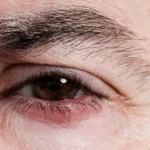
A lump in the neck is one of the most common reasons people book a skin appointment, and most of the time it is an epidermoid cyst: a pocket of trapped keratin rather than a growth. The neck is also the one site where a benign looking lump deserves a second thought, because several very different structures sit under the same patch of skin. This guide explains what a neck cyst actually is, how to tell it apart from the lumps it is confused with, how removal methods compare on recurrence and scarring, and the small number of neck lumps that need urgent assessment rather than a planned procedure.
What a neck cyst actually is
The lump most people call a sebaceous cyst on the neck is usually an epidermoid cyst, also known as an epidermal inclusion cyst. Skin cells that should have shed from the surface become sealed inside a pocket in the dermis. That pocket is lined with the same stratified squamous epithelium as your outer skin, and it carries on doing what skin does: producing keratin. The keratin has nowhere to go, so the cyst slowly fills and enlarges.
Two consequences follow from that structure, and between them they explain almost everything about treatment. First, the cyst cannot resolve by itself, because the lining is alive and still producing. Second, if you drain the contents but leave the lining behind, the pocket refills.
“Removing the entire cystic lining is important in decreasing recurrence.”
Zito PM, Scharf R. Epidermoid Cyst. StatPearls, published by the National Library of Medicine, NIH
The contents are not oil or pus. They are compacted keratin, which is why a cyst squeezed at home produces a thick, pale, strong smelling material rather than the clear fluid people expect.
The neck is not an incidental site for these cysts. It is one of the places they form most often, alongside the face and trunk, which is why a neck lump is far more likely to be an ordinary epidermoid cyst than anything unusual.
The five lumps people call a neck cyst
This is where the neck differs from every other site. On the earlobe or the back, a lump under the skin is nearly always a cyst or a lipoma. In the neck, structures left over from embryological development sit alongside lymph nodes and the thyroid, and they are managed by different specialists using different operations. Getting the label right is the whole diagnosis.
Smooth, mobile, firm, sitting under intact skin, anywhere on the neck. Often has a tiny central punctum, the blocked pore it grew from. Painless unless inflamed. This is the classic neck cyst and the one a skin clinic removes.
Sits in the midline, usually near the hyoid bone, and characteristically moves upward when you stick your tongue out or swallow. A developmental remnant, not a skin cyst. Needs the Sistrunk operation, not a simple excision.
Sits laterally, anterior to the sternocleidomastoid muscle. Another developmental remnant, often first noticed in the teens or twenties when it swells during a throat infection. Treated by complete excision under a head and neck surgeon.
Rubbery, often several together, commonly along the jawline or the side of the neck. Usually reactive to a recent infection and settles within weeks. A node that persists, hardens or keeps growing needs assessment rather than removal.
Soft, doughy, slow growing and deeper than a cyst, with no punctum. Common on the back of the neck. Benign, and removed for comfort or appearance rather than necessity.
Low in the midline or just to one side, moving upward on swallowing but not on tongue protrusion. Assessed with ultrasound and thyroid function rather than treated as a skin lesion.
Why cysts form on the neck in particular
For epidermoid cysts specifically, the reasons are largely mechanical and largely to do with what the neck puts up with day to day.
- Shaving and ingrown hairs
- Repeated shaving over the front and sides of the neck damages follicular openings and drives hairs back into the skin. A follicle that seals over while cells continue to shed inside is the standard mechanism for an epidermoid cyst, which is part of why these lumps are more common in men.
- Friction and occlusion
- Collars, ties, backpack straps, helmet fastenings and long hair all rub and cover the same strip of skin. Warmth and moisture favour blockage of the follicular openings that most cysts start from.
- Previous acne or folliculitis
- The nape and the jawline are common sites for both. Inflammation that damages a follicle can leave a sealed pocket behind, which then behaves as an inclusion cyst long after the original spot has settled.
- Minor trauma
- Any injury that pushes surface skin cells down into the dermis can seed a cyst. This is the same mechanism as a piercing tract elsewhere on the body, and it explains cysts appearing at the site of an old cut or scar.
- Genetic tendency
- Some people simply form multiple cysts. Where cysts are numerous or start young, an inherited syndrome such as Gardner syndrome is worth considering, though this is uncommon.
- Embryology, for the other two
- Thyroglossal duct and branchial cleft cysts have nothing to do with any of the above. They are remnants of structures that should have closed before birth, which is why they occupy fixed anatomical positions and why their surgery is different.
Does a neck cyst need removing?
Not automatically. The NHS is clear that a stable, symptom free skin cyst can be left alone:
“Skin cysts do not need to be treated if they’re not causing any problems.”
NHS, Skin cyst
What is equally clear is that leaving it alone is not the same as it going away. An epidermoid cyst has a living lining, so watchful waiting means the lump stays and usually grows slowly over months to years. That is the honest trade off: no treatment carries no risk, but it also produces no improvement.
There is one important caveat that applies more strongly to the neck than to most sites. Leaving a lump alone is only reasonable once you know what it is. The NHS advice on that point is unambiguous:
“See a GP if you have a lump on your skin and you do not know what it is.”
NHS, Skin cyst
The other half of the guidance is about what not to do in the meantime:
“Do not squeeze a skin cyst. If it bursts it could become infected, or if it’s already infected you might spread the infection.”
NHS, Skin cyst
Rupture spreads keratin into the surrounding tissue and triggers an intense inflammatory reaction that is frequently mistaken for infection. It also scars the tissue plane a surgeon later needs to work in, which makes clean removal of the lining harder and recurrence more likely. On the neck there is a second reason to leave it alone: the skin here is thin, mobile and highly visible, so an avoidable episode of inflammation tends to leave an avoidable mark.
Consider removal when: the cyst is growing; it has become inflamed or infected more than once; it catches on collars, razors or jewellery; it is visible enough to bother you; it is uncomfortable when you turn your head or lie down; or the diagnosis is not certain.
Neck cyst removal options compared
Three tiers, and the differences between them are real rather than cosmetic.
Watch and manage
- ObservationReasonable for a small, stable, painless cyst with a confirmed diagnosis.
- Warm compressEases discomfort in an inflamed cyst. Does not remove it.
- Change how you shaveReduces the follicular trauma that seeds new cysts.
- Photograph monthlyThe most reliable way to track slow growth.
Definitive removal
- Complete surgical excisionSac removed intact. Recurrence 3.3% at 12 months.
- Minimal or punch excisionSmaller scar. Recurrence 8.3% at 12 months.
- Incision and drainageFor acute infection only. Lining stays, so it refills.
- HistologyTissue sent to pathology to confirm the diagnosis.
Scar care
- Silicone gel or sheetingApplied once the wound has fully closed.
- Incision along skin linesNeck creases hide a scar better than any dressing.
- Sun protectionThe neck catches sun year round; a new scar darkens easily.
- Intralesional steroidHeld in reserve if a scar starts to thicken.
The choice between complete excision and a smaller minimally invasive approach has been tested directly. A study of 120 patients randomised epidermal cysts to conventional complete surgical excision or minimally invasive removal through a small opening made with a CO2 laser, then followed them for 12 months:
| Measure | Complete surgical excision | Minimally invasive laser excision |
|---|---|---|
| Patients | 60 | 60 |
| Recurrence at 12 months | 3.3% | 8.3% |
| Statistical difference | None (P = 0.648) | |
| Mean scar length | 1.23 cm | 0.30 cm |
| Scar difference | Significant (P = 0.001) | |
| Patient satisfaction | Lower | Significantly higher |
Two things are worth saying plainly about that evidence. The study was carried out on facial epidermal cysts between 0.5 and 2.2 cm, so it is the closest available comparison rather than a neck specific one; the biology of the cyst is the same, but neck skin is more mobile and heals slightly differently. And the authors’ own conclusion was about appearance rather than cure: they found that “the cosmetic outcome of CO2 laser excision is excellent” and recommended it for cysts measuring 2.2 cm or smaller where appearance matters. Recurrence was numerically higher in that group. The sensible reading is a genuine choice between a smaller scar and a slightly lower chance of the cyst returning, rather than one method simply being better.
Incision and drainage sits outside that comparison. It relieves an acutely infected, painful cyst, but it is a holding measure. The lining remains, so a planned excision is still needed once the inflammation settles, usually after four to six weeks.
For an assessment of which approach suits your neck, see our cyst removal treatment page.
What happens on the day
Removal of a straightforward neck cyst is a same day procedure carried out under local anaesthetic. The NHS describes the same approach: “Local anaesthetic is used to numb the area around the cyst before it’s cut out. You’ll have a small scar after the wound has healed.” Expect to be in clinic for around an hour.
Assessment
The procedure
Immediate care
Recovery and aftercare
The neck heals well, but it is a mobile area. Every time you turn your head, swallow or look down, the wound is put under tension, and that tension is the main thing that decides how the scar matures. Swelling and tenderness settle over three to five days; the scar itself matures over three to six months.
Do
- Keep the dressing clean and dry for the first 48 hours
- Sleep with an extra pillow for the first few nights to limit swelling
- Take paracetamol if the area feels sore
- Return for suture removal at 5 to 7 days
- Start silicone gel once the wound has fully closed
- Use sun protection on the scar for at least three months
Avoid
- Shaving over the wound until it has fully healed
- Stiff collars, ties and anything that rubs the dressing
- Heavy lifting and gym work for one to two weeks
- Swimming and saunas for two weeks
- Picking at the crust or sutures
- Stretching the neck repeatedly in the first week
If the cyst was on the front of the neck, be particularly careful with shaving. Returning to a razor over a healing wound is the most common reason a neat scar becomes an irritated one.
Risks, scarring and recurrence
- Recurrence
- Reported at 3.3% after complete excision and 8.3% after minimally invasive laser removal, over 12 months. After simple incision and drainage, where the lining is left in place, recurrence should be regarded as the expected outcome rather than a complication.
- Recurrence after the wrong operation
- This is the risk specific to the neck. A midline thyroglossal duct cyst treated as though it were a skin cyst recurs in 45% to 55% of cases; the same lesion treated with the Sistrunk procedure, which removes the central portion of the hyoid bone along with the tract, recurs in around 5%. Identifying the lump correctly matters more than the technique used to remove it.
- Scarring
- Mean scar length was 1.23 cm for conventional excision against 0.30 cm for the minimally invasive approach. Neck skin is visible and mobile, so incision placement along a natural crease does more for the final appearance than incision length alone.
- Infection
- Uncommon after planned excision of a quiet cyst. Risk rises sharply if the cyst is operated on while actively inflamed, which is why surgery is deferred until it settles.
- Contour change
- A large cyst leaves a cavity, and the area can look slightly dented at first. This usually fills out over several months as the tissue remodels.
- Numbness
- A small patch of altered sensation over the scar is common in the first weeks and almost always temporary.
Red flags: when a neck lump needs more than removal
The overwhelming majority of neck cysts are entirely benign. A small minority are not, and because the neck drains the mouth, throat and thyroid, national guidance treats an unexplained lump here differently from one on the arm or back.
“Consider a suspected cancer pathway referral for laryngeal cancer in people aged 45 and over with: persistent and unexplained hoarseness, or an unexplained lump in the neck.”
NICE, Suspected cancer: recognition and referral, guideline NG12, recommendation 1.8.1
The same guideline makes a parallel recommendation for oral cancer in people with “a persistent and unexplained lump in the neck”, at any age, and a further one for thyroid cancer in people with an unexplained thyroid lump. None of this means a neck lump is likely to be sinister. It means the threshold for having one looked at properly is deliberately low, and that a lump you cannot account for should be examined rather than watched.
For epidermoid cysts themselves, the underlying numbers are worth stating plainly rather than glossing over:
“Approximately 1% of epidermoid cysts have been noted to have a malignant transformation.”
Zito PM, Scharf R. Epidermoid Cyst. StatPearls, published by the National Library of Medicine, NIH
Where malignant change does occur, squamous cell carcinoma accounts for roughly 70% of cases. That is the practical argument for sending excised tissue to pathology as a matter of routine rather than only when something looks wrong, since the appearance of a cyst on the outside is a poor guide to what the lining is doing.
Seek same day medical attention if a neck lump is accompanied by fever with spreading redness, rapidly increasing pain and swelling, or any difficulty breathing or swallowing. Related lesions are covered on our skin cysts and keloid scarring pages.
FAQs
Will a neck cyst go away on its own?
No. An epidermoid cyst is lined with living skin cells that keep producing keratin, so it has no mechanism for resolving. It may stay the same size for years, but it will not disappear. Only removal of the lining clears it permanently.
Can I squeeze a neck cyst at home?
No. The NHS advises against squeezing any skin cyst, because rupture risks infection and spreads the contents. On the neck it also inflames and scars the tissue plane, making later surgical removal harder and recurrence more likely, and leaving a mark in a very visible place.
Does neck cyst removal hurt?
The local anaesthetic injection stings for a few seconds. After that the area is fully numb and the procedure is felt as pressure and movement only. Most people need nothing stronger than paracetamol afterwards.
How long does neck cyst removal take?
A straightforward cyst usually takes 20 to 30 minutes, with around an hour in clinic including examination, consent and dressing. Larger or previously inflamed cysts take longer because the sac is harder to separate cleanly.
Will a neck cyst come back after removal?
Recurrence was 3.3% at 12 months after complete surgical excision and 8.3% after minimally invasive laser removal. If the cyst is only drained and the lining is left behind, it should be expected to refill.
Will neck cyst removal leave a scar?
Yes, though usually a small one. Mean scar length was 1.23 cm for conventional excision and 0.30 cm for the minimally invasive approach. On the neck, placing the incision along a natural crease matters as much as its length, because a scar lying in a skin line is far less visible.
How do I know whether my lump is a cyst or something else?
Position and behaviour give most of the answer. A skin cyst moves with the skin and often has a small central punctum. A midline lump that rises when you stick your tongue out suggests a thyroglossal duct cyst. A lump low on the side of the neck that appeared with a sore throat is more likely a reactive lymph node. Anything you cannot account for should be examined rather than assumed.
Why does a midline neck cyst need a different operation?
Because a thyroglossal duct cyst is connected by a tract running up to the base of the tongue, passing through the hyoid bone. Removing only the visible cyst leaves that tract behind, and recurrence is then reported at 45% to 55%. The Sistrunk procedure removes the central portion of the hyoid and the tract with it, bringing recurrence down to around 5%.
When should I worry about a lump in my neck?
NICE advises considering a suspected cancer pathway referral for anyone aged 45 and over with an unexplained lump in the neck, and for a persistent unexplained neck lump at any age. That is a low threshold by design. A lump that is growing, hard, fixed, or accompanied by hoarseness, swallowing difficulty or weight loss should be assessed promptly.
Can a neck cyst be cancer?
Rarely. Around 1% of epidermoid cysts show malignant transformation, and squamous cell carcinoma accounts for about 70% of those. This is why removed tissue is sent for histology routinely, and why a lump that grows quickly, becomes fixed or ulcerates should be assessed promptly.
Sources
- Zito PM, Scharf R. Epidermoid Cyst. StatPearls Publishing. National Library of Medicine, National Institutes of Health.
- NHS. Skin cyst. National Health Service, United Kingdom.
- National Institute for Health and Care Excellence. Suspected cancer: recognition and referral, NICE guideline NG12, recommendations 1.8.1, 1.8.2 and 1.8.5. NICE.
- Kim KT, Sun H, Chung EH. Comparison of complete surgical excision and minimally invasive excision using CO2 laser for removal of epidermal cysts on the face. Archives of Craniofacial Surgery, 2019;20(2), pages 84 to 88. Hosted on PubMed Central, NIH.
- Thyroglossal Duct Cyst. StatPearls Publishing. National Library of Medicine, National Institutes of Health.
- Branchial Cleft Anomalies. StatPearls Publishing. National Library of Medicine, National Institutes of Health.
This article is for information only and does not replace an assessment in person. If you have a lump in your neck that you cannot account for, please see a clinician.