If you’ve ever dealt with deep, painful breakouts that refuse to budge, the kind that sit beneath the skin for weeks and leave marks long after they’ve gone, you may be dealing with cystic acne. It’s one of the most challenging skin conditions we treat here at Linia Skin Clinic, and it’s also one of the most misunderstood.
In this guide, we’re breaking down everything you need to know about cystic acne: what sets it apart from other types of acne, why it develops, and most importantly, what actually works when it comes to treatment.
What Is Cystic Acne?
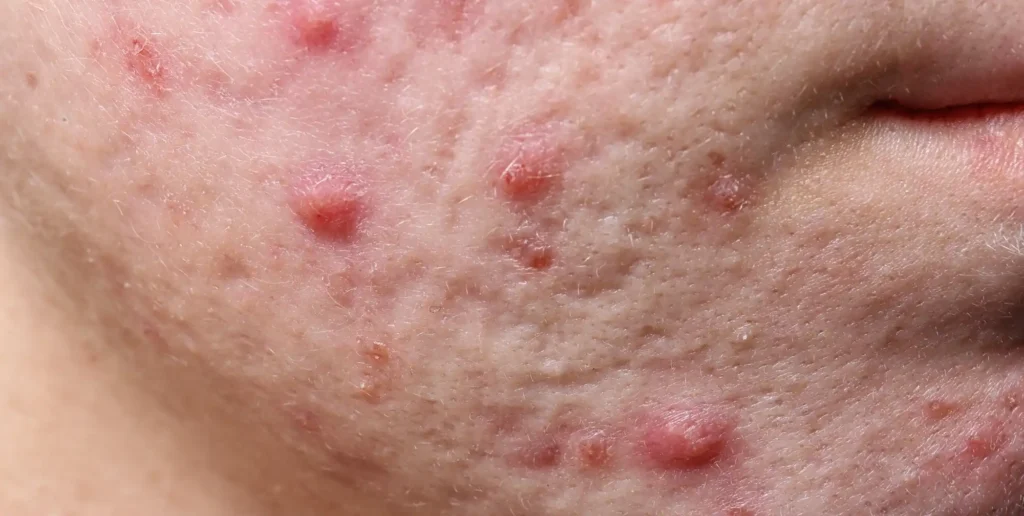
Cystic acne is the most severe form of acne vulgaris. Unlike the surface-level blackheads or whiteheads most people are familiar with, cystic acne develops deep within the skin. It forms when a pore becomes blocked, trapping oil (sebum), dead skin cells, and bacteria deep beneath the surface. The result is a large, inflamed, fluid-filled cyst that can be painful to the touch.
These cysts don’t have a visible head, which is why they can’t simply be “popped.” Attempting to do so often makes things significantly worse, driving infection deeper and dramatically increasing the risk of permanent scarring.
Cystic acne most commonly appears on the face (particularly the jawline and cheeks), but it can also affect the neck, chest, back, and shoulders.
How Is Cystic Acne Different from Regular Acne?
Not all spots are created equal. Here’s how cystic acne differs from milder forms:
Surface acne (blackheads and whiteheads): These form when pores become clogged at skin level. They’re non-inflammatory and generally respond well to over-the-counter products.
Inflammatory acne (papules and pustules): These are the classic red spots and pus-filled pimples. They involve some bacterial activity and inflammation but remain relatively close to the surface.
Cystic acne: This is a deep, inflammatory response involving the immune system. The cysts are larger, more painful, last longer, and carry a much higher risk of scarring. Over-the-counter treatments are rarely effective at this stage.
If you’re dealing with cysts that measure more than 5mm, recur in the same areas, or are leaving behind dark marks and indentations, it’s time to seek professional help.
What Causes Cystic Acne?
Cystic acne is rarely caused by one single factor. It tends to develop when several triggers combine:
1. Hormonal Fluctuations
Hormones are one of the biggest drivers of cystic acne, particularly androgens (male hormones present in both men and women). When androgen levels rise, sebaceous glands produce more oil, increasing the likelihood of blocked pores and deep bacterial infections.
This is why cystic acne is so common in:
- Teenagers going through puberty
- Women during their menstrual cycle, pregnancy, or perimenopause
- People with polycystic ovary syndrome (PCOS)
- Those starting or stopping hormonal contraceptives
2. Genetics
If a parent or sibling has experienced cystic acne, you are statistically more likely to develop it yourself. Genetics influence how your skin produces sebum, how your immune system responds to bacteria, and how quickly your skin cell turnover occurs.
3. Excess Sebum Production
Overactive sebaceous glands produce more oil than the skin can manage. Combined with a build-up of dead skin cells, this creates the perfect environment for Cutibacterium acnes (formerly known as Propionibacterium acnes) bacteria to thrive.
4. Skin Cell Build-Up
When dead skin cells aren’t shed efficiently, they can accumulate and block pores. This is often worsened by using overly rich or comedogenic (pore-blocking) skincare products.
5. Diet and Lifestyle
Research increasingly suggests that high-glycaemic foods (sugary drinks, refined carbohydrates, processed foods) and dairy products may exacerbate acne in some individuals by influencing insulin and hormone levels. Stress is also a well-documented trigger, as it elevates cortisol, which in turn increases oil production.
6. Incorrect Skincare
Using harsh, stripping products can disrupt the skin barrier and trigger rebound oil production. Equally, heavy or occlusive products can block pores and worsen congestion.
The Emotional Impact of Cystic Acne
It’s important to acknowledge that cystic acne is not just a physical condition. The psychological toll can be significant. Research has consistently shown that people with severe acne experience higher rates of anxiety, depression, and reduced self-esteem.
In the UK, where cultural conversations around skin health are evolving, many people still feel dismissed when seeking help, being told it’s “just spots” or that they’ll “grow out of it.” At Linia Skin Clinic, we take cystic acne seriously, because we know it affects far more than just the skin.
Can You Treat Cystic Acne at Home?
The honest answer is: partially, and only in the mildest cases. For true cystic acne, over-the-counter products are rarely sufficient, and delaying professional treatment increases the risk of permanent scarring.
That said, certain measures can support your skin between clinic visits:
- Gentle, non-comedogenic cleansing: Twice daily with a mild, fragrance-free cleanser. Avoid scrubbing, which can worsen inflammation.
- Salicylic acid: A beta-hydroxy acid (BHA) that helps to clear pores. Effective for surface congestion, but limited in reach for deep cysts.
- Niacinamide: Helps to regulate sebum production and reduce redness.
- Non-comedogenic moisturiser: Essential, even for oily skin. A compromised skin barrier worsens acne.
- SPF daily: Especially important if you are using any prescription treatments, many of which increase photosensitivity.
- Hands off: Avoid touching, squeezing, or picking. This cannot be overstated.
Professional Treatments for Cystic Acne
When cystic acne is persistent or severe, professional intervention is the most effective path forward. At Linia Skin Clinic, we offer a range of evidence-based treatments tailored to your skin type, acne severity, and lifestyle.
Prescription Topicals
Prescription-strength retinoids (such as tretinoin or adapalene) and topical antibiotics can significantly reduce cystic acne when used correctly. These are far more potent than anything available over the counter and are prescribed following a thorough skin assessment.
Oral Antibiotics
In cases involving significant bacterial activity, a short course of oral antibiotics (such as doxycycline or lymecycline) can help bring inflammation under control. These are typically used alongside topical treatments rather than as a standalone solution.
Hormonal Treatments
For women whose cystic acne is hormonally driven, options such as the combined oral contraceptive pill or spironolactone (an anti-androgen medication) can be highly effective. These require consultation with a clinician to assess suitability.
Isotretinoin (Roaccutane)
For severe or treatment-resistant cystic acne, isotretinoin (commonly known by the brand name Roaccutane) remains the most effective medical treatment available. It works by drastically reducing sebum production, shrinking sebaceous glands, and reducing inflammation at the source.
Isotretinoin requires careful monitoring due to its potential side effects, including dry skin, lips, and eyes, as well as important considerations for those who are or may become pregnant. At Linia Skin Clinic, patients on isotretinoin are supported throughout their course with regular check-ins and blood monitoring.
Chemical Peels
Medical-grade chemical peels using acids such as salicylic acid or glycolic acid can help to exfoliate the skin, clear congested pores, and reduce post-acne pigmentation. They are particularly useful as part of a maintenance programme once active cysts are under control.
LED Light Therapy
Blue light therapy targets Cutibacterium acnes bacteria, while red light reduces inflammation and supports healing. LED treatments are gentle, non-invasive, and can be a useful adjunct to other acne therapies.
Corticosteroid Injections
For individual, particularly large or painful cysts, an intralesional corticosteroid injection can reduce inflammation and flatten the cyst rapidly, often within 24 to 48 hours. This is a targeted treatment rather than a solution to the underlying cause.
Treating the Scars Left Behind
Many people who come to us aren’t just dealing with active breakouts. They’re living with the reminders. Cystic acne is the most common cause of acne scarring, which can present as:
- Ice pick scars: Deep, narrow, pitted scars
- Boxcar scars: Broad depressions with sharp edges
- Rolling scars: Wave-like, uneven texture
- Post-inflammatory hyperpigmentation (PIH): Dark marks left after a cyst heals
The good news is that acne scarring is highly treatable. Options available at Linia Skin Clinic include microneedling, laser resurfacing, chemical peels, and dermal filler for deep atrophic scars. Treatment plans are bespoke and designed around the type and depth of scarring present.
When Should You See a Professional?
Don’t wait until your acne is at its most severe to seek help. We recommend booking a consultation if:
- You have recurring deep, painful cysts
- Your acne hasn’t responded to over-the-counter products after 8–12 weeks
- You are developing dark marks or textural changes after spots heal
- Your skin is affecting your confidence, mood, or daily life
- You’ve been prescribed treatments before that haven’t worked
Early intervention is the most effective way to prevent long-term scarring.
The Linia Skin Clinic Approach
At Linia Skin Clinic, we believe that clear skin isn’t a luxury. It’s something every person deserves access to. Our approach to cystic acne is thorough, personalised, and grounded in evidence. We begin with a detailed consultation to understand your skin history, lifestyle, hormonal health, and previous treatments before building a plan that works for you, not a one-size-fits-all protocol.
Whether you’re in the early stages of cystic acne or have been struggling for years, we’re here to help you find a way forward.