
Acne excoriée, also known as picker’s acne or acne excoriée des jeunes filles, is a distinctive skin condition that goes beyond typical acne. It’s characterised by self-inflicted trauma to the skin, often resulting in significant scarring and emotional distress. At Linia Skin Clinic, we understand the complex nature of this condition and the profound impact it can have on those who experience it.
What Is Acne Excoriée?
Acne excoriée is a psychodermatological disorder where individuals compulsively pick, scratch, or squeeze their skin, targeting existing acne lesions or even minor skin imperfections. This repetitive behaviour leads to excoriated lesions, open wounds, scarring, and prolonged healing times. Unlike typical acne that heals naturally, acne excoriée is perpetuated by the picking behaviour itself, creating a cycle that can be difficult to break.
The condition predominantly affects young women, though it can occur in anyone regardless of age or gender. It often begins during adolescence when acne is common, but the compulsive picking behaviour distinguishes it from standard acne presentation.
Understanding the Causes
The development of acne excoriée involves multiple interconnected factors:
Psychological Components
The psychological aspect of acne excoriée is fundamental to understanding the condition. Many individuals with this disorder experience underlying anxiety, depression, or obsessive-compulsive tendencies. The act of picking provides temporary relief from emotional distress, creating a maladaptive coping mechanism. Perfectionism and body dysmorphic disorder are also commonly associated with acne excoriée, as individuals may perceive their skin imperfections as more severe than they actually are.
Stress and emotional trauma can trigger or exacerbate picking behaviours. The skin becomes a focus for releasing internal tension, with the picking ritual providing a sense of control during times of uncertainty or emotional turbulence.
Dermatological Factors
While the psychological component is primary, dermatological factors play a significant role. The presence of actual acne lesions provides targets for picking behaviour. Individuals may initially have mild to moderate acne that becomes severely aggravated through manipulation. The tactile sensation of rough or raised areas on the skin can trigger the urge to pick, creating a feedback loop where the damage caused by picking leads to more textural irregularities.
Neurological Aspects
Research suggests that acne excoriée may involve neurological pathways related to impulse control and reward. The picking behaviour may activate dopamine release, creating a neurochemical reinforcement pattern similar to other compulsive behaviours. This neurological component helps explain why the behaviour can be so difficult to stop despite the negative consequences.
Recognising the Symptoms
Acne excoriée presents with characteristic features that distinguish it from other skin conditions:
Physical Manifestations
The most obvious signs are the lesions themselves. Unlike typical acne that appears in various stages of development, acne excoriée lesions are predominantly excoriated, meaning they show evidence of having been picked or scratched. You’ll notice lesions at different healing stages, from fresh wounds to partially healed scabs and eventually scars.
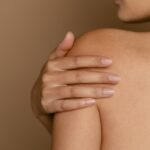
The face is the most commonly affected area, particularly the cheeks, chin, and forehead. However, any accessible area may be targeted, including the shoulders, chest, and back. The distribution often follows a pattern where the individual can easily reach the affected areas, and notably, the skin on the back may be relatively spared compared to the face.
Post-inflammatory hyperpigmentation is common, with dark marks persisting long after wounds heal. The skin may appear to have a “picked” appearance with multiple small erosions and crusts. In severe cases, significant scarring develops, which brings us to a particularly troubling complication.
Ice Pick Scars: A Common Consequence
One of the most challenging long-term effects of acne excoriée is the development of ice pick scars. These are deep, narrow, pitted scars that extend into the dermis, resembling small holes as if the skin has been punctured with a sharp instrument. They’re called ice pick scars because they look as though an ice pick has been driven into the skin.
Ice pick scars form when picking behaviour damages the deeper layers of skin, causing collagen destruction and dermal atrophy. The repetitive trauma prevents proper healing and leads to permanent indentations in the skin. These scars are particularly distressing because they’re highly visible and notoriously difficult to treat, though modern techniques have made significant improvements possible.
Behavioural Patterns
Beyond the physical signs, behavioural patterns are telling. Individuals with acne excoriée often pick at their skin without full awareness, particularly during times of stress, boredom, or when examining their reflection. The picking episodes may last from minutes to hours, and individuals often report a sense of tension before picking followed by relief or satisfaction during the act, and then guilt and shame afterwards.
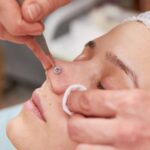
Many people with this condition spend excessive time in front of mirrors examining their skin, and they may use tools such as tweezers, pins, or fingernails to pick at lesions. There’s typically a strong desire to stop the behaviour accompanied by repeated unsuccessful attempts to do so.
Emotional Impact
The psychological burden of acne excoriée is substantial. Individuals often experience shame and embarrassment about their appearance and their inability to stop picking. This can lead to social withdrawal, avoidance of situations where their skin will be visible, and significant impairment in quality of life. Depression and anxiety frequently co-occur with the condition, creating a vicious cycle where emotional distress triggers picking, and the resulting skin damage increases emotional distress.

Comprehensive Treatment Approaches
Successfully treating acne excoriée requires addressing both the dermatological and psychological aspects of the condition. At Linia Skin Clinic, we take an integrated approach that recognises the complexity of this disorder.
Psychological Interventions
Cognitive Behavioural Therapy (CBT) is the gold standard psychological treatment for acne excoriée. CBT helps individuals identify triggers for picking behaviour, develop healthier coping strategies, and challenge distorted thoughts about their skin. Habit reversal training, a specific form of CBT, teaches individuals to become more aware of their picking behaviour and replace it with alternative actions.
For some individuals, medication may be beneficial. Selective serotonin reuptake inhibitors (SSRIs) have shown effectiveness in reducing compulsive picking behaviours, particularly when anxiety or depression is present. N-acetylcysteine, an amino acid supplement, has also demonstrated promise in reducing skin-picking urges.
Mindfulness-based therapies can help individuals develop greater awareness of picking urges and learn to tolerate uncomfortable sensations without acting on them. Stress management techniques, including relaxation training and meditation, address underlying triggers for the behaviour.
Dermatological Treatments
While addressing the picking behaviour is paramount, dermatological treatment helps manage the existing skin condition and promotes healing. A gentle skincare routine is essential, avoiding harsh products that might increase skin irritation and provide more targets for picking. We recommend mild cleansers, non-comedogenic moisturisers, and products that support skin barrier function.
For underlying acne, topical treatments such as retinoids, benzoyl peroxide, or azelaic acid may be prescribed. These help prevent new acne lesions from forming, reducing the targets available for picking. In some cases, oral antibiotics or hormonal treatments may be appropriate for managing underlying acne.
Treatments that promote healing of existing lesions are crucial. Topical antibiotics can prevent secondary infections in excoriated areas, while occlusive dressings or hydrocolloid patches can protect healing lesions and reduce the temptation to pick. These patches also serve as a physical barrier, making picking more difficult.
Scar Treatment Options
Addressing the scarring, particularly ice pick scars, requires specialised interventions. Several effective treatments are available:
Chemical Peels: Medium to deep chemical peels using trichloroacetic acid (TCA) can improve the appearance of ice pick scars by promoting collagen remodelling and skin resurfacing. TCA CROSS (Chemical Reconstruction of Skin Scars) is a technique specifically designed for ice pick scars, where high-concentration TCA is applied directly into individual scars.
Microneedling: This procedure involves creating controlled micro-injuries to the skin, stimulating collagen production and improving scar depth. When combined with radiofrequency energy (RF microneedling), results can be enhanced. Multiple sessions are typically required for optimal outcomes.
Laser Treatments: Fractional laser resurfacing, including both ablative and non-ablative options, can significantly improve ice pick scars. Ablative lasers like CO2 or Erbium YAG remove outer skin layers and stimulate deep collagen production. Non-ablative fractional lasers create thermal injury without removing surface skin, offering less downtime but potentially requiring more sessions.
Punch Techniques: For particularly deep ice pick scars, punch excision or punch elevation may be necessary. These surgical techniques involve removing the scarred tissue and either suturing the wound or elevating the scar base to skin level. While more invasive, they can be highly effective for scars that don’t respond to other treatments.
Dermal Fillers: For some scars, injectable fillers can provide temporary improvement by elevating the depressed areas. While not a permanent solution, fillers can be useful for select scars or as a temporary measure whilst considering other treatments.
Subcision: This technique involves inserting a needle beneath the scar to break up fibrous bands that tether the skin downward. It’s often combined with other treatments for enhanced results.
Creating an Optimal Treatment Environment
Successful treatment requires creating conditions that minimise picking opportunities. This might include keeping hands busy with stress balls or fidget toys, wearing gloves during high-risk times, limiting mirror time, and ensuring adequate lighting to reduce the urge to examine skin closely. Keeping nails short and avoiding keeping picking tools accessible can also help.
Living with Acne Excoriée: Practical Strategies
Recovery from acne excoriée is a journey that requires patience, self-compassion, and persistence. Here are practical strategies that many individuals find helpful:
Develop a structured skincare routine that becomes a caring ritual rather than an opportunity for examination. Keep products simple and focus on gentle, healing formulations. Consider setting specific times for skincare rather than repeatedly touching or examining your face throughout the day.
Identify your personal triggers. Keep a journal noting when picking occurs, what you were feeling, and what was happening in your environment. This awareness is the first step toward developing alternative responses to these triggers.
Build a support system. Whether through therapy, support groups, or trusted friends and family, having people who understand your struggle can provide crucial encouragement and accountability. Online communities can also offer valuable support, though be mindful of choosing positive, recovery-focused spaces.
Celebrate progress, no matter how small. Recovery isn’t linear, and setbacks are part of the process. Instead of viewing lapses as failures, see them as opportunities to learn what works and what doesn’t. Each day without picking is an achievement worth acknowledging.
Frequently Asked Questions
Is acne excoriée a form of OCD?
Acne excoriée is classified as a body-focused repetitive behaviour (BFRB) related to obsessive-compulsive and related disorders. While it shares similarities with OCD, including repetitive, compulsive behaviours, it’s considered a distinct condition. However, individuals with acne excoriée may also have OCD or other anxiety disorders, and the treatments overlap considerably.
How long does it take to see improvement?
The timeline varies significantly between individuals. With appropriate treatment, including both psychological and dermatological interventions, many people notice reduced picking behaviours within several weeks to months. However, healing existing lesions and treating scars takes longer. Visible improvement in skin appearance may take three to six months or more, and complete scar improvement often requires multiple treatments over a year or longer.
Can acne excoriée be cured?
With comprehensive treatment, many individuals can overcome compulsive picking behaviours and achieve significant improvement. However, like many psychological conditions, stress or life changes may trigger relapses. Learning to recognise warning signs and having strategies in place can help manage potential setbacks. The goal is to develop long-term management strategies and coping mechanisms.
Will my scars ever go away completely?
While modern treatments have made remarkable advances in scar improvement, the complete elimination of deep ice pick scars is challenging. However, significant improvement is possible with appropriate treatment. The depth and severity of scarring, your skin type, and how consistently you follow treatment protocols all influence outcomes. Starting scar treatment early, before scars become fully matured, often yields better results.
Is it safe to treat scars whilst still experiencing picking episodes?
This is an important consideration. Ideally, the picking behaviour should be under control before aggressive scar treatment begins, as continued picking can damage healing tissue and reduce treatment effectiveness. However, some gentle treatments that support healing can be implemented alongside behavioural interventions. Your dermatologist will assess your individual situation and create a phased treatment plan.
How can I hide the appearance of my skin whilst in treatment?
A skilled makeup application can help conceal lesions and scars, improving confidence during the recovery process. Use non-comedogenic, hypoallergenic products and ensure proper makeup removal each evening. Colour-correcting products can neutralise redness, whilst a good concealer and foundation can even out skin tone. Consider consulting with a makeup artist experienced in covering skin concerns for personalised advice.
Does diet play a role in acne excoriée?
While diet doesn’t directly cause picking behaviour, it can influence underlying acne and inflammation. A balanced diet rich in antioxidants, omega-3 fatty acids, and adequate hydration supports overall skin health and healing. Some individuals find that certain foods trigger their acne, and avoiding these may reduce targets for picking. However, dietary changes alone won’t resolve the compulsive picking component.
Can children and teenagers develop acne excoriée?
Yes, acne excoriée often begins during adolescence, though it can occur at any age. Early intervention is particularly important for young people to prevent long-term scarring and the development of entrenched picking habits. Treatment for younger individuals typically emphasises behavioural interventions and gentle dermatological care, with psychological support tailored to their developmental stage.
What should I do if I have an urge to pick?
Develop a set of alternative responses to picking urges. Try the delay technique: when you feel an urge, wait 10 minutes whilst engaging in another activity. Often the urge passes. Physical alternatives include squeezing a stress ball, applying pressure to the area without breaking the skin, or using ice to reduce inflammation and sensations. Cognitive strategies include reminding yourself of your goals and visualising your skin healing.
How do I find the right treatment provider?
Look for providers with experience in both dermatology and psychodermatology. A multidisciplinary approach often works best, with coordination between a dermatologist and a mental health professional. Don’t hesitate to ask about a provider’s experience treating acne excoriée specifically and their treatment philosophy.
Are there any treatments I should avoid?
Be cautious of treatments that require significant post-procedure care that might trigger picking behaviours. Very aggressive treatments that create substantial skin disruption may not be appropriate initially. Focus first on stabilising the picking behaviour and healing existing lesions before considering invasive procedures. Always discuss your history of skin picking with any provider before undergoing treatment.