
Ice pick scars are among the most challenging types of acne scarring to treat, but understanding their nature and the available treatment options can help you achieve smoother, more even-toned skin. At Linia Skin Clinic, we specialise in advanced scar treatments tailored to your unique skin concerns.
What Are Ice Pick Scars?
Ice pick scars are deep, narrow indentations in the skin that extend into the dermis, resembling small puncture marks as if the skin has been pierced with a sharp instrument. These scars typically measure less than 2mm in diameter but can penetrate deeply into the skin, making them particularly noticeable and difficult to conceal with makeup or skincare products alone.
The name “ice pick scar” comes from their appearance – they look as though the skin has been stabbed with an ice pick, creating a deep, narrow opening. Unlike other acne scars that may be wider or shallower, ice pick scars have a distinctive V-shaped structure that extends vertically downward into the skin’s deeper layers.
Identifying Ice Pick Scars
Ice pick scars have several distinctive characteristics that set them apart from other types of acne scarring:
Visual Appearance: These scars appear as small, deep holes or pits in the skin’s surface. They’re typically narrow at the top, widening slightly as they extend downward, though they remain quite small overall. The opening is usually 2mm or less in diameter.
Texture and Depth: When you run your finger across ice pick scars, you can feel the deep indentations in the skin. Unlike rolling scars (which create wave-like undulations) or boxcar scars (which have wider, more defined edges), ice pick scars feel like distinct pinpoint depressions.
Common Locations: Ice pick scars most frequently appear on the cheeks, where the skin is relatively thin and acne breakouts commonly occur. However, they can also develop on the forehead, chin, and other areas of the face affected by severe acne.
Depth Assessment: The depth of ice pick scars can vary considerably. Some may be relatively shallow (affecting only the upper dermis), whilst others extend deep into the dermal layer, making them more challenging to treat. A skincare professional can assess the depth during a consultation to determine the most appropriate treatment approach.
What Causes Ice Pick Scars?
Ice pick scars develop as a result of severe inflammatory acne and the skin’s subsequent healing process. Understanding the causes can help in both prevention and treatment planning.
The Acne-Scar Connection
When severe acne lesions such as cysts or nodules form deep within the skin, they cause significant inflammation and damage to the surrounding tissue. As these lesions heal, the body produces collagen to repair the damaged area. However, if too little collagen is produced during the healing process, or if the inflammation destroys too much tissue, the skin cannot fill in the gap completely, resulting in a depressed scar.
Ice pick scars specifically result from deep inflammatory acne lesions that create a narrow but deep channel of destruction through the skin layers. As the lesion heals, the skin pulls downward, creating the characteristic narrow, deep appearance.
Risk Factors
Several factors can increase your likelihood of developing ice pick scars:
Severe or Cystic Acne: The more severe your acne, particularly if you experience deep cysts or nodules, the higher your risk of developing ice pick scars.
Picking or Squeezing Spots: Manipulating acne lesions can drive bacteria deeper into the skin and increase inflammation, significantly raising the risk of scarring.
Delayed Treatment: Allowing severe acne to persist without proper treatment increases both the severity and duration of inflammation, which contributes to more extensive scarring.
Genetics: Some individuals are genetically predisposed to scarring. If your parents or siblings have acne scarring, you may be more likely to develop scars as well.
Skin Type and Tone: Whilst ice pick scars can affect all skin types, the healing process and scar visibility may vary depending on your skin tone and genetic background.
Age of Onset: Severe acne that develops during the teenage years, when skin is still developing, may have a different scarring pattern than adult-onset acne.

Treatment Options for Ice Pick Scars
Treating ice pick scars requires targeted approaches that can address the depth and narrow structure of these challenging scars, often as part of a comprehensive acne treatment plan. At Linia Skin Clinic, we offer several advanced treatment modalities.
TCA CROSS (Chemical Reconstruction of Skin Scars)
TCA CROSS is considered one of the gold-standard treatments specifically for ice pick scars. This technique involves applying a high concentration of trichloroacetic acid (TCA) directly into individual scars using a fine applicator.
The acid stimulates collagen production at the base of the scar, causing the depression to gradually fill in from below. Multiple treatment sessions, typically spaced 4-6 weeks apart, are usually required for optimal results. The precision of this treatment makes it particularly effective for narrow, deep ice pick scars whilst minimising damage to surrounding healthy skin.
Punch Excision
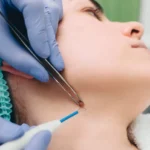
For particularly deep or stubborn ice pick scars, punch excision may be recommended. This minor surgical procedure involves using a small surgical tool to remove the entire scar, including its deep root. The resulting wound is then closed with a fine suture or allowed to heal naturally, leaving a much less noticeable mark that’s easier to treat with other modalities if needed.
This technique is especially effective for isolated, deep ice pick scars and can be combined with other treatments for comprehensive scar improvement.
Microneedling and Radiofrequency Microneedling
Microneedling creates controlled micro-injuries to the skin, stimulating the body’s natural healing response and promoting collagen production. For ice pick scars, radiofrequency microneedling may be particularly beneficial as it combines the mechanical action of needling with the collagen-stimulating effects of radiofrequency energy delivered at various depths.
Whilst microneedling alone may not be sufficient for very deep ice pick scars, it can be an excellent complementary treatment or effective option for shallower scars.
Laser Resurfacing
Fractional laser treatments, including both ablative and non-ablative options, can improve the appearance of ice pick scars by removing damaged skin layers and stimulating collagen remodelling. Ablative lasers (such as CO2 or erbium lasers) remove thin layers of skin, whilst non-ablative lasers work beneath the skin’s surface.
Laser treatments may require multiple sessions and work best when combined with other targeted treatments for ice pick scars, as they’re more effective for broader, shallower scarring patterns.
Dermal Fillers
Whilst not a permanent solution, dermal fillers can temporarily improve the appearance of ice pick scars by plumping the depressed areas from beneath. This can be a good option for individuals seeking immediate improvement whilst undergoing other treatments, or for those who prefer a non-invasive approach.
Results typically last several months before requiring repeat treatment.
Combination Therapy
In many cases, the most effective approach to treating ice pick scars involves combining multiple treatment modalities. For example, beginning with punch excision or TCA CROSS for deep scars, followed by laser resurfacing or microneedling to improve overall skin texture and tone. Your skincare professional at Linia Skin Clinic can develop a personalised treatment plan based on your specific scarring pattern and skin type.
Prevention: Protecting Your Skin from Ice Pick Scars
Whilst some scarring risk is genetic, there are several steps you can take to minimise your chances of developing ice pick scars:
Seek Early Treatment for Acne: Don’t wait for acne to become severe. Early intervention with appropriate topical or systemic treatments can prevent the deep inflammatory lesions that lead to ice pick scars.
Avoid Picking or Squeezing: As tempting as it may be, manipulating acne lesions significantly increases scarring risk. If a spot needs extraction, seek professional help from a trained aesthetician or dermatologist.
Follow a Consistent Skincare Routine: Maintaining healthy skin through proper cleansing, moisturising, and sun protection supports the skin’s natural healing processes.
Use Sun Protection: UV exposure can worsen the appearance of scars and interfere with healing. Apply broad-spectrum SPF 30 or higher daily, even on cloudy days.
Consider Professional Treatments During Active Acne: Some treatments, such as chemical peels or professional extractions, can help manage active acne and reduce the likelihood of scarring.
Maintain Overall Health: Factors such as diet, stress management, and adequate sleep all play a role in skin health and healing capacity.
What to Expect During Treatment
Understanding the treatment process can help you prepare for your journey to smoother skin.
Initial Consultation: Your treatment journey at Linia Skin Clinic begins with a comprehensive consultation. During this appointment, a skincare professional will examine your scars, assess their depth and severity, discuss your medical history, and understand your aesthetic goals. This information allows us to create a customised treatment plan tailored to your needs.
Treatment Sessions: The number of treatment sessions required varies depending on the severity of your scarring and the chosen treatment modality. TCA CROSS and punch excision typically require multiple sessions spaced several weeks apart, whilst laser treatments may involve 3-6 sessions or more. Your clinician will provide a realistic timeline based on your individual case.
Recovery and Downtime: Recovery time varies by treatment type. TCA CROSS typically involves several days of mild redness and potential scabbing at treatment sites. Punch excision may require a few days to a week for initial healing, with sutures removed after about 5-7 days. Laser treatments can involve several days to two weeks of redness and peeling, depending on the intensity. Your clinician will provide detailed aftercare instructions to optimise healing and results.
Results Timeline: Patience is essential when treating ice pick scars. Whilst some improvement may be visible after the first treatment, optimal results typically develop over several months as collagen remodelling continues. Most patients see progressive improvement over 6-12 months with a series of treatments.
Living with Ice Pick Scars: Skincare and Makeup Tips
Whilst undergoing treatment or if you choose not to pursue professional interventions, there are ways to minimise the appearance of ice pick scars:
Skincare Ingredients: Retinoids (vitamin A derivatives) can promote cell turnover and stimulate collagen production over time. Vitamin C serums support collagen synthesis and can brighten scarred areas. Niacinamide helps improve skin texture and can reduce the appearance of enlarged pores that often accompany scarring.
Proper Hydration: Well-hydrated skin appears plumper and can make scars less noticeable. Use a quality moisturiser appropriate for your skin type.
Makeup Application: Using a pore-filling primer before foundation can help create a smoother canvas. Apply foundation with a stippling or patting motion rather than rubbing. Setting powder can help maintain coverage throughout the day.
Skin Texture Treatments: Regular gentle exfoliation (chemical rather than physical) can improve overall skin texture, though it won’t significantly affect deep ice pick scars.
Frequently Asked Questions
Can ice pick scars be completely removed?
Whilst complete removal of deep ice pick scars can be challenging, significant improvement is achievable with appropriate treatments. The goal is typically to make scars much less noticeable rather than achieving complete elimination. Shallower scars may respond better to treatment than very deep ones, but even deep scars can be substantially improved with persistent, targeted therapy.
How long does it take to see results from ice pick scar treatments?
Results vary depending on the treatment modality and individual healing response. Initial improvements may be visible within weeks, but optimal results typically develop over 6-12 months as collagen remodelling continues. Multiple treatment sessions are usually required, spaced several weeks apart.
Are ice pick scar treatments painful?
Discomfort levels vary by treatment type. Most procedures are performed with topical anaesthetic to minimise discomfort. TCA CROSS may cause a brief stinging sensation. Punch excision is performed under local anaesthetic. Laser treatments and microneedling typically involve mild to moderate discomfort, well-managed with numbing cream. Your clinician will discuss pain management options during your consultation.
Can ice pick scars come back after treatment?
Once ice pick scars are successfully treated and filled with new collagen, they don’t “come back.” However, if you continue to experience severe acne, new scars can form. This is why managing active acne is an essential part of any scar treatment programme. Maintaining results also requires proper sun protection and skincare.
How much do ice pick scar treatments cost?
Treatment costs vary depending on the modality chosen, the number of scars being treated, and how many sessions are required. During your consultation at Linia Skin Clinic, we’ll provide a detailed treatment plan with associated costs. Many patients find that investing in professional scar treatment provides significant improvements in both appearance and confidence.
Are there any risks or side effects?
All cosmetic procedures carry some risk, but when performed by trained professionals, ice pick scar treatments are generally safe. Potential side effects may include temporary redness, swelling, scabbing, or changes in pigmentation. These typically resolve with proper aftercare. Rare complications can include infection or scarring. Your clinician will discuss all potential risks during your consultation.
Can ice pick scars be treated on all skin types?
Yes, but treatment approaches may be modified based on skin type and tone. Darker skin tones have a higher risk of post-inflammatory hyperpigmentation or hypopigmentation with certain treatments. At Linia Skin Clinic, we have experience treating all skin types and will customise your treatment plan to minimise risks and optimise results for your specific skin.
What’s the difference between ice pick scars and enlarged pores?
Whilst both appear as small indentations in the skin, ice pick scars are much deeper and have sharper, more defined edges. Enlarged pores are openings of hair follicles that have been stretched, typically due to excess oil production, sun damage, or ageing. Ice pick scars result from tissue damage and loss. Your skincare professional can easily distinguish between the two during examination.
Can I treat ice pick scars at home?
Over-the-counter products containing retinoids, vitamin C, or alpha-hydroxy acids may provide modest improvement in skin texture and very shallow scarring over time, but they cannot effectively treat true ice pick scars. These scars require professional intervention for meaningful improvement. Home treatments may complement professional procedures but shouldn’t replace them for moderate to severe scarring.
Will my ice pick scars get worse over time?
Ice pick scars themselves don’t typically worsen with age, but the natural ageing process can affect how noticeable they appear. As skin loses elasticity and volume over time, scars may become more apparent. Additionally, sun damage can make scarred areas more noticeable. This is another reason why sun protection is crucial for anyone with scarring.
How soon after having acne can I start scar treatment?
It’s generally recommended to wait until active acne is well-controlled before beginning aggressive scar treatments. However, some treatments can be performed while managing mild ongoing breakouts. Your clinician will assess your current acne status and recommend the optimal timing for beginning scar treatment. Managing active acne may need to be the first priority.
Is there an age limit for ice pick scar treatment?
There’s no strict age limit, but treatment is typically recommended once acne has been controlled and the skin has finished the most active phases of acne development. For younger patients, the focus is often on preventing further scarring whilst managing active acne. Adults of any age can benefit from scar treatments.