
Introducing the treatment of choice for those patients fearful of going under the knife for facelift surgery; the thread lift.
If you wanted to deal with problems related to facial skin laxity, like sagging skin, drooping cheeks and jowls, in the past you would have to undergo highly invasive facelift surgery.
Even though there were skin resurfacing treatments available that could help to restore a measure of firmness, if loose skin became a problem, a scalpel was the best way to deal with it.
Although many women are perfectly fine going under the knife, others are not able to either for financial reasons or simply because they don’t like the idea of being cut open.
If you find yourself in the latter group, you will be pleased to know there is an alternative procedure that is a great middle-ground between the short-term non-invasive facial rejuvenation treatments that are currently available and facelift surgery. The treatment is known as the thread lift.
If you already know about thread lift treatment and are ready to have the procedure, BOOK NOW for a consultation
What is a Thread Lift?
A thread lift is a procedure that involves non-permanent sutures being inserted that helps to provide a very subtle, but noticeable lift to your skin.
This is why it is often referred to as a suture lift. Rather than removing the loose skin around your face and cheeks, a cosmetic surgeon will suspend it using stitches, producing a similar effect to pulling your skin back taut, giving your skin the needed tightening and lift and that youthful appearance you long for.

How long does a thread lift last?
Before you undergo any treatment – in this case thread lift treatments – you probably want to know how long it will last.
The thing you need to understand is that no matter how good non-surgical facial treatments like the thread lift procedure are, they will not provide the best or long-lasting results.
Facelift surgery will always produce the longer-lasting results. However, the thread lift treatment will provide natural-looking results that will last for anything from one to three years.
What is a nose thread lift?
You may have heard of a nose thread lift by its other name, the lunchtime nose job (though this same term is used by some people to describe the non surgical rhinoplasty too)
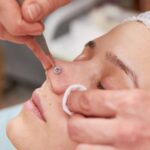
Similarly to a standard thread lift, a nose PDO thread lift involves threads or sutures being placed below the surface of the skin to help elevate your nose tip and bridge.
How long can a nose thread lift last?
The desired side effects of a nose thread lift will normally last between 1 to 2 years. If you are looking for even longer results, you can opt to have the treatment repeated 9 months after your initial thread lift procedure.
Because of the collagen stimulation that occurs in the nose following a suture lift, it is not unreasonable to expect that some results last permanently.

How to reduce swelling after a thread lift?
The best way to reduce the swelling, and bruising that occurs following a thread lift procedure on the face or nose is to use ice regularly on the treated area.
You should also use SPF30+ sunscreen. The pain will normally subside after two days, if it doesn’t, you may need to speak to the cosmetic surgeon who performed the procedure.
You also need to try and avoid exfoliating, rubbing or scrubbing your face, nose and the skin around it.
Is a thread face lift safe?
Generally speaking, compared to their surgical alternatives, thread lifting is not considered to be an especially high-risk procedure.
You also get the benefit of a reduced recovery time and the side effects normally consist of some swelling, bruising and redness around the treated areas.
Can thread lifts go wrong?
Although a thread lift is a minimally invasive and very low-risk procedure, there is a small chance that complications can occur, such as dimpling.
Generally, though, even the complications are not severe and can be corrected easily.
Common complications from a thread lift include:
- Infection around the area treatment site
- Threads feeling too tight or awkwardly place and causing pain below the surface of your skin
- Whether accidental or not, migration of the threads can result in unattractive bulges or lumps in your skin
- Visible pulling or dimpling around the area where threads are inserted
- Bleeding
- Allergic reactions
Infection is the risk that you need to be aware of the most, and you should contact your doctor immediately if you have any of the following symptoms:
- A fever
- Continuous headaches
- Swelling that lasts for longer than 48 hours
- Red, brown, black or green discharge around the procedure site
Can a thread lift be reversed?
Yes, it can be reversed, although this is not recommended. Speak to your surgeon about the possibility.
How much does a thread face lift cost?
As with any cosmetic procedure, whether it is surgical or non-surgical, the cost depends on where you are having the treatment. If you are having a PDO thread lift, you can expect to pay:
- For Cheeks – £600 to £700
- For Under the Chin or Under the Chin and Upper Neck – between £300 and £600
- For Under Lower Lip and both Above Upper Lip and Below Lower Lip – between £250 to £500
For PDO Cog Threads you can expect to pay:
- For a Face Lift – £1,250 or more
- Face and Neck Lift – £1,750 or more
- Neck Lift – £850 or more
- Jowl Lift – £850 or more
- Any Additional PDO Thread Cogs – £300 per thread
How much does a nose thread lift cost?
Again, as with all thread lifts, the cost is determined from patient to patient and is based on how many threads are required to get the desired results. You could expect to pay around £1,200 for a nose thread lift but it varies.
How much does a brow thread lift cost?
For brow thread lifts, it is best to speak to one of our team or better yet, book a consultation appointment, to find out how much it will cost.
The cost of thread lifts, whether its a silhouette soft or another from is performed, depends on the number of threads or sutures required to achieve the desired results.
If you are ready to discuss your thread lift treatment procedure, BOOK NOW for a consultation with a Linia Skin practictioner