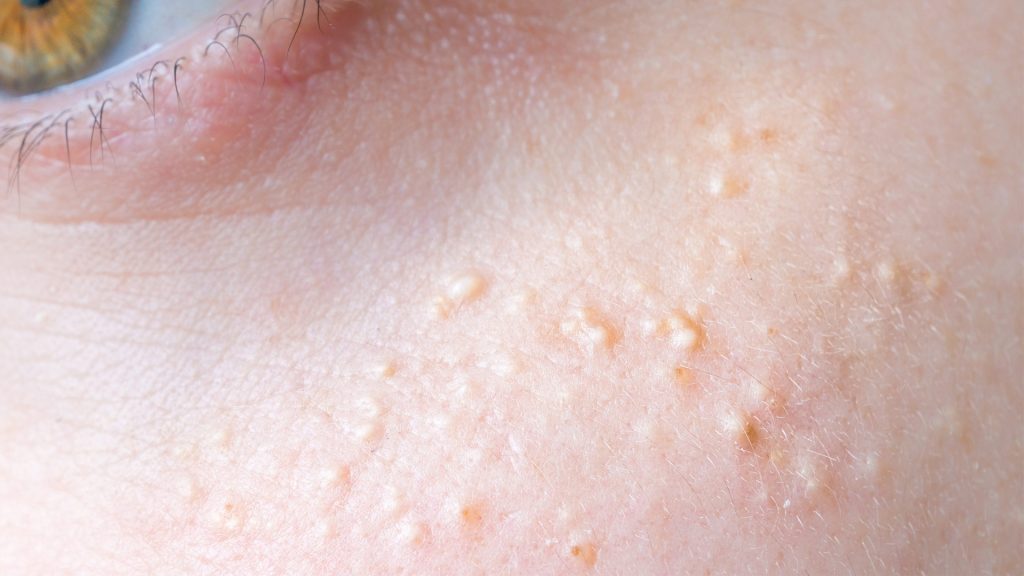
Milia are tiny, white bumps that develop on your skin, usually caused by keratin trapped just beneath the surface. They look like whiteheads but contain no pus and aren’t a sign of clogged pores — and while they’re perfectly harmless and often clear in time, there are plenty of effective ways to remove them. This guide covers what milia are, what causes them under the eyes, how to prevent them, and every treatment option from at-home care to professional removal.

What are milia?
Milia, also known as milk spots, are cysts or small spots that appear under the skin beneath your eyes. Often they are yellow or white, but some milia can be a similar colour to your skin.
Milia are not acne, even if they are easily mistaken for acne pimples and blemishes. Although they can be found on other parts of the body, they most commonly develop under and above your eyes, on your forehead, cheeks, and even genitals.
Milia are essentially small clusters of keratin that have got trapped under the skin. Keratin is a fibrous protein that provides your hair, nails, and skin cells with strength. As the body tries to remove dead skin cells shed through your pores, keratin often gets collected up and trapped inside the pore, forming little cysts.
Milia is the plural word, and one single lesion would be known as a milium.
Types of milia
Not all milia are the same. Dermatologists group them by cause and age of onset, which also guides how they’re treated.
Neonatal milia. Common in newborns and appearing on the nose, scalp, cheeks, and upper body. They are harmless and usually clear on their own within a few weeks.
Primary milia. Form directly from trapped keratin in children and adults. Found around the eyelids, cheeks, forehead, and genitals; they may clear over weeks to months.
Secondary (traumatic) milia. Develop where the skin has been damaged — after burns, blistering, cosmetic procedures, or long-term use of topical steroids.
Milia en plaque. A rarer type where many milia cluster on a raised, inflamed patch of skin. It can be triggered by cryotherapy and often needs professional treatment.
Multiple eruptive milia. Crops of milia that appear over weeks to months across the face, upper arms, and torso.
What causes milia under the eyes?
The main cause of milia under the eyes can vary from person to person. There is no single clear explanation for why some people develop them and others don’t — often it is simply a build-up of trapped keratin and dead skin cells with nothing in particular causing it.
Some people develop milia after an injury to the skin, such as a burn, rash, or blistering.
Milia can appear following cosmetic surgery or resurfacing treatments as the skin heals.
Milia have developed following a course of corticosteroids or other kinds of topical medication.
Often it is simply a build-up of trapped keratin and dead skin cells, with no specific trigger.
Common in infants and young children — around 40 to 50% of newborns experience milia — and also more common in older women.
Rich, occlusive eye creams and long-term sun damage can thicken skin and slow natural exfoliation, helping keratin become trapped.
Milia vs. whiteheads: how to tell them apart
Milia are frequently mistaken for whiteheads, but they are a different thing entirely — and the difference matters because they respond to different care.
- Firm, white or yellow keratin-filled cysts
- Sit deep under the skin with no opening or pore
- Contain no pus and are not caused by clogged pores
- Don’t respond to squeezing; need exfoliation or removal
- A form of acne caused by blocked pores
- Sit closer to the surface with a visible clogged opening
- Contain trapped sebum, dead skin, and bacteria
- Respond to typical acne treatments over time
How to prevent milia under the eyes
Before the treatments you can have to get rid of milia, it’s worth covering some preventative measures — after all, prevention is often more effective than treatment or cure.
Over-exfoliating can irritate the skin, but gentle exfoliation under the eyes helps new skin cells reach the surface and frees trapped keratin. Oil-free cleansers and soaps are a good choice if you develop milia easily. Always finish with a lightweight moisturiser that is kind to the skin under your eyes to replenish much-needed moisture.
Use a night serum containing vitamin E, or a topical eye cream with vitamin A that has been approved for use around the eyes. Over time the body becomes less effective at exfoliating dry skin naturally; serums lock moisture into the skin and encourage the growth of new skin cells while you sleep.
Getting your regular daily requirement of vitamins helps keep skin as healthy as it can be. If your diet isn’t as vitamin-enriched as it could be, consider supplements such as B-complex vitamins, vitamin B-3 (niacin), and vitamin E.
How to get rid of milia under the eyes
There are a lot of over-the-counter and at-home remedies for milia. However, if you want to remove these problematic milk spots without causing unnecessary damage to your skin or eyes, it is best to look to professionals for help. The most common professional options are:
Laser ablation
- How it worksA high-powered, completely safe laser removes the milia from underneath your eyes.
- Best forPrecise removal in the delicate under-eye area.
Manual extraction
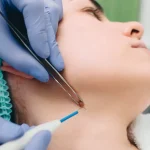
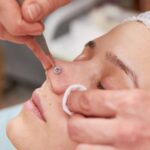
- How it worksA tiny sterile needle opens the clogged pore so the cyst can be lifted out.
- Best forIndividual, well-defined milia removed in a single visit.
Freezing
- How it worksLiquid nitrogen freezes the tiny bumps to destroy them.
- NoteCan occasionally trigger milia en plaque, where many milia develop in one area over a short period.
Even an outbreak of milia en plaque is harmless, but it can be irritating and counterintuitive to your goal of removing the spots in the first place — which is why technique and an experienced practitioner matter.
Can you remove milia at home safely?
While milia are harmless, removing them at home should be approached with caution. Unlike acne spots, milia sit deeper under the skin and have no opening, so squeezing or picking them rarely works and can easily damage the delicate skin around the eyes — potentially leading to irritation, infection, scarring, or post-inflammatory pigmentation.
Gentle practices that may help
- Low-strength alpha hydroxy acids (AHAs) to encourage cell turnover
- Retinoid-based products approved for the eye area
- A consistent, gentle cleansing and moisturising routine
- Letting harmless milia clear on their own over time
What to avoid
- Squeezing, picking, or trying to pop milia
- Piercing the skin with unsterile needles at home
- Strong exfoliation or harsh scrubs near the eyes
- Heavy, occlusive products that trap keratin
If milia persist or become bothersome, professional removal by a trained specialist is the safest and most effective option, as sterile tools and proper techniques minimise skin trauma and ensure precise extraction.
What to expect during professional removal
Professional milia removal is a quick, minor procedure, usually completed in a single appointment. Knowing the steps ahead of time makes it far less daunting:
Assessment
Removal
Recovery
Aftercare and recovery
Good aftercare keeps healing on track and reduces the small risk of marks after removal:
Do
- Keep the treated area clean and dry
- Apply any recommended ointment or eye-safe moisturiser
- Use SPF to protect healing skin from pigmentation
- Let any crusting heal naturally
Avoid
- Rubbing, scratching, or touching the area
- Heavy makeup over the site until it has healed
- Harsh actives or exfoliants for a few days
- Direct, unprotected sun exposure
When to see a dermatologist
FAQs about milia
Will milia go away on their own?
Often, yes. Milia are harmless and many clear over weeks to months as the skin naturally exfoliates. Persistent or bothersome milia can be removed professionally.
Can I pop or squeeze milia like a spot?
No. Milia have no opening and sit deep under the skin, so squeezing rarely works and can cause irritation, infection, or scarring — especially around the delicate eye area.
Are milia the same as whiteheads?
No. Whiteheads are a form of acne from clogged pores and contain trapped sebum and bacteria. Milia are keratin-filled cysts with no pus and no pore opening.
How long does professional milia removal take?
It’s usually a quick, minor procedure completed in a single appointment, with only brief redness afterwards.
Can milia be prevented?
You can lower the chances with gentle regular exfoliation, oil-free cleansers, a lightweight eye-safe moisturiser, night serums, and sun protection — though sometimes milia appear with no clear cause.
Do milia leave scars?
Left alone or removed professionally, milia don’t typically scar. Scarring risk comes mainly from picking or unsterile at-home extraction.
Conclusion
Although milia are nothing to worry about, if you want to get rid of these tiny cysts there are plenty of great options. Start by adopting a smart skincare routine, if you haven’t already, to stop breakouts before they become more developed.
Whether you opt for laser treatment, cryotherapy, chemical peels, or any other method to remove these tiny raised white bumps, the best option is to speak to a professional. At Linia Skin Clinic we offer a full range of professional treatments designed to get rid of primary milia and secondary milia — speak to one of our team today to find out more.