Have you ever wondered if there is a difference between eczema and dermatitis?
You could be forgiven for thinking they were the same thing as they are both generic terms that describe skin inflammations and skin conditions that result in dry and red rashes and patches of skin.
As many resources and even some experts refer to them as one or the other interchangeably, it causes a lot of confusion, which is why they are often mentioned together.
We’ve explained the differences between eczema vs psoriasis, but in the following post, we will discuss how similar different types of eczema are to dermatitis.

Are eczema and dermatitis the same thing?
While the terms eczema and dermatitis may be used interchangeably most of the time, there are specific skin conditions that are more often referred to one than the other.
For instance, doctors may refer to eczema and atopic dermatitis as the same thing, but wouldn’t with eczema and contact dermatitis.
The interesting thing is that rather than being the same thing, eczema is caused by atopic dermatitis.
It could be argued that although it is considered a condition, that eczema is a group of related skin diseases that can cause skin irritation and inflammation.
In addition to atopic dermatitis and resulting eczema, there are several other types of both dermatitis and eczema.
To help you understand the differences, we are going to look at them closely, one by one.
If you need help with dermatitis or eczema treatment, our friendly, experienced dermatologists at Linia Skin Clinic can help. BOOK A CONSULTATION today.
dermatitis herpetiformis vs eczema
One particular type of dermatitis that is often mistaken for eczema is dermatitis herpetiformis.
This condition will normally start with your skin feeling particularly itchy and will blister after you have drunk or eaten products containing gluten.
Also known as Duhring’s disease. Although it has similar symptoms and effects, as it only flares up when you consume gluten products, it is not eczema.
atopic dermatitis vs eczema
As we’ve already noted, atopic dermatitis is the most common type and cause of eczema. This condition normally first develops during infancy and childhood but can occur at any age.
People who suffer from skin barrier defects that allow germs in and moisture out, who have a family history of hay fever, asthma or eczema or themselves suffer from hay fever or asthma are also prone to develop atopic dermatitis.
With atopic dermatitis, the symptoms are normally experienced on the back of your knees, inner elbows, feet, hands, and face.

If you have not inherited the condition, it can also be caused by irritants like household cleaners, rough clothing and even soap.
While things that trigger allergies like dust mites and certain foods may also make atopic dermatitis symptoms worse.
seborrheic dermatitis vs eczema
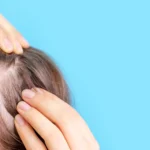
Seborrheic dermatitis may not sound familiar until you realise that’s the scientific name for dandruff.
This type of dermatitis, as you may know, causes the skin, primarily from your scalp, to drop off in flakes.
Generally speaking, when infants suffer from this condition, it affects just the scalp, but when adults suffer from it, they may experience the same symptoms and effects on the centre of their chest, groin, around their ears and nose and on their eyebrows.
It specifically affects areas, where hair grows and/or oils, are produced and secreted.
It is believed that the condition may develop as a result of too much of a form of yeast that lives in these areas, as well as continuous overgrowth and then rapid shedding of skin cells on your scalp.
dermatitis herpetiformis vs dyshidrotic eczema
Dyshidrotic eczema, also known as dyshidrosis is a type of skin condition that involves the development of blisters on the palms of the hands or soles of the feet.
These blisters tend to be very itchy and are often full of fluid.
There is a lot of uncertainty when it comes to the cause of this form of eczema (as with most eczema, there are still so many clinical trials being done to discover more), however, it is believed it could be related to stress or seasonal allergies.
atopic eczema vs contact dermatitis
Although these two forms of conditions seem very similar, there are important differences.
Atopic eczema is the same more or less as a condition like atopic dermatitis, and you are more likely to have that if you have any allergies or your family has a history of hay fever, asthma, or eczema.
Whereas allergic contact dermatitis is not connected to a reaction to allergic antibodies but is an immune-mediated skin rash that flairs up when you come into contact with some kind of chemical allergen.
contact dermatitis vs eczema
Contact Dermatitis is somewhat self-explanatory by nature as it develops when your skin comes into contact with something that causes a reaction. There are two forms of contact dermatitis –
- Allergic contact dermatitis
- Irritant contact dermatitis
Allergic contact dermatitis develops when the skin comes into contact with substances that can trigger allergies like poison ivy, certain cosmetics, and nickel to name a few.
Whereas irritant contact dermatitis can develop if you have been in contact with a strong irritant, either one time for a prolonged period or regularly.
dermatitis herpetiformis vs eczema herpeticum
It is not just conditions like dermatitis herpetiform that eczema herpeticum is confused with.
For example, because when it first develops there are visible small red-coloured spots, it is misdiagnosed as chickenpox often.
It’s easy to tell the difference though, as eczema herpeticum consists of multiple minuscule red-coloured spots close together whereas chickenpox only has larger red-coloured spots that are spaced further apart.
As it’s also mistaken for dermatitis herpetiformis, it’s worth noting that although they are similar, they differ in that one has rashes and flareups that are itchy, whereas the other has flareups that are very painful.
nummular eczema vs atopic dermatitis
Also referred to as nummular dermatitis and discoid eczema, nummular eczema involves the development of scattered and circular shaped itchy patches that often ooze fluid.
The name comes from the Latin for coin, as it is thought the spots resemble coins.
Although anyone can get it at any age, there are more cases in males than females.
While we are not completely sure what causes it, specialists have noted that sensitive or dry skin and trauma cause it, as does trauma to the skin from chemical burns, scrapes, and insect bites.
scalp eczema vs seborrheic dermatitis
As we mentioned earlier, you may have heard seborrheic dermatitis (dandruff) called scalp eczema too. These terms are interchangeable and largely mean the same thing.
Infantile seborrheic dermatitis vs eczema
Infantile seborrheic dermatitis, more commonly known as ‘Cradle cap’, is a scalp condition in young infants (as the name gives away).
This condition usually presents as thick and greasy scales on the scalp. These scales eventually become waxy and yellowy which causes them to stick to a baby’s head. The result will usually look like crusting.
In more severe conditions, the crusting can spread wider across the forehead, neck, behind your baby’s ears and the temples.
Though this looks painful, it generally isn’t an issue for the baby’s comfort.
Treatment usually consists of mild, unperfumed shampoo and brushing with a very soft brush to slowly remove the scales. A gentle massage may also help but never pick or force the scales out. This may cause infection.
This should outline the differences between infantile seborrheic dermatitis vs generalised eczema.
Final Thoughts and Summary
Eczema and dermatitis are often interchangeably used to describe the same conditions and specific types will require differing treatments.
If you’re unsure or need help treating your stubborn dermatitis or eczema BOOK A CONSULTATION today with our friendly, experienced dermatologists at Linia Skin Clinic