There’s something quietly personal about a makeup routine. For many people, it’s not vanity, it’s armour. A tinted moisturiser before a long day, a concealer dabbed over an angry spot before a meeting, a light powder to even out the redness that never quite fades. Makeup is often part of how we negotiate a relationship with skin we don’t always feel at peace with.
So the question that follows “Is my makeup making my acne worse?” carries real emotional weight. It’s not just a skincare question. It’s a question about whether the very thing helping you feel confident is quietly working against your skin.
The honest, evidence-based answer is nuanced. Makeup doesn’t automatically cause acne. But certain products, habits, and formulas absolutely can trigger and worsen breakouts, particularly in skin that’s already acne-prone. Understanding the difference is the first step to a smarter, gentler approach.
This guide will walk you through everything you need to know: the science behind makeup-related breakouts, the ingredients to seek out and avoid, the daily habits that make the biggest difference, and how to genuinely enjoy makeup without compromising your skin’s health.

The Relationship Between Makeup and Acne: What the Evidence Actually Shows
Acne vulgaris, the clinical name for the common skin condition affecting an estimated 85% of people at some point in their lives, is driven by a combination of excess sebum production, the bacterium Cutibacterium acnes, follicular hyperkeratinisation (blocked pores), and inflammatory responses beneath the skin’s surface.
Makeup does not cause this underlying process. Hormones, genetics, diet, stress, and the microbiome all play far more significant roles in why acne develops in the first place.
What makeup can do is exacerbate existing acne-prone skin. The term dermatologists use for this is acne cosmetica, a form of low-grade, persistent comedonal acne (typically small, non-inflamed bumps and clogged pores) that appears in areas where cosmetic products are regularly applied. It was first described in clinical literature in the 1970s, and while formulations have improved considerably since then, the underlying mechanism remains the same: certain ingredients and habits create conditions in which pores block more easily, bacteria thrive, and inflammation is prolonged.
The key point is this: the problem is rarely makeup itself. It’s the wrong makeup, applied the wrong way, removed incompletely.
Why Some Makeup Triggers Breakouts: The Main Mechanisms
Comedogenic Ingredients
“Comedogenic” means pore-clogging. The term comes from comedo, the medical name for a blocked pore, which is the earliest visible stage of an acne lesion.
Not all comedogenic ingredients are equally problematic, and comedogenicity is not always listed on packaging. However, some ingredients have a particularly poor track record in acne-prone skin. These include:
- Coconut oil: one of the most comedogenic ingredients in cosmetics, despite its widespread use in “natural” beauty products.
- Isopropyl myristate and isopropyl palmitate: synthetic emollients found in many foundations and primers, known to block pores.
- Lanolin: a rich emollient derived from sheep’s wool; valuable in dry skin but problematic for acne-prone skin.
- Cocoa butter and shea butter: both are heavy occlusive agents that can trap oil and debris in pores.
- Certain algae derivatives: occasionally found in “natural” formulations; some have high comedogenic potential.
- Heavy silicones used in thick pore-filling primers: silicones such as dimethicone in low concentrations are generally well tolerated, but in thick, layered primers they can form an occlusive film that prevents the skin from functioning normally.
It is worth noting that comedogenicity ratings, the 0 to 5 scale sometimes referenced online, were largely established through rabbit ear testing, which does not always translate directly to human skin responses. The ratings are useful as a guide, yet individual skin response matters more than any single number.
Bacterial Contamination from Makeup Tools
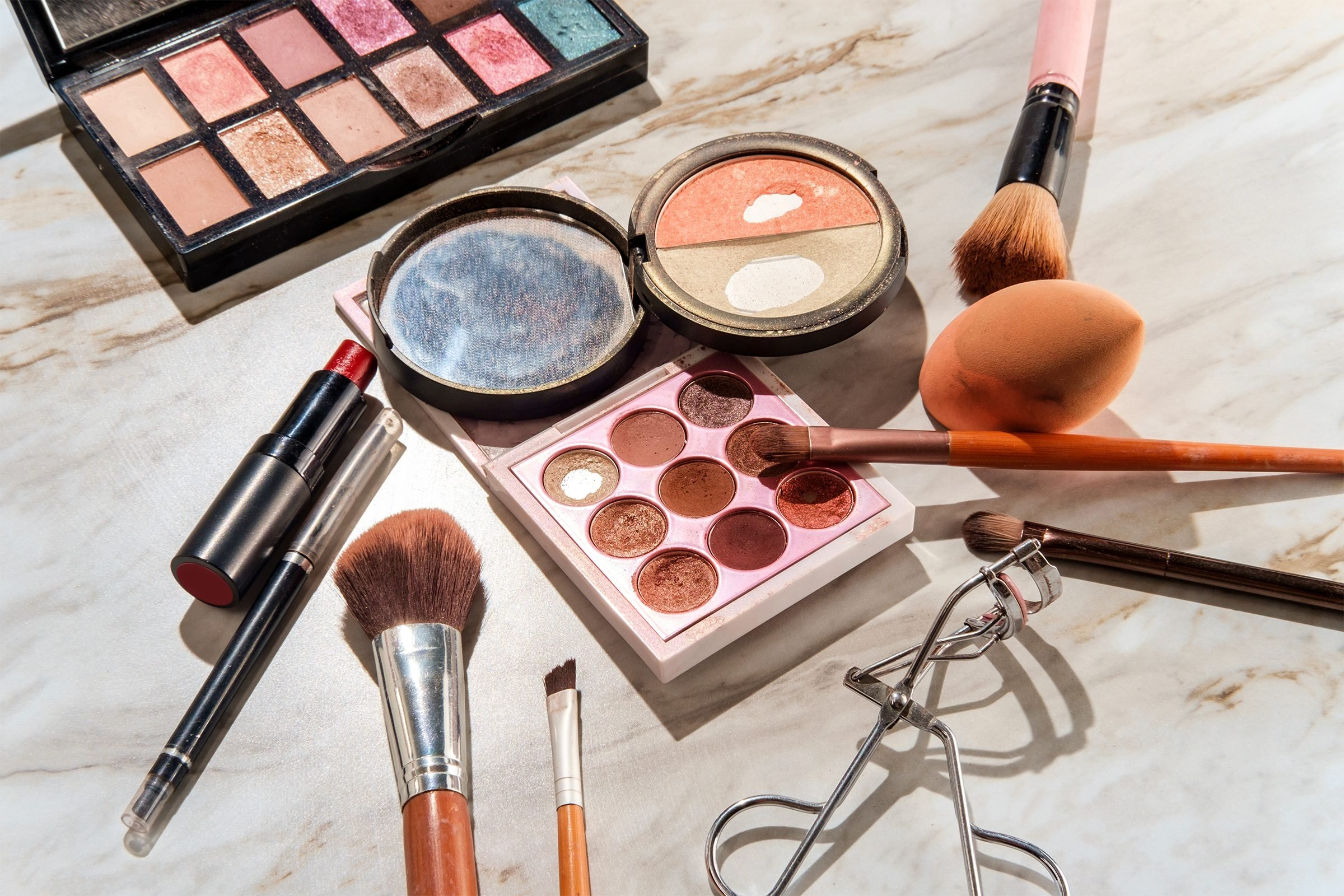
Makeup brushes, sponges, beauty blenders, and even the tips of foundation bottles accumulate a significant amount of material with every use: residual product, skin oils, dead skin cells, environmental debris, and bacteria. Studies have detected bacteria on the surface of used cosmetic applicators, including Staphylococcus species, the same group that plays a role in inflammatory acne lesions.
When you use these tools on acne-prone skin, you are effectively pressing that bacterial load back onto the skin with each application. If you have noticed breakouts that follow the contours of a brush stroke or appear precisely in the areas touched by a sponge, contaminated tools may be contributing.
This is one of the most under-recognised causes of makeup-related breakouts, largely because it is invisible and accumulates gradually.
Occlusion: When Skin Cannot Regulate Itself Properly
Skin is a dynamic, active organ, not simply a surface to be covered. It continuously sheds dead cells, releases sebum, regulates temperature through perspiration, and carries out repair processes, most of which occur overnight.
When heavy, occlusive layers of makeup sit on the skin for extended periods, they interfere with these processes. Sweat and sebum become trapped beneath the product layer. Dead skin cells that should shed normally become entangled with the product. Heat, particularly during exercise or warm weather, intensifies this occlusion.
The result is an environment in which pore blockages form more readily, and Cutibacterium acnes, which thrives in the anaerobic (oxygen-free) environment of a blocked follicle, can proliferate.
This is not a reason to avoid all coverage; it is a reason to use lightweight, breathable formulas and to be especially cautious when wearing heavy makeup for long hours, exercising whilst wearing a full face, or sleeping in product.
Incomplete Makeup Removal
Arguably the most clinically significant makeup-related cause of breakouts.
Leaving makeup on overnight or removing it incompletely allows a film of product, sebum, sunscreen residue, environmental pollutants, and bacteria to remain on the skin during the hours when it would otherwise be repairing itself. Studies in sleep medicine and dermatology have demonstrated that skin undergoes significant cellular regeneration overnight, a process disrupted by the presence of residual makeup.
A single night of sleeping in makeup will not destroy your skin. However, a pattern of incomplete removal, such as relying on a single wipe, using a cleanser that doesn’t fully dissolve product, or skipping cleansing altogether on tired evenings, has a cumulative effect on pore health and skin clarity.
A Compromised Skin Barrier
The skin barrier, technically the stratum corneum and its associated lipid matrix, is the outermost layer of the epidermis. When intact, it keeps moisture in, keeps irritants and bacteria out, and maintains the slightly acidic pH, around 4.5 to 5.5, that skin requires to function well.
Acne-prone skin often has a measurably more permeable barrier than non-acne skin. Active acne lesions disrupt the barrier further. Aggressive spot treatments, over-exfoliation, harsh cleansers, and poorly tolerated topical actives all compromise it additionally.
When the barrier is already fragile, makeup behaves differently on the skin. Products that were previously tolerated well may begin to cause irritation. Pores that would otherwise cope with a foundation may become sensitised. What looks like makeup-triggered acne may actually be irritant contact dermatitis sitting on top of existing acne, a distinction that matters when it comes to treatment.
Barrier repair is frequently the most effective first step when a patient reports that “everything is breaking me out.”
Recognising Acne Cosmetica
Acne cosmetica has a distinctive clinical presentation that is worth knowing because it can be confused with inflammatory hormonal acne and treated incorrectly as a result. Its characteristic features are:
- Small, closed comedones (whiteheads) rather than large, inflamed cysts.
- Distribution that mirrors product application, typically across the cheeks, forehead, chin, and sometimes the neck or décolletage if products migrate there.
- Persistence rather than cyclical flaring. Unlike hormonal acne, which often worsens in predictable patterns around the menstrual cycle, acne cosmetica tends to be steady and low-grade.
- Gradual onset, usually developing over weeks to months of product use rather than appearing acutely.
- Improvement when the causative product is removed, though this can take four to six weeks to become apparent as the comedo cycle runs its course.
If this pattern sounds familiar, the diagnostic step is an elimination approach: systematically removing or replacing products to identify the offending formula.
How to Wear Makeup with Acne-Prone Skin: A Clinical Perspective
None of the above means you should stop wearing makeup. It means you should be strategic about it. Here is what we recommend to clients at our clinic.
Step 1: Audit Your Current Products
Begin with the formulas you use most frequently, foundation, primer, and concealer, and search each one’s ingredient list on a resource such as CosDNA or the INCI Decoder. Look specifically for the high-risk comedogenic ingredients listed above.
This exercise is often revealing. A foundation that describes itself as “nourishing” or “skin-perfecting” may contain coconut oil or shea butter as prominent ingredients. A “blurring” primer may rely heavily on isopropyl palmitate or thick silicones to create that soft-focus effect.
You do not necessarily need to replace everything immediately. Identify the products with the highest comedogenic risk and start there.
Step 2: Understand What “Non-Comedogenic” Actually Means
“Non-comedogenic” is a marketing claim, not a regulated certification. There is no standardised legal definition, no official testing protocol required to use the term, and no regulatory body that verifies it. A product can be labelled non-comedogenic and still contain ingredients that trigger breakouts in sensitive skin.
That said, non-comedogenic labelling does indicate that the formulator has considered pore safety, and it remains a useful first filter when choosing products. It simply should not be taken as a guarantee.
Look beyond the label. Prioritise formulas with:
- Zinc oxide: a mineral UV filter and anti-inflammatory agent, excellent for acne-prone skin and the active ingredient in many dermatologically recommended mineral foundations.
- Niacinamide: a form of vitamin B3 that reduces sebum production, supports barrier function, and has demonstrated anti-inflammatory properties in clinical trials.
- Hyaluronic acid: a humectant that provides hydration without adding oil, widely well tolerated in acne-prone skin.
- Squalane: a lightweight, non-comedogenic emollient derived from sugarcane or olive, compatible with most skin types including acne-prone.
- Ceramides: lipid molecules that reinforce the skin barrier, particularly valuable in formulas for compromised or sensitised acne skin.
- Silica: an absorbent mineral ingredient commonly found in mineral powders, helps manage shine without clogging pores.
Step 3: Simplify Your Base Routine
More layers do not equal more coverage. They equal more occlusion, more product weight on the skin, and a greater likelihood of pore congestion.
A disciplined approach to base makeup serves acne-prone skin far better than a maximalist one.. Consider:
- A lightweight tinted moisturiser or skin tint with SPF as an everyday base, reserving fuller coverage for occasions that genuinely require it.
- Spot concealing over active breakouts rather than attempting full coverage with a heavy foundation.
- Allowing each product layer, moisturiser, SPF, and foundation, to settle fully before applying the next. Rushing the application process leads to over-application.
- Avoiding thick, pore-filling silicone primers if you are using prescription actives such as tretinoin or adapalene, as occlusive primers can work against the mechanism of these treatments.
Step 4: Clean Your Tools More Often Than Feels Necessary
A practical schedule that works for most acne-prone skin:
- Sponges and beauty blenders: after every single use.
- Brushes used with liquid or cream products, such as foundation or concealer brushes: every two to three uses.
- Brushes used with powder products, such as blush, bronzer, or setting powder brushes: weekly.
Use a dedicated brush cleanser or unscented gentle soap. Allow tools to dry horizontally or bristle-downwards. Drying upright allows water to pool in the ferrule and degrade the glue, and wet bristles pressed upright remain damp for longer, allowing bacteria to proliferate.
A small note on sponges specifically: beauty blenders used for liquid foundation can harbour bacteria in their interior, not just on the surface. If you are using a sponge daily with full-coverage foundation, replacing it monthly is reasonable practice for acne-prone skin.
Adequate hydration of dry skin is equally crucial, as it helps maintain skin’s elasticity and overall well-being.

Step 5: Double Cleanse Every Evening Without Exception
Double cleansing, using an oil-based or micellar first cleanser followed by a water-based second cleanser, is the clinical standard for complete makeup removal and represents one of the highest-impact changes any makeup-wearing person with acne-prone skin can make.
The logic is straightforward. Most foundations, primers, and concealers are formulated to be long-wearing and water-resistant. A water-based cleanser alone struggles to fully dissolve these formulas, particularly around the hairline, jawline, and the creases of the nose, precisely the areas where product migrates and sits throughout the day.
The first cleanse dissolves makeup, SPF, and surface sebum.
The second cleanse actually cleanses the skin itself.
Skipping the first cleanse does not make your second cleanser redundant, it makes it ineffective on the things that matter most.
First-cleanse options appropriate for acne-prone skin include lightweight cleansing oils, those without coconut oil or heavy butters, micellar waters, and oil-to-milk emulsifying formulas. Avoid heavy cold-cream style cleansers as your first step if your skin is particularly congested.
Step 6: Patch Test New Products
Before applying a new foundation or primer all over the face, patch test it on a small area. The inner jawline is a practical location for this. Apply the product to the same spot for three to five days and observe. This will not catch every possible reaction, as some comedones take weeks to form, but it will identify acute sensitivities and obvious reactions before you commit the entire face.
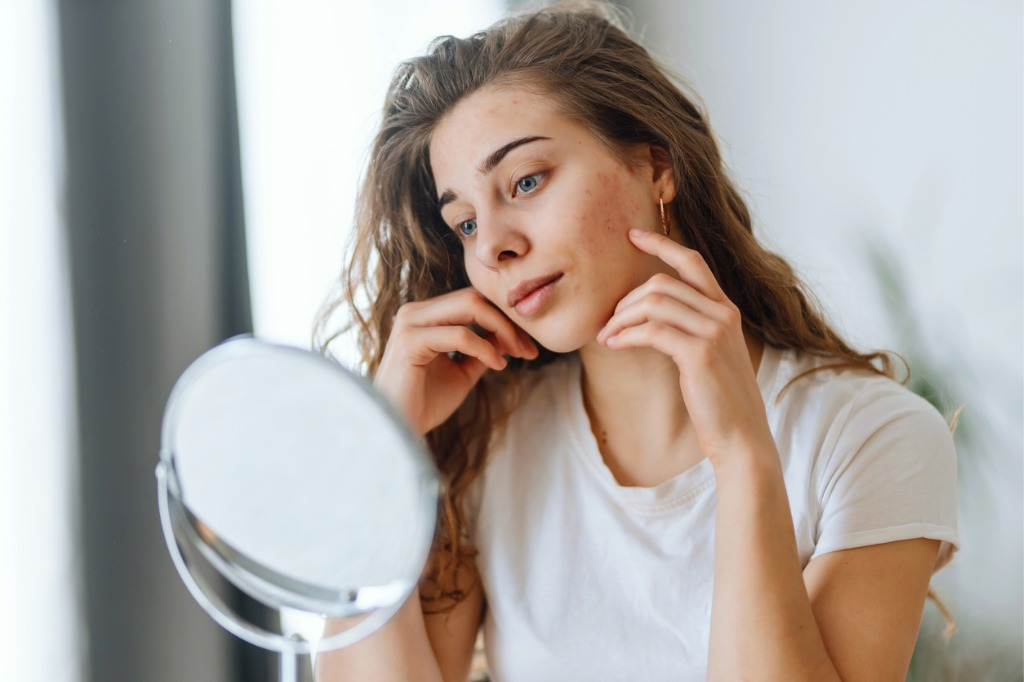
Common Mistakes That Perpetuate Makeup-Related Breakouts
The following habits are frequently encountered in clinic and are worth examining honestly:
Using expired products. Cosmetics have a PAO (Period After Opening) date stamped on the packaging — the small jar icon with a number (e.g. “12M” = 12 months after opening). Foundations and concealers used beyond this date have degraded preservative systems and can harbour significantly higher bacterial loads. Many people use products for far longer than the PAO recommends.
Using a single makeup wipe as your only evening cleanse. Makeup remover wipes, regardless of how saturated they are, do not cleanse skin. They redistribute product across the skin’s surface and leave significant residue. Used as a substitute for proper cleansing, they are one of the most common contributors to persistent comedonal breakouts we encounter.
Applying foundation directly after moisturiser without waiting. Applying makeup over incompletely absorbed moisturiser traps the moisturiser beneath the product, increases the total occlusion on the skin, and often causes foundation to pill or apply unevenly — prompting additional layers.
Reapplying powder throughout the day. Each reapplication adds another layer of product onto existing product, increasing the total occlusive burden. If shine management is a concern, blotting paper is a better midday intervention than powder top-ups.
Wearing heavy coverage during exercise. Physical exertion significantly increases sebum production and perspiration. Heavy makeup worn during exercise is particularly prone to migrating into pores under these conditions. If possible, exercise without makeup or with minimal coverage only, and cleanse promptly afterwards.
Sharing products with others. Particularly relevant for concealers, lip products, and any product applied with fingers or shared applicators. Sharing cosmetics transfers bacteria between users — a significant consideration in acne-prone skin.
Product Category Guide: What to Look For and What to Avoid
Foundations and Base Products
Better choices:
- Mineral powder foundations containing zinc oxide and silica
- Lightweight gel-based or serum foundations
- Tinted moisturisers and skin tints
- Products specifically formulated for acne-prone or post-procedure skin
Approach with caution:
- Full-coverage stick foundations (often contain heavy waxes and butters)
- Illuminating or “glow” foundations with high oil content
- Cream-based compact foundations
Primers
Better choices:
- Hydrating, gel-texture primers
- Primers containing niacinamide or hyaluronic acid
- Light-texture smoothing primers with minimal silicone content
Approach with caution:
- Thick pore-filling primers designed to blur texture — these typically contain high concentrations of dimethicone and cyclopentasiloxane, which in dense layers can trap sebum and impede cellular turnover
Concealers
Better choices:
- Liquid concealers with buildable coverage
- Formulas containing niacinamide or zinc — these have the added benefit of mild anti-inflammatory and antimicrobial properties
- Application technique matters: dab, do not smear
Approach with caution:
- Dense, full-coverage cream concealers applied across large areas of the face
- Applying concealer directly to an open, weeping, or recently extracted spot
Setting Powders and Sprays
Better choices:
- Translucent mineral setting powders used sparingly
- Lightweight setting sprays
Approach with caution:
- “Baking” (the technique of applying a thick layer of powder and allowing it to sit) — this creates a particularly occlusive layer and is not appropriate for acne-prone skin as a regular practice
- Mattifying sprays with high alcohol content, which can disrupt the skin barrier if used frequently

When to Seek Professional Advice
If you are experiencing persistent breakouts that you suspect are related to your makeup, or if your acne is not improving despite changes to your routine, a consultation with a skin specialist is advisable.
At a clinic assessment, a clinician can:
- Perform a thorough analysis of your skin barrier status and sebum levels.
- Help you identify the likely category of acne you are experiencing, such as hormonal, comedonal, inflammatory, or mixed.
- Review your existing product list and flag potential concerns.
- Recommend prescription-grade topical treatments where appropriate.
- Advise on professional treatments, including chemical peels, LED therapy, or targeted facials, that can support clearer skin alongside a revised home routine.
It is also worth noting that if you are using prescription actives, such as tretinoin, adapalene, benzoyl peroxide, or topical antibiotics, your choice of makeup products may need to be reviewed in that context. Some formulas interact poorly with active ingredient regimes, either by interfering with their mechanism or by increasing skin sensitivity.
The Broader Picture: Makeup as Part of a Skin Health Strategy
The most useful shift in thinking is this: rather than viewing makeup as the enemy of clear skin, view it as one component of a complete skin health strategy that either supports or undermines your skin depending on the choices you make.
Skin that is well supported, through an appropriate cleansing routine, targeted treatment, barrier care, hydration, and protection, tolerates makeup well even in acne-prone presentations. Skin that is over-burdened, under-cleansed, or barrier-compromised will find even gentle formulas challenging.
The goal is not to wear less makeup. The goal is to wear the right makeup, in the right way, and to give your skin what it needs to cope with it.
If you would like to discuss your skin’s specific needs, or if you are uncertain which products in your current routine may be contributing to breakouts, we welcome you to book a consultation with our clinical team. We will take the time to understand your skin’s history, assess its current condition, and offer recommendations tailored precisely to you, not a generic list of “safe” products.
Your skin is individual. Your routine should be too.