A mole on the face is the one mole you see every time you look in a mirror. Most facial moles are benign, and most can be removed with a very small mark, because the face heals better than almost anywhere else on the body. But the face is also where sun damage collects, and not every brown mark on it is a harmless mole. This guide explains how removal methods compare on scarring and regrowth, what recovery looks like, and which marks need checking first.
What a facial mole actually is
A mole, or melanocytic naevus, is a small cluster of the pigment cells called melanocytes. A mole usually starts as a flat brown spot, and over the years its cells move deeper, so it rises above the surface and often loses colour.
By middle age, many facial moles have become intradermal naevi: soft, dome shaped, skin coloured or light brown bumps, sometimes with a few hairs. Part of the mole sits above the skin and part extends into the dermis below, which is why the removal technique matters.
“Harmless moles are not usually treated on the NHS.”
NHS. Moles. National Health Service, United Kingdom
The six spots people call a facial mole
Several common facial spots look like moles but are treated differently.
Soft, dome shaped, skin coloured to light brown and present for years. The classic raised facial mole.
An even, flat brown mole with a regular edge that has not yet risen.
A waxy, stuck on looking spot, common from middle age. Not a mole but a benign surface growth.
A soft flap of skin on a narrow stalk, often around the eyelids. See our guide to skin tags and moles.
A small yellowish bump with a central dip. An enlarged oil gland.
A pearly bump with fine blood vessels, a sore that will not heal, or a spreading, uneven brown patch. These are diagnosed and treated, not removed cosmetically.
Does a facial mole need removing?
A benign mole never has to come out. The usual reasons for removal are:
- Appearance. A raised mole in a prominent place can affect confidence, especially in photographs.
- Irritation. Moles in the beard area are cut by razors, and those on the nose are pressed by glasses.
- Reassurance. A mole that has changed, or that worries you, is removed so it can be examined under the microscope.
In every case the mole should be examined first, so that a skin cancer is not treated as a cosmetic blemish. Our page on when to get a mole removed covers the decision in more detail.
Facial mole removal options compared
Watch and manage
- ObservationReasonable for a stable, benign looking mole.
- PhotographsThe simplest way to notice a change in size, shape or colour.
- Trim, do not pluckHairs in a mole can be trimmed close to the skin.
Removal
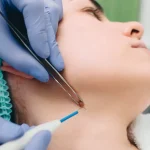
- Shave excisionRaised mole shaved flush with the skin. No stitches, smallest mark, higher regrowth.
- Elliptical excisionMole and root cut out and stitched. Line scar, lowest regrowth.
- Punch excisionA small round cut for small moles, closed with a stitch or two.
Scar refinement
- Skin line placementIncisions follow the natural creases of the face.
- Fine suturesRemoved early on the face to avoid suture marks.
- LaserFor leftover redness or pigment once a benign diagnosis is confirmed.
The trade off has been tested directly. In a randomised clinical trial, 18 patients had intradermal facial moles removed either by shaving or by elliptical excision with stitches, and were followed for six months:
| Measure | Shave excision | Elliptical excision with stitches |
|---|---|---|
| Mean scar size at six months | 2.92 mm | 8.11 mm |
| Patient satisfaction (out of 10) | 9.57 | 9.67 |
| Doctors’ rating of the result | Similar for both methods | |
| Mole grew back | 28.6% | Lower |
In a larger survey of 83 shaved facial moles, 28% had regrown at 12 months (41% of hairy moles), yet most patients were satisfied and over half reported no visible scar or a flat white one.
In practice, shaving suits a raised, clearly benign mole where the smallest mark matters most, while excision suits a flat, hairy or regrown mole, or any mole where a complete specimen is needed. Laser alone destroys the mole and leaves no tissue to examine, so it is reserved for marks confidently diagnosed as benign. Our guide to the best way to remove a mole compares the techniques further.
What happens on the day
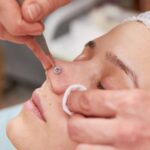
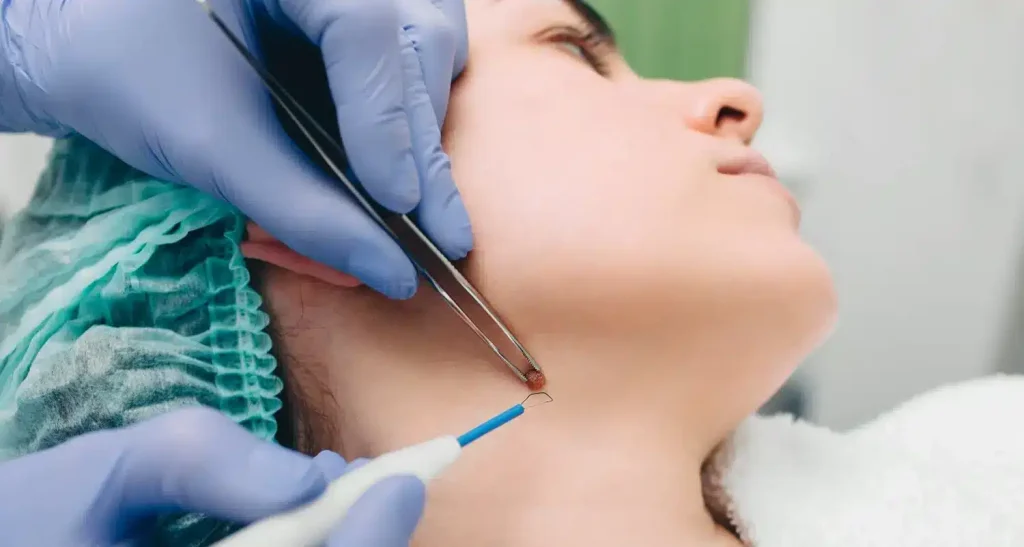
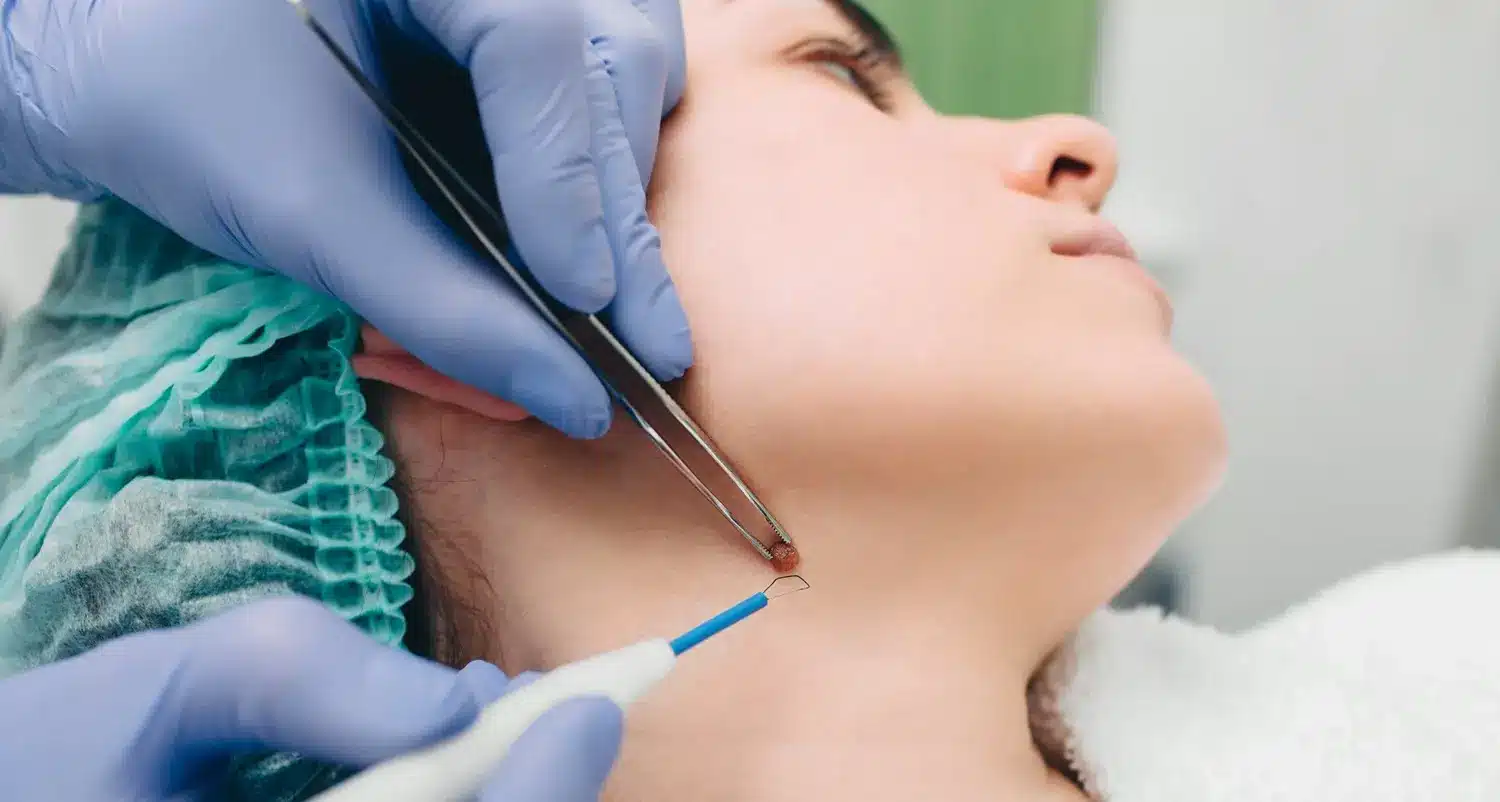
Facial mole removal is a same day procedure under local anaesthetic. The removal usually takes 20 to 30 minutes, and most people go straight back to work.
Assessment
The procedure
Immediate care
Recovery and scarring on the face
The face has a rich blood supply, so wounds heal quickly and finely. A shave wound forms a thin crust and heals within one to two weeks, leaving a pink mark that fades over the following months. An excision leaves a fine line that starts red and becomes pale and flat over several months. Our articles on whether mole removal leaves a scar and the healing timeline go into more detail.
Do
- Keep the dressing clean and dry for 24 to 48 hours
- Return for suture removal at 5 to 7 days if you had stitches
- Use high factor sunscreen on the area daily for at least three months
- Tell us early if the scar becomes raised, itchy or darker
Avoid
- Make up on the wound until it has fully closed
- Shaving directly over the area for the first week
- Swimming, saunas and steam rooms for two weeks
- Picking at the crust or stitches
Sun protection makes the biggest difference, because a new scar exposed to sunlight can darken permanently. The main risks of removal are infection, bleeding, a depressed or raised scar, and regrowth. A regrown mole is not more dangerous, but it should be checked, and an excision usually removes it for good. See whether moles come back after removal.
The flat brown patch in older skin is a different problem
A flat, irregular, slowly spreading brown patch on the cheek, nose or temple, especially in someone over sixty with a history of sun exposure, can be lentigo maligna, an early form of melanoma that stays in the outer layer of the skin for a long time before it invades.
“If left untreated, LM will progress to lentigo maligna melanoma (LMM), a form of invasive melanoma with the same prognosis as other forms of invasive melanoma.”
Naik PP. Diagnosis and Management of Lentigo Maligna. Journal of Skin Cancer, 2021
It is often mistaken for an age spot, and it is treated by complete removal with a margin of healthy skin, not by shaving, freezing or laser. Our skin cancer page explains the assessment.
Red flags: when a facial mole needs more than removal
NICE guidance on suspected melanoma treats a change in size, shape or colour as the major warning signs. Ask for an assessment before any removal if a mole or mark on your face:
- has changed in size, shape or colour
- has an uneven edge or more than two colours
- is itchy, painful, crusty or bleeding without being injured
- is new in adult life and looks different from your other moles
- is a flat brown patch that is slowly spreading
- is a shiny or pearly bump, or a sore that has not healed in a few weeks
See our moles and mole and skin lesions pages, our mole checking guide and our mole removal treatment page.
FAQs
Can I have a mole removed from my face on the NHS?
Usually not. The NHS states that harmless moles are not usually treated, so removing a benign facial mole for appearance is normally done privately. A mole suspected to be cancerous is assessed and treated through the NHS.
Is shaving or cutting out a facial mole better?
Shaving leaves a smaller mark and needs no stitches, but around 28% of shaved facial moles grow back. Excision leaves a line scar but removes the root, so regrowth is less likely. Raised, benign moles often suit shaving, while flat, hairy or regrown moles suit excision.
Does facial mole removal hurt?
The local anaesthetic injection stings for a few seconds, after which the area is numb. Most people need nothing stronger than paracetamol afterwards, if anything.
Is a flat brown patch on my face a mole?
Often it is a sun spot or a flat mole, but in older adults a flat, irregular brown patch that is slowly spreading can be lentigo maligna, an early form of melanoma. It should be examined by a dermatologist before any cosmetic treatment.
Sources
- NHS. Moles. National Health Service, United Kingdom.
- Soares AS, Manzoni APD, Souza CDA, Weber MB, Watanabe T, Camini L. Comparative analysis between sutured elliptical excision and shaving of intradermal melanocytic nevi: a randomized clinical trial. Surgical & Cosmetic Dermatology, 2016;8(4), pages 316 to 320.
- Bong JL, Perkins W. Shave excision of benign facial melanocytic naevi: a patient’s satisfaction survey. Dermatologic Surgery, 2003;29(3), pages 227 to 229.
- Naik PP. Diagnosis and Management of Lentigo Maligna: Clinical Presentation and Comprehensive Review. Journal of Skin Cancer, 2021, article 7178305.
- National Institute for Health and Care Excellence. Suspected cancer: recognition and referral (NG12).
This article is for information only and does not replace an assessment in person. If you have a mole on your face that has changed, is bleeding or that you are worried about, please see a clinician.