
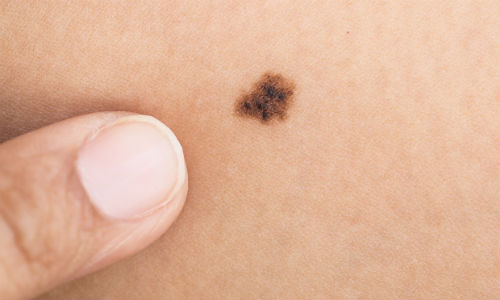
Moles are very common, according to the Consulting Room, the average adult has over 30! Moles can run in the family and are present from birth or you can develop them before you are 30 years old.
It is estimated that between 1 and 3% of babies have at least one mole when they are born, these kinds of moles are called congenital nevi.
So, if you have a mole or you think you have one, what should you look for and what should you do about it?
How do I check my moles?
Firstly, we recommend getting it checked. Although most moles don’t pose a threat, it’s important that Melanoma, a skin cancer, is ruled out.
Get your moles checked out by our professional and friendly dermatologists here
You should check your skin regularly every month or so, keeping an eye on your existing moles and noticing whether they change shape, size or colour.
If you suspect your mole has changed shape or a mole has appeared where there wasn’t one before, visit your GP surgery or our private GP Service to get it checked out.
The NHS share a handy way to remember what you’re checking for when it comes to moles:
A helpful way to remember what to look for is to use the NHS’s ABCDE method. Simply remember the below when checking your skin:
- A – asymmetry
- B – border irregularity
- C – colour change
- D – diameter
- E – elevated (raised) or enlarged
Other things that are important to look for when checking moles that could indicate you have mole cancer include:
- Crusting
- Bleeding
- Itching
If any of your moles start bleeding and haven’t suffered any injuries around the area, then you should have it checked out by a professional as soon as possible.
If you have any worries about your moles, the best way to stay on top of whether or not they are a problem is by becoming more familiar with your skin.
There are also a number of things you need to keep in mind when looking at your moles:
- Make sure you are standing in a room that is well lit
- Use both a hand mirror and a full-length mirror so that you can check the whole of your body
- Remember to look at the harder to see and reach places such as your scalp, buttocks and back. If you are married or live with a partner or a trusted roommate/friend, you could ask them to help you check those places.
- Look at the places that are less obvious too, such as the soles of your feet, in-between your toes and fingers and under your arms and in the armpits
What shall I do if I find a new mole?
Firstly, we recommend getting it checked. Although most moles don’t pose a threat, it’s important that Melanoma, a skin cancer, is ruled out.
How often should you get moles checked?
You should check your skin regularly every month or so, keeping an eye on your existing moles and noticing whether they change shape, size or colour.
If you suspect your mole has changed shape or a mole has appeared where there wasn’t one before, visit your GP surgery to get it checked out.
How much is a mole check?
If you are willing to wait for an appointment, you don’t need to actually pay anything to have your mole checked through the NHS.
Your doctor will be able to take a look at it and if they don’t like the look of it, they may recommend you to a hospital for tests and more information with a skin expert.
However, if you don’t want to wait on a list and don’t mind paying, you can book a private consultation with a qualified dermatologist here at Linia Skin Clinic, for a mole check in London.
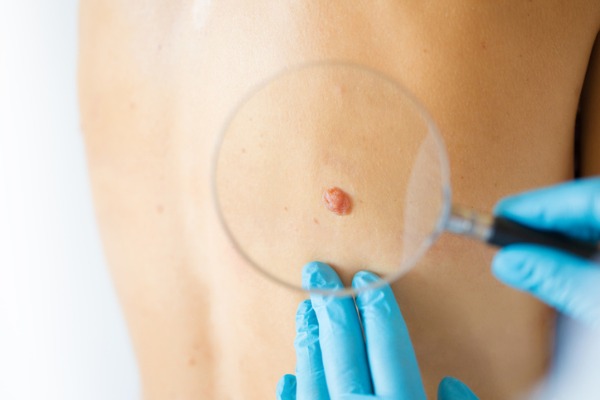
The price to check your moles will involve the standard charge for a consultation dermatology consultation appointment at £150, to begin with.
If our doctor has any reason to believe you are at risk of cancer in a mole, they will arrange for a full body mole check and are likely to arrange for you to have a Diagnostic Biopsy at £150 per mole or lesion.
In total, therefore, it could cost as much as £300. But, having your mole checked sooner than later could make all the difference between stopping any skin cancer or improving your overall health.
At the very least, it will help you feel a lot less worried if the tests come back negative and you have no skin cancers.
How to reduce the risk of developing Melanoma
There are many ways you can reduce the risk of developing Melanoma skin cancer. We’ve listed a few of the most simplistic ways below.
Become familiar with your skin
If you become familiar with what is normal for your skin, you’re more likely to notice any changes to your existing moles or when you develop new moles.
It’s a good idea to give yourself a regular once-over to see if you spot any changes in existing moles or find new ones. Alternatively, book an appointment with a professional if you’re worried
Stay away from tanning beds
Tanning beds and lamps emit UV rays, this exposure is unhealthy for your skin and can increase the risk of developing skin cancer.
Be sun-wise
In the summer months, it’s important you stay out of the hottest part of the day, which is usually between 11 am and 3 pm. This is when the Sun’s UV rays are strongest.
It’s also important you realise that regardless of season, your skin is still exposed to UV rays throughout the year. To help protect the skin, you can wear sunscreen all year round – although this won’t protect you against all the Sun’s UV rays.
Getting your mole removed
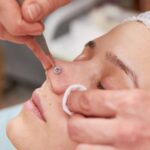
The majority of moles are completely harmless – but they can be unsightly and knock the confidence of those who have them. That’s why here at Linia we provide a mole removal treatment in London.
Before you book the mole removal treatment, you will first require a consultation where we can thoroughly examine the mole.
We offer two kinds of mole treatment here at our London clinic.
Shaving
This procedure will only take around 20-30 minutes, meaning you can return to work the same day, providing minimal disruption to your week. The area is injected with a local anaesthetic and the mole is then shaved so it’s level with the skin using a Dermablade.
There can be scarring after the mole has been removed, but this should fade with time.
Excision
This method also requires a small local anaesthetic injection. This procedure is a little more invasive as the immediate area surrounding the mole is removed to ensure any cells below the surface are also removed. This method usually requires a few small stitches which will leave a scar that will fade over time.
To discuss your options and book your mole consultation, fill in our simple form here.