
Acne that clusters around the mouth, along the chin and at the corners of the lips is known clinically as perioral acne. It behaves differently from breakouts on the forehead or cheeks because the triggers behind it are usually ongoing rather than one off, and because the skin at the lip border is thinner and quicker to react. This guide explains what drives it, which treatments have evidence behind them, and how long each one realistically takes to work.
Acne around the mouth is most often caused by hormonal fluctuation, product irritation from toothpaste and lip balms, friction and habitual touching, and dietary triggers. First line treatment is a topical active such as benzoyl peroxide at 2.5 percent, salicylic acid, azelaic acid or adapalene, applied consistently and kept slightly away from the lip border.
NICE guideline NG198 advises reviewing a first line acne treatment at 12 weeks before deciding whether to change it. If breakouts follow a monthly pattern or are cystic, hormonal therapy assessed by a clinician is usually the more effective route. Persistent cases that look uniform, feel irritated or itchy and have been treated with steroid creams may be perioral dermatitis rather than acne, which needs a different approach entirely.
What perioral acne actually is
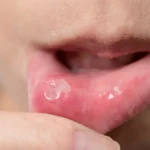
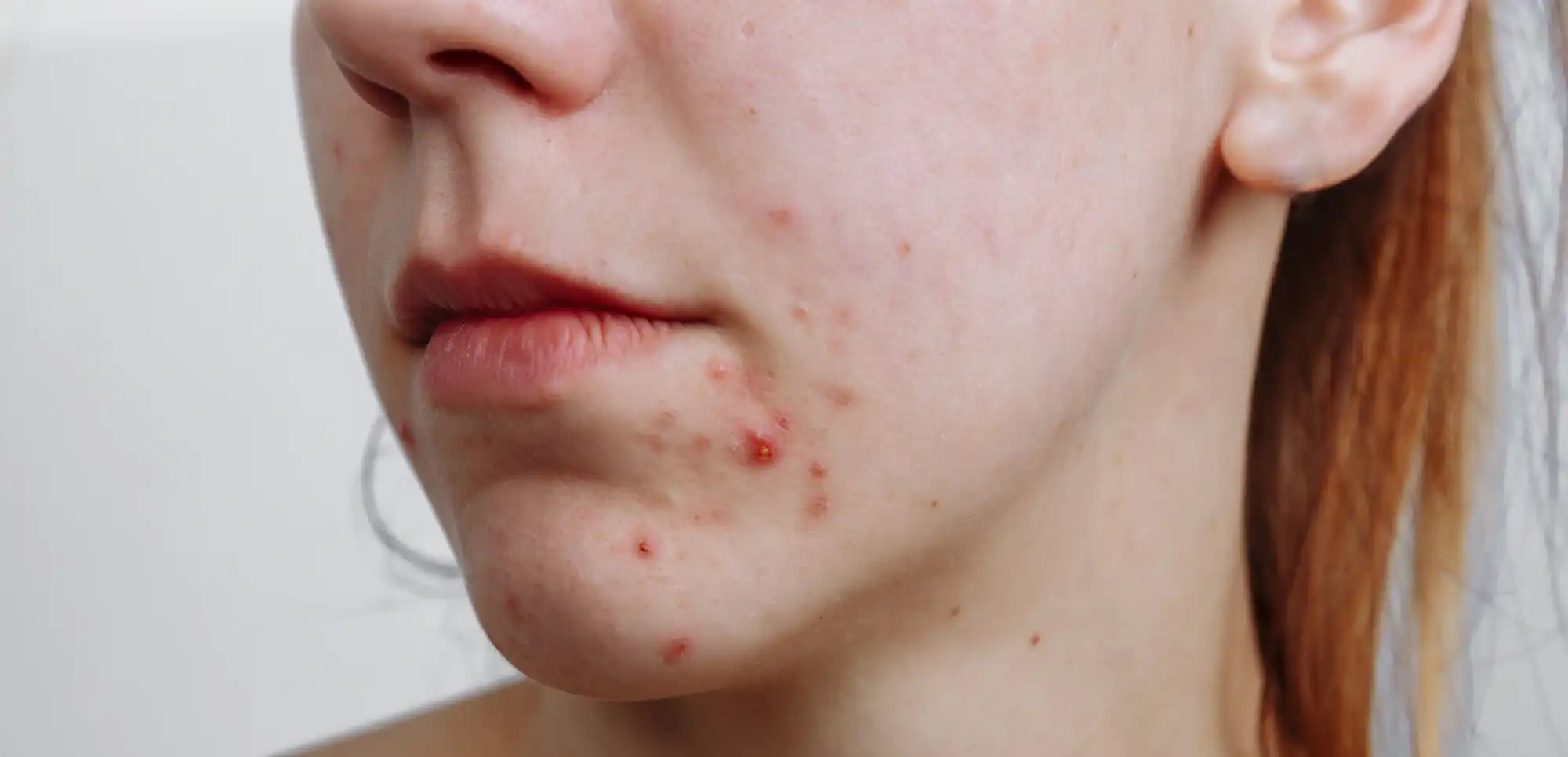
The word perioral simply means around the mouth. Perioral acne describes the same disease process as acne anywhere else on the face, blocked follicles that become colonised by Cutibacterium acnes and then inflamed, but concentrated in the lower third of the face. It can present as blackheads, whiteheads, papules, pustules or deeper cystic nodules, and often as a mixture of several at once.
Two things make this area distinctive. The sebaceous glands of the chin and jawline carry a high density of androgen receptors, so they respond strongly to hormonal signals. The skin immediately at the lip border is thinner, moves constantly and is exposed to products that never reach the rest of the face, including toothpaste, lip balm, food residue and inhaler propellant.
Acne is not a rare or trivial problem. It is one of the most prevalent skin conditions worldwide, and it persists well beyond adolescence for a substantial minority of people.
“About 95% of people aged 11 to 30 are affected by acne to some extent.”
NHS, Acne guidance
The same NHS guidance notes that around 3% of adults still have acne over the age of 35, which is the group in whom breakouts most often settle into the chin and mouth area rather than spreading across the whole face.
Common causes of acne around the mouth
There is rarely one single explanation. Most cases are driven by two or three factors acting together over months, which is why treating only the spots and not the trigger tends to produce a cycle of recurrence.
The chin and jaw respond sharply to androgens, so breakouts often track the menstrual cycle, ovulation or periods of prolonged stress.
Toothpaste, lip balm, foundation and rich moisturisers all pool in this area and can block follicles or provoke inflammation.
Raised cortisol increases androgen activity and sebum output, which is why flares often follow demanding weeks rather than precede them.
High glycaemic index foods and, for some people, dairy are linked with higher acne activity in controlled and observational research.
Resting a hand on the chin, phone contact, face coverings and chin straps all transfer bacteria and apply repeated pressure.
Steroid inhalers, oral corticosteroids and some hormonal contraceptives can change the breakout pattern in this specific zone.
Hormonal acne and the chin zone
Of all the contributing factors, hormonal activity is the one most closely associated with persistent breakouts around the mouth and chin. When testosterone or DHEA levels shift, as they routinely do around ovulation, menstruation or during chronic stress, the androgen receptors concentrated in the lower face trigger increased oil production, congested pores and inflammation.
The clinical pattern backs this up. In published series of adult acne, the chin is involved in roughly six patients in ten and the jawline in roughly one in three, and women are considerably more likely than men to show this lower face distribution. If your breakouts appear or worsen in the days before a period, follow a repeatable monthly rhythm and sit mainly along the jaw, hormonal influence is very likely part of the picture.
Toothpaste, lip balm and inhalers
One of the more surprising contributors to breakouts in this zone is the set of products that touch it every day and never touch the rest of the face. Sodium lauryl sulphate, the foaming agent in many toothpastes, is a known skin irritant and has been linked with both acne and perioral dermatitis in susceptible people. Flavouring agents and fluoride residue can have a similar effect when they are left to dry on the skin after brushing.
Heavily fragranced or waxy lip balms are the second common culprit, because they sit directly over the fine follicles along the vermilion border. Steroid inhalers are the third. Residue left on the skin around the mouth after use disrupts the local skin microbiome and is a recognised trigger for both acne like lesions and perioral dermatitis.
If your breakouts cluster tightly at the lip line or in the corners of the mouth rather than spreading across the chin, review these three product categories before changing anything else in your routine. It is the cheapest test available and it resolves a meaningful proportion of cases on its own.
Acne around the mouth versus perioral dermatitis
These two conditions look similar at a glance and are treated very differently, so distinguishing them matters. Using a standard acne routine on perioral dermatitis can make it considerably worse, and applying a steroid cream to either one tends to produce short term relief followed by a stronger rebound.
Topical treatments that work
The following actives all have good clinical evidence behind them. The principle for this area is to start with one product, use it consistently for a full treatment cycle, and keep the strongest formulations slightly away from the lip border.
- Benzoyl peroxide 2.5%Reduces acne bacteria. Three double blind studies in 153 patients found 2.5% matched 5% and 10% for reducing inflammatory lesions with less redness and peeling.
- Salicylic acidA beta hydroxy acid that exfoliates inside the pore. Best suited to congested, noninflammatory breakouts.
- Azelaic acidAntibacterial and calming, gentler than benzoyl peroxide. A strong choice for sensitive or deeper skin tones where pigmentation is a concern.
- NiacinamideRegulates sebum and supports the skin barrier. A useful partner to other actives rather than a standalone treatment.
- AdapaleneAvailable without prescription in many formulations. Normalises follicular cell turnover and prevents new comedones forming.
- TretinoinPrescription strength. More effective and more irritating, so it is introduced gradually.
- Fixed combinationsAdapalene with benzoyl peroxide in one product improves adherence and treats two mechanisms at once.
- Application ruleA pea sized amount for the whole lower face, applied to dry skin, buffered with moisturiser if needed.
- Topical antibioticsClindamycin or erythromycin, always combined with benzoyl peroxide to limit resistance.
- Oral antibioticsDoxycycline or lymecycline in short defined courses alongside a topical agent.
- Hormonal therapyCombined oral contraceptives with antiandrogenic activity, or spironolactone.
- IsotretinoinReserved for severe, scarring or treatment resistant acne under specialist supervision.
Hormonal and prescription options
If your acne is primarily hormonally driven, topical treatment alone often produces limited results. A GP or dermatologist can assess whether systemic therapy is appropriate. The two main routes are a combined oral contraceptive with antiandrogenic activity, such as one containing drospirenone or cyproterone acetate, and spironolactone, which blocks androgen activity at the receptor in the skin.
The evidence for spironolactone in adult women strengthened considerably with the SAFA trial, a double blind randomised controlled trial published in the BMJ in 2023. At 24 weeks, 82% of women taking spironolactone reported that their acne had improved, compared with 63% of those taking placebo. Headache was slightly more common in the treatment group at 20% versus 12%, and no serious adverse reactions were reported.
These options are worth exploring if your breakouts are cystic, follow a clear monthly pattern, or have failed to respond to two separate topical regimens used properly for 12 weeks each.
Professional clinic treatments
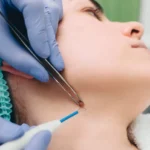
In clinic treatment makes the most difference for persistent inflammatory acne and for the marks left behind once the active breakouts settle. At Linia Skin Clinic on Harley Street, treatment for perioral acne commonly combines several of the following.
Salicylic or glycolic acid peels clear congestion and reduce inflammation across the chin and jawline in a course of treatments.
Prescription acne treatment gives access to strengths and combinations that are not sold over the counter.
Blue and red LED phototherapy targets acne bacteria and inflammation without downtime, used alongside topical care.
Microneedling and laser resurfacing address textural scarring and residual pigmentation once breakouts are controlled.
A qualified clinician will assess lesion type, skin tone, scarring risk and lifestyle triggers before recommending a plan, because the right sequence matters as much as the individual treatments.
Skincare habits that support clearer skin
Active treatment does the heavy lifting, but the routine around it determines how tolerable that treatment is and how quickly the skin barrier recovers.
“Do not try to ‘clean out’ blackheads or squeeze spots. This can make them worse and cause permanent scarring.”
NHS, Acne guidance
- Rinse your face after brushing your teeth
- Rinse the mouth area after using a steroid inhaler
- Switch to a fragrance free, noncomedogenic lip balm
- Introduce one new product at a time
- Keep moisturising while using drying actives
- Give any treatment a full 12 weeks before judging it
- Steroid creams on the face unless prescribed for this purpose
- Squeezing lesions near the lip line, where scarring risk is high
- Resting your chin on your hand while working
- Stacking several strong actives in the same week
- Heavily fragranced or waxy balms and occlusive ointments
- Abandoning a treatment after two or three weeks
Diet, stress and gut health
Lifestyle factors will not clear moderate acne on their own, but the research linking them to acne severity is stronger than it was a decade ago and they are worth addressing alongside treatment.
- Blood sugar
- High glycaemic index foods raise insulin and insulin like growth factor 1, both of which increase sebum production. In a 12 week randomised controlled trial published in the American Journal of Clinical Nutrition, total lesion counts fell by 23.5 in the low glycaemic load group compared with 12.0 in the control group.
- Dairy
- A systematic review and meta analysis of 78,529 children, adolescents and young adults published in Nutrients in 2018 found an odds ratio of 1.25 for any dairy intake and 1.32 for low fat or skimmed milk. The association is consistent but modest, and individual responses vary widely.
- Stress
- Psychological stress raises cortisol, which increases androgen activity and sebum output, and it degrades sleep quality at the same time. Regular exercise, consistent sleep and breathwork or mindfulness practice all reduce that load measurably.
- Gut health
- The gut skin axis is an active area of dermatology research. Microbiome diversity appears to influence systemic inflammation, which in turn affects the skin. Adequate fibre, fermented foods and fewer ultraprocessed foods are sensible measures, though the evidence is not yet strong enough to make specific probiotic recommendations.
A simple food and breakout diary kept for six to eight weeks is far more useful than eliminating whole food groups on speculation. Look for patterns that repeat rather than single coincidences.
What improvement looks like week by week
Unrealistic timelines are the most common reason people abandon a treatment that was actually working. This is the pattern most patients follow.
“Treatments can take several months to work, so do not expect results overnight.”
NHS, Acne guidance
When to seek professional advice
Mild to moderate perioral acne is often manageable with over the counter treatment and consistent habits. Professional input becomes clearly worthwhile in specific situations.
Frequently asked questions
Can toothpaste cause acne around the mouth?
Yes, in some people. Sodium lauryl sulphate, fluoride residue and flavouring agents can irritate the skin around the mouth and provoke breakouts or perioral dermatitis. Test it by switching to a sulphate free formulation for four weeks and rinsing your face after brushing. If the lesions sit tightly around the lip line rather than across the chin, this is one of the first things to rule out.
Why do my breakouts always come back in the same place?
Recurrence in a fixed location almost always means an ongoing trigger rather than bad luck. Around the mouth the usual candidates are hormonal fluctuation, a daily product that contacts only that area, and repeated physical contact such as resting a hand on the chin. Identifying and removing the trigger prevents recurrence in a way that treating each individual spot never will.
Is it acne or perioral dermatitis?
Acne produces a mixture of lesion types including blackheads, and feels tender when inflamed. Perioral dermatitis produces small uniform red papules with burning or itching, rarely involves blackheads, and often spares a narrow band of skin immediately next to the lips. Around 90% of perioral dermatitis cases occur in women aged 20 to 45, and topical steroids are the most common trigger. If you have used a steroid cream on your face, assume perioral dermatitis until a clinician says otherwise.
How long will it take to see improvement?
Most topical treatments need eight to twelve weeks of consistent use before results are clear, which is why NICE sets the formal review point at 12 weeks. Hormonal treatments typically take three to six months to reach full effect. Introducing several treatments at once makes it impossible to tell what is working, so change one variable at a time.
Does acne on my chin mean it is hormonal?
Not automatically, but it raises the probability. The chin and jawline carry a high density of androgen receptors and are involved in roughly six out of ten adult acne cases. The stronger indicators are a cyclical pattern tied to the menstrual cycle, deeper tender lesions rather than surface bumps, and poor response to topical treatment used correctly. Blood tests are usually normal even when hormonal treatment works well.
Should I use a stronger benzoyl peroxide for faster results?
Generally no. Three double blind studies covering 153 patients found 2.5% benzoyl peroxide as effective as 5% and 10% for reducing inflammatory lesions, with less peeling, redness and burning. Around the mouth, where the skin is thinner, the lowest effective concentration is almost always the better choice because tolerability determines whether you stay consistent.
Can a steroid inhaler cause breakouts around my mouth?
It can. Residue left on the skin after inhaler use alters the local skin microbiome and is a recognised trigger for both acne like lesions and perioral dermatitis. Rinsing your mouth and gently washing the surrounding skin after each use resolves this in many cases. Never stop a prescribed inhaler because of skin symptoms. Speak to your prescriber about technique, a spacer device or an alternative device instead.
Will squeezing a spot near my lip cause scarring?
The risk is genuinely higher here than on the cheeks or forehead, because the skin is thinner, the area moves constantly and healing is slower. NHS guidance is explicit that squeezing spots can make them worse and cause permanent scarring. If a lesion is painful and persistent, a clinician can drain or inject it safely rather than leaving you to manage it at home.
- NHS. Acne: overview, causes and treatment. nhs.uk
- National Institute for Health and Care Excellence. Acne vulgaris: management. NICE guideline NG198, 2021.
- Santer M and colleagues. Effectiveness of spironolactone for women with acne vulgaris (SAFA). BMJ, 2023.
- Mills OH, Kligman AM and colleagues. Comparing 2.5%, 5% and 10% benzoyl peroxide on inflammatory acne vulgaris. International Journal of Dermatology, 1986.
- Smith RN and colleagues. A low glycaemic load diet improves symptoms in acne vulgaris patients: a randomised controlled trial. American Journal of Clinical Nutrition, 2007.
- Juhl CR and colleagues. Dairy intake and acne vulgaris: a systematic review and meta analysis of 78,529 children, adolescents and young adults. Nutrients, 2018.
- DermNet. Periorificial (perioral) dermatitis.
A consultation at Linia Skin Clinic, 94 Harley Street, London includes a full assessment of your breakout pattern, lesion type and likely triggers, followed by a treatment plan with access to prescription strength options.