

Moles are things that many of us have in common. They are perfectly normal and, usually, nothing to worry about.
However, moles can also be an indication of an underlying issue, such as skin cancer. That is why anyone who has a suspicious mole is advised to have it checked out by a doctor, and potentially removed by a dermatologist.
Some even choose to have their moles removed from their faces, heads, necks, etc., simply because they can get in the way a bit! So, does mole removal hurt?
Mole removal doesn’t hurt at all. The mole removal procedure can take a few shapes or forms, depending on the mole itself and its location.
However, even the more intensive technique will not hurt the patient at all. So, how exactly are moles removed and what can patients expect from the simple procedure?
Is Removing a Mole Painful?
In case you are still a little worried about having a mole removed, no, it will not hurt at all!
The only thing that might pinch a little is the needle from the local anaesthetic, and even that will only last for seconds
There are a few ways through which your mole may be removed:
- A shave biopsy: A shave mole biopsy involves a razor blade being used to shave the mole off your skin, and some of the skin surrounding it.
- Laser mole removal: As the name suggests, laser mole removal works by using a strong laser which breaks down the skin cells in the mole. Thanks to the precision of the laser, this will minimise scarring.
- Freezing: Some moles can be removed by freezing them. Doctors use liquid nitrogen to freeze off the mole.
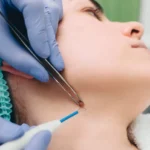
- Scalpel: Some moles need to be removed with a scalpel. The scalpel will therefore lift off the mole and some of the surrounding skin, usually meaning that stitches are needed following the procedure.
However your mole will be removed depends on you and your doctor. In some cases they may have to insist on a particular type of removal.
Whatever the case, it will not hurt you and could indeed be a very important step in saving your life, should you have a cancerous mole!
Is It Scary to Get a Mole Removed?
Simply put, it doesn’t have to be. Of course, there are those of us who are particularly afraid of needles and/or scalpels, however, there is absolutely nothing to worry about.
As mentioned, mole removal is a very simple procedure that takes very little time. As long as you work with a professional skin specialist, you will be in good hands.
The healing process should be relatively quick.
Once your mole has been removed, it will be sent off to be analysed. From the results, your doctor will either tell you that everything is fine, or that the mole contains cancerous cells.
It is important to note that the earlier the mole is seen, the easier it will be to treat the melanoma (also known as skin cancer).
That is why having your abnormal mole seen sooner rather than later could make a big difference.
Chances are, the mole you are worrying about will be non cancerous. However, it’s just as well to get normal moles, or non cancerous moles, checked out just in case!

Are You Awake During Mole Removal?
Yes, you are awake during mole removal. Since moles all tend to be relatively small, there is no need to administer a general anaesthetic.
Instead, your doctor will use a local anaesthetic to numb the area surrounding your mole.
Once the anaesthetic has worked, the doctor will begin removing the mole, taking no longer than a few moments to complete the mole removal.
How Long Does Mole Removal Take?
Mole removal should take no longer than just a few minutes to complete.
Depending on how your mole is being removed, it could take a few moments for the local anaesthetic to kick in, then a few minutes for the doctor to remove the mole, and potentially a few extra short minutes should the doctor need to put any stitches on your skin.
In total, it should take no longer than ten minutes to remove a mole.
Of course, in order for the process to go as quickly, painlessly, and efficiently as possible, you should always consult a professional.
Summary
Whether you want to have your common mole removed for cosmetic reasons, or are concerned about an atypical mole potentially being proof of an underlying issue, it is important to get the right treatment and permanent solution from your doctor.
There are so many ways nowadays of dealing with moles that do not have to involve surgery.
However, it is still very important to address them as soon as possible, in the hope that they are benign, but with the potential for them being cancerous.
You cannot be sure without having them tested, and remember that the quicker they are seen, the easier it will be to treat the condition!
Read also: Is it safe to have moles removed? , What to expect after mole removal?