Yes, some cysts can be dealt with without surgery, but the honest answer depends almost entirely on what kind of cyst you have. Functional ovarian cysts under 5 cm usually disappear on their own within two to three menstrual cycles. Skin cysts on the face, scalp and back behave very differently, because the sac itself has to come out or the cyst simply refills.
- Simple ovarian cysts under 5 cm usually resolve over two to three menstrual cycles with no treatment at all.
- Around 42% to 44% of ganglion cysts disappear on their own if simply left alone and observed.
- Skin cysts have a capsule. Drainage empties the contents but leaves the capsule behind, so the cyst returns.
- Recurrence after aspiration of a ganglion is roughly 58% to 74%, against about 8% to 21% after surgical excision.
- Complete removal of the cyst wall gives recurrence rates of about 3%, whichever incision technique is used.
- The NHS position is that skin cysts do not need treating at all if they are not causing problems.
- Never squeeze or burst a cyst yourself. It risks infection and makes later removal harder.
- Any lump that grows, changes, bleeds or does not settle should be examined rather than self treated.
simple ovarian cysts this size usually resolve without any intervention
NHS gynaecology guidance
of ganglion cysts resolved spontaneously with observation alone
Published observational series
recurrence after aspirating a ganglion cyst rather than excising it
Comparative studies
recurrence after minimal excision of a skin cyst with the capsule removed
Randomised comparison
All figures are drawn from the peer reviewed sources and clinical guidelines listed at the end of this article. They describe published study populations and national guidance, and are not a prediction of any individual outcome.
The short answer, by type of cyst
The word cyst covers dozens of unrelated conditions, and whether surgery is needed depends on which one you have. A follicular cyst on an ovary and an epidermoid cyst on your back share a name and almost nothing else. This table is the fastest way to find where you sit.
| Type of cyst | Resolves on its own? | What usually works |
|---|---|---|
| Functional ovarian cyst | Usually | Watchful waiting. Simple cysts under 5 cm typically resolve over two to three menstrual cycles. |
| Ganglion cyst | Sometimes | Observation resolves 42% to 44%. Aspiration works short term but recurs often. Excision is the durable option. |
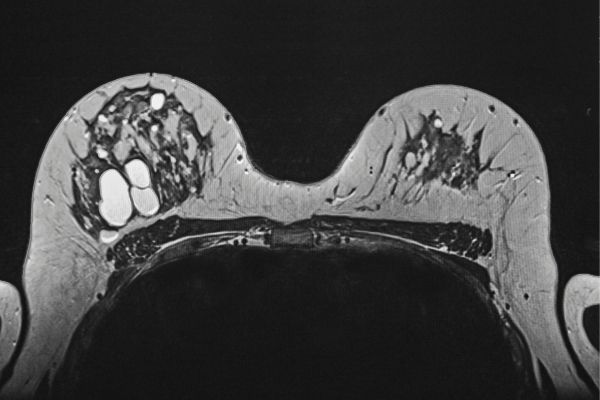
| Breast cyst | Sometimes | Simple cysts often need nothing. Needle aspiration relieves a painful one and confirms the diagnosis. |
| Epidermoid cyst | Rarely | Nothing non-surgical removes the capsule. Complete excision is the only reliable answer. |
| Pilar cyst (scalp) | Rarely | Same as above. These shell out cleanly but still require the capsule to be removed. |
| Milia | Sometimes | Tiny keratin cysts. Often clear slowly by themselves, or are lifted out in a quick in clinic procedure. |
| Inflamed or infected cyst | No | Needs assessment. Antibiotics and drainage settle the flare, but definitive removal is deferred until it is quiet. |
Why skin cysts behave differently: the capsule
An epidermoid or pilar cyst is not just a pocket of fluid. It is a sac lined with living skin cells that continuously produce keratin. That lining is the reason non-surgical removal fails. You can empty the sac, but the lining stays behind and starts filling it again.
DermNet, the international dermatology reference, is direct about what this means in practice.
The most effective treatment for an epidermoid cyst is complete surgical excision with an intact cyst capsule. If the cyst has ruptured, or the capsule is not removed in its entirety, the cyst may recur.
DermNet, Epidermoid cyst. Typical diameter given as 1 to 3 cm, with spontaneous resolution described as occasional rather than expected.
The same principle explains why simply cutting and squeezing a cyst is a temporary measure. A widely used clinical teaching reference puts it plainly: “simple incision and drainage of cysts frequently results in recurrence.”
What genuinely works without surgery
Grouped honestly, from options with real evidence behind them to those that mainly manage symptoms.
Evidence supported
- Watchful waitingThe treatment of choice for simple ovarian cysts under 5 cm and a reasonable first step for many ganglions.
- Needle aspiration of a breast cystRelieves discomfort and confirms the diagnosis at the same time.
- Ganglion aspirationWorks, but expect recurrence in roughly 58% to 74% of cases.
- Antibiotics for infectionSettles an infected cyst. It treats the infection, not the cyst.
Comfort measures
- Warm compressTen to fifteen minutes a few times a day eases discomfort and can encourage an inflamed cyst to settle. It does not remove the capsule.
- Anti-inflammatory medicationReduces pain and swelling during a flare.
- Steroid injectionCan calm an acutely inflamed skin cyst so that it can be removed properly later.
- A well fitted supportive braGenuinely helps with the discomfort of breast cysts.
Not treatment
- Squeezing or poppingRisks infection, scarring and rupture into surrounding tissue, which makes proper removal harder.
- Tea tree oil, apple cider vinegar and similarNo evidence that any topical agent dissolves a cyst capsule.
- Drainage of an epidermoid or pilar cystEmpties it, then it refills. Recurrence is the expected outcome, not a complication.
- Waiting for a skin cyst to disappearOccasionally happens, but it is not a plan.
Size, and what it actually tells you
Size matters far less than most articles suggest, and the size thresholds that do exist are specific to the type of cyst rather than universal. A commonly repeated claim is that any cyst above 4 cm needs removing. UK gynaecology guidance says something quite different for the most common internal cysts.
| Simple ovarian cyst | Standard UK approach |
|---|---|
| Under 5 cm | Usually resolves over two to three menstrual cycles. No intervention needed. |
| 5 cm to 7 cm | Routine interval ultrasound follow up, typically every three to six months, to monitor size. |
| Over 7 cm | Surgical management is considered, largely because of the risk of ovarian torsion. |
For skin cysts, size is not the deciding factor at all. Epidermoid cysts are typically 1 to 3 cm across, and a 1 cm cyst on the cheek is far more likely to be removed than a 3 cm one on the back. What drives the decision is whether it is symptomatic, whether it keeps becoming inflamed, where it sits, and whether the diagnosis is certain.
Watchful waiting is a real treatment
The instinct that a cyst must be dealt with is often wrong. The NHS position on skin cysts is explicit.
Skin cysts do not need to be treated if they’re not causing any problems. Do not squeeze a skin cyst. If it bursts it could become infected, or if it’s already infected you might spread the infection.
NHS, Skin cyst. The same guidance notes that new skin cysts may still appear in future even after one has been removed.
Ganglion cysts make the case even more strongly. In observational series, 42% to 44% of ganglions resolved with no treatment at all when patients were simply followed up. Compare that with the recurrence figures after aspiration, and doing nothing starts to look like an active decision rather than a passive one.
| Ganglion cyst approach | Reported outcome | What it means |
|---|---|---|
| Observation only | 42% to 44% resolve | A substantial minority disappear without anyone touching them. |
| Aspiration | 58% to 74% recur | Effective immediately, but most come back. Useful when quick relief is the goal. |
| Surgical excision | About 8% to 21% recur | Markedly more durable, at the cost of a procedure and a scar. |
When a cyst does need removing
Removal moves from optional to advisable in a fairly short list of situations.
- It keeps flaring
- Repeated episodes of inflammation cause scarring in the surrounding tissue, which makes each subsequent removal harder and the final scar worse. Recurrent flares are one of the strongest reasons to remove a quiet cyst electively.
- It is painful or in the way
- A cyst that catches on a collar, a waistband or a razor, or that hurts when you lie down, is affecting daily life. The NHS notes that a large, painful skin cyst making everyday tasks difficult may be removable on the NHS.
- The diagnosis is not certain
- This is the most important reason on the list. Not every lump under the skin is a cyst. Removal allows the tissue to be examined, which settles the question definitively.
- It has changed
- Growth, colour change, bleeding, ulceration or a lump that becomes firm and fixed all warrant assessment rather than watchful waiting.
- It is on the face
- Facial cysts are usually removed earlier, partly for appearance and partly because a small planned excision on quiet skin leaves a much better scar than an emergency drainage of an inflamed one.
What removal actually involves
Removing a skin cyst is a short procedure under local anaesthetic, not an operation in the way most people picture it. The goal throughout is to get the capsule out intact.
- Assessment and local anaesthetic. The area is examined, marked and numbed. You stay awake and should feel pressure rather than pain.
- Access. Either a small elliptical incision over the cyst, or a minimal incision technique using an opening of only 2 to 3 mm through which the contents are expressed.
- Capsule removal. The sac is separated from surrounding tissue and lifted out whole. This is the step that determines whether the cyst returns.
- Closure. Fine sutures, usually removed after about a week depending on the site. Some very small excisions need no stitches at all.
- Examination of the tissue. The removed cyst can be sent for histology, which confirms exactly what it was.
Both approaches work. In a randomised comparison, recurrence after the minimal excision technique was 2.8% against 3.3% for conventional elliptical excision, a difference that was not statistically significant. A 2026 systematic review comparing techniques concluded that complete surgical excision was consistently associated with lower recurrence than incision and drainage, while minimally invasive and laser assisted techniques offered good cosmetic results with acceptable recurrence.
If you are weighing this up, our page on cyst removal sets out what the procedure involves at the clinic. Smaller keratin cysts are handled differently again, and are covered under milia removal.
Do and avoid
Do
- Get any new or changing lump looked at rather than guessing
- Use a warm compress for comfort during a flare
- Keep the area clean and leave it alone
- Take a photo with a ruler beside it to track any change
- Ask whether the capsule will be removed, not just the contents
- Have a facial cyst assessed while it is quiet
Avoid
- Squeezing, popping or trying to dig it out
- Piercing it with a needle at home
- Applying strong acids or essential oils neat to the skin
- Assuming any lump under the skin must be a cyst
- Accepting drainage alone as a permanent solution
- Waiting until it becomes infected before seeking advice
Frequently asked questions
Can a cyst be removed without surgery?
It depends on the type. Functional ovarian cysts under 5 cm usually resolve on their own within two to three menstrual cycles, and roughly 42% to 44% of ganglion cysts disappear with observation alone. Skin cysts such as epidermoid and pilar cysts are different: they have a capsule that keeps producing keratin, so draining them empties the cyst without removing it, and it refills.
Will a cyst go away on its own?
Internal cysts often do. Skin cysts occasionally resolve spontaneously, but this is described in dermatology references as an occasional event rather than something to plan around. A skin cyst that has been present and stable for years will usually stay.
Why does my cyst keep coming back after being drained?
Because drainage removes the contents but leaves the sac. The lining is made of living cells that continue to produce keratin, so the cavity refills. Recurrence after simple incision and drainage is the expected outcome, not a sign that anything went wrong. Removing the capsule intact is what prevents it.
Does a cyst over 4 cm always need surgery?
No, and this is a common misconception. UK gynaecology guidance is that simple ovarian cysts under 5 cm usually resolve without intervention, that 5 cm to 7 cm cysts are monitored with interval ultrasound, and that surgery is considered above 7 cm largely because of torsion risk. For skin cysts, size is not the deciding factor at all. Symptoms, site, repeated inflammation and diagnostic certainty matter far more.
Is it safe to pop a cyst at home?
No. NHS guidance is explicit that you should not squeeze a skin cyst, because if it bursts it could become infected, or an existing infection could spread. Rupturing a cyst also pushes its contents into the surrounding tissue, which causes inflammation and scarring and makes proper removal harder and the eventual scar worse.
Do antibiotics get rid of a cyst?
Antibiotics treat infection in or around a cyst. They settle the redness, pain and swelling of a flare, but they do not remove the capsule, so the cyst itself remains once the infection clears. They are a step towards definitive treatment rather than a substitute for it.
How likely is a cyst to come back after proper removal?
Low, provided the capsule was removed intact. In a randomised comparison of techniques, recurrence was 2.8% after minimal excision and 3.3% after conventional elliptical excision, with no significant difference between them. Bear in mind that new cysts can still form elsewhere, which is different from the original one recurring.
Will removal leave a scar?
Yes, any procedure that opens the skin leaves some mark, but a planned excision on quiet skin generally heals to a fine line. Scarring tends to be worse when a cyst has repeatedly become inflamed, or when it is removed during an active infection, which is one of the practical arguments for dealing with a troublesome cyst before it flares again.
How do I know it is definitely a cyst?
You often cannot tell by looking, and neither can anyone else without examining it. Several other lumps look similar, including lipomas, abscesses and, less commonly, skin cancers. That uncertainty is itself a reason for assessment, and removal has the advantage that the tissue can be examined to confirm the diagnosis.
Sources & references
- NHS. “Skin cyst”, nhs.uk. Guidance that skin cysts need no treatment if asymptomatic, that they should not be squeezed, and that new cysts may appear in future.
- DermNet. Epidermoid cyst. Typical diameter 1 to 3 cm; complete surgical excision with an intact capsule described as the most effective treatment; recurrence where the capsule is not removed in its entirety.
- NHS gynaecology guidance on ovarian cysts and masses. Simple ovarian cysts under 5 cm typically resolve over two to three menstrual cycles; 5 cm to 7 cm monitored with interval ultrasound every three to six months; over 7 cm considered for surgery because of torsion risk.
- Zuber TJ. “Minimal Excision Technique for Epidermoid (Sebaceous) Cysts.” American Family Physician, 2002;65(7):1409 to 1412. Describes a 2 to 3 mm incision and states that simple incision and drainage frequently results in recurrence.
- Prospective randomised comparison of minimal excision and elliptical excision for epidermal inclusion cysts. Recurrence 2.8% versus 3.3%, difference not statistically significant.
- “Surgical Excision Versus Incision and Drainage for Epidermoid (Sebaceous) Cysts: A Systematic Review.” Cureus, 2026. Complete excision consistently associated with lower recurrence than incision and drainage.
- Published series on ganglion cysts of the wrist and hand. Spontaneous resolution 42% to 44% with observation; recurrence 58% to 74% after aspiration and approximately 8% to 21% after surgical excision.
This article is general information and does not replace individual medical advice. Figures quoted are from published studies and national guidance and are not a prediction of your own outcome. Any new, changing or persistent lump should be assessed by a doctor.
Not sure whether your cyst needs treating?
Book a consultation with Dr Simon Zokaie at our Harley Street clinic for a proper diagnosis, an honest view on whether it needs removing at all, and a clear explanation of your options if it does.