Cysts are ball-shaped lumps that form beneath the skin, and while many are harmless, they rarely disappear on their own. When one becomes uncomfortable, keeps growing, or simply won’t settle, surgical removal is the most reliable way to deal with it. This guide explains exactly what happens during cyst removal surgery, how recovery differs between cyst types, and the aftercare that gives you the cleanest, fastest healing.
- What is a cyst, and why remove it?
- Signs a cyst should be removed
- How to prepare for cyst removal surgery
- The cyst removal procedure, step by step
- Types of cysts and how each is removed
- Removal methods compared
- Recovery timelines at a glance
- Your recovery, day by day
- Aftercare — do’s and don’ts
- Managing pain, swelling and discomfort
- Habits that support healing
- Scarring and how the wound heals
- Reducing the appearance of your scar
- Risks and possible complications
- When to contact your clinic
- FAQs
What is a cyst, and why remove it?
A cyst is a sac-like growth that develops beneath the skin and fills with fluid, keratin, or a semi-solid material. They can form from hair follicles, blocked glands, or the tissue around tendons and joints, and they can appear almost anywhere on the body. Most are benign and painless, but they can become tender, inflamed, or infected — and because they are enclosed by a wall or capsule, they tend to persist and often slowly enlarge.
Draining a cyst may relieve pressure temporarily, but if the surrounding sac is left behind, the cyst usually refills and returns. This is why surgical removal of the entire sac is considered the definitive treatment. Before any procedure, it is important to have the lump assessed by a dermatologist, who can confirm the type of cyst, rule out anything more serious, and recommend the right removal method.
Signs a cyst should be removed
Many cysts can be safely left alone and simply monitored. Removal is usually recommended when a cyst starts to cause problems — the following signs are worth discussing with a dermatologist.
A cyst that is steadily enlarging is unlikely to resolve on its own and becomes harder to remove neatly the bigger it gets.
Tenderness, redness, or swelling suggests the cyst is irritated or inflamed and is affecting your comfort.
Cysts near joints, on the scalp, or in high-friction areas can catch on clothing, restrict movement, or rub painfully.
A lump on the face, neck, or hands can be a cosmetic concern, and many people choose removal for appearance alone.
Warmth, pus, or a foul-smelling discharge points to infection, which usually needs treatment before or alongside removal.
A cyst that refills after being drained will typically only be resolved by removing the sac completely.
How to prepare for cyst removal surgery
A little preparation makes the procedure smoother and supports faster healing. Your clinic will give you specific instructions, but these are the essentials.
- Consultation & assessment
- Have the lump examined so the type of cyst is confirmed, the right method is chosen, and any concerns are ruled out before the day of surgery.
- Medication review
- Tell your clinician about all medicines and supplements — especially blood thinners such as aspirin or anti-inflammatories — as some may need to be paused to reduce bleeding.
- Skin & area prep
- Keep the area clean and avoid shaving directly over the cyst in the days beforehand, which lowers the risk of irritation or infection.
- Plan your downtime
- Depending on the cyst’s location and size, arrange a day or two of lighter activity and avoid scheduling strenuous exercise straight afterwards.
- Gather aftercare supplies
- Have gauze, adhesive dressings, and any recommended antibiotic ointment ready at home so you can care for the wound from day one.
- Ask your questions
- Check what the recovery will look like, when stitches (if any) come out, and what warning signs to watch for, so you know what to expect.
The cyst removal procedure, step by step
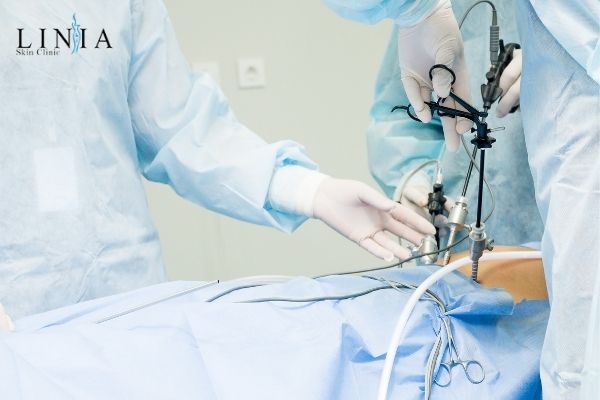
A cyst removal (cystectomy) is usually a quick, minor procedure performed under local anaesthetic. Knowing the sequence ahead of time makes the experience far less daunting.
- 1. Mark & numb
- The doctor marks the area around the cyst and numbs it with a local anaesthetic such as lidocaine. You may feel a brief sting from the injection, but the procedure itself is essentially painless.
- 2. Incision
- A small, precise incision is made in the skin directly over the cyst, sized to the lump and its location.
- 3. Drainage & dissection
- Where needed, the contents are drained to reduce the cyst’s bulk. The cyst wall is then carefully dissected away from the surrounding tissue.
- 4. Complete removal
- The entire sac or capsule is removed. This is the key step — if fragments of the wall remain, the cyst can grow back.
- 5. Closure
- Larger incisions are closed with sutures. The wound heals from the inside out, which supports a neater final result.
- 6. Dressing & instructions
- A sterile dressing is applied and you are given tailored aftercare instructions, including when to change dressings and when to return for suture removal.
Types of cysts and how each is removed
Not all cysts behave the same way, and the removal approach — and recovery — varies with each. These are the four most commonly treated types.
A benign cyst that develops from hair follicles, most common in adults in their 20s and 30s, and affecting men roughly twice as often as women.
- Removal: an incision above the cyst allows drainage, then the cyst wall is dissected and removed; sutures may be used for larger incisions.
- Recovery: around one week before resuming physically demanding activity. Recurrence is possible if wall fragments remain.
Usually harmless, slow-growing lumps under the skin, often found on the trunk or groin. They can follow burst acne follicles, abnormal duct growth, or injury to the area.
- Removal: a small incision provides access; the cyst is removed before the sac is extracted, minimising scarring.
- Recovery: up to around two weeks for a more invasive surgical excision.
Noncancerous lumps that form around tendons or joints, typically filled with a jelly-like substance. Sizes range from a pea to about one inch across.
- Removal: needle drainage or surgical removal under local anaesthetic — a scalpel incision, extraction of the cyst and its capsule, then suturing.
- Recovery: complete healing typically takes two to eight weeks, depending on location and method.
Forms when hair follicles become clogged and skin cells become trapped and replicate beneath the surface — most commonly on the scalp.
- Removal: under local anaesthetic, removed through a small incision with evacuation, or via non-incisional extraction.
- Recovery: around four weeks if stitched; weeks to months if the incision is left open to heal.
Removal methods compared
There is more than one way to deal with a cyst, and the right choice depends on its type, size, location, and whether it has been inflamed or infected. Here is how the main approaches compare.
Surgical excision
- What it involvesThe whole cyst, including its sac or wall, is removed through an incision under local anaesthetic.
- Best forMost cyst types, and any cyst that keeps returning after other treatment.
- RecurrenceLowest — removing the full sac is what prevents regrowth.
Minimal-incision removal
- What it involvesA small incision is used to drain the contents and extract the sac, keeping the wound as small as possible.
- Best forSuitable, uncomplicated cysts where a smaller scar is a priority.
- RecurrenceLow when the sac is fully removed; slightly higher than a wide excision.
Drainage & aspiration
- What it involvesThe cyst is drained or aspirated with a needle to relieve pressure, without removing the sac.
- Best forRapid relief of a painful or inflamed cyst, or as a temporary measure.
- RecurrenceHighest — the cyst often refills because the sac remains in place.
Recovery timelines at a glance
Recovery duration depends mainly on the cyst type, its size and location, and whether the wound was stitched or left open.
- Epidermoid cyst
- About one week before returning to demanding physical activity.
- Sebaceous cyst
- Up to two weeks for a full surgical excision.
- Ganglion cyst
- Two to eight weeks for complete healing.
- Pilar cyst
- Around four weeks if stitched; weeks to months if the incision remains open.
Your recovery, day by day
Everyone heals at a slightly different pace, but most cyst removals follow a familiar pattern. Use this as a rough map of what to expect.
Rest & protect
Early healing
Settling & scar care
Aftercare — do’s and don’ts
Good aftercare keeps the wound clean, lowers the risk of infection, and helps the scar fade. The specifics vary a little by cyst type, but these principles apply across the board.
Do
- Apply antibiotic ointment to the site as directed
- Keep gauze over surgical sites (except on the scalp) and keep dressings clean and dry
- Apply firm pressure if bleeding continues, then replace gauze with an adhesive bandage the next day
- For a ganglion cyst, use ice packs in 30-minutes-on, 30-minutes-off cycles to ease swelling
- Let the skin dry fully before applying a fresh bandage, and change it frequently if it becomes contaminated
- Attend your appointment for suture removal if stitches were used
Avoid
- Bathing or submerging the wound for the first 36 hours (sebaceous cyst sites in particular)
- Picking, scratching, or squeezing the healing area
- Strenuous activity before your clinic clears you
- Ignoring leakage, ongoing bleeding, or increasing redness
- Skipping antibiotic ointment or leaving the site undressed where a dressing is advised
Managing pain, swelling and discomfort
Cyst removal is a minor procedure and most people feel only mild discomfort once the local anaesthetic wears off. A few simple measures keep it manageable while the wound settles.
- Pain relief
- Over-the-counter paracetamol is usually enough. Check with your clinician before taking anti-inflammatories such as ibuprofen, as these can slightly increase bleeding around a fresh wound.
- Swelling & bruising
- Some swelling and light bruising are normal for the first few days. Cold packs applied in 30-minutes-on, 30-minutes-off cycles help, and both usually fade within a week.
- Positioning
- Where practical, keeping the treated area raised — especially on a limb — encourages fluid to drain and reduces throbbing.
- Activity
- Gentle movement is fine, but avoid anything that stretches, pulls, or presses on the wound until your clinic says it’s healed enough.
Habits that support healing
What you do in the weeks after surgery has a real effect on how quickly and cleanly the wound heals. These everyday habits make a difference.
Support healing
- Eat well, with enough protein and vitamin-rich fruit and vegetables
- Stay hydrated throughout the day
- Get plenty of rest, as tissue repairs fastest during sleep
- Keep the wound clean and follow your dressing routine
- Protect the healed skin from the sun to help the scar fade
Slows healing
- Smoking, which restricts blood flow to the wound
- Excess alcohol, which can increase swelling and delay repair
- Strenuous exercise or heavy lifting before you’re cleared
- Picking, scratching, or peeling scabs and the wound edges
- Soaking the area in baths, pools, or hot tubs while it heals
Scarring and how the wound heals
Because incisions are sutured and heal from the inside out, most cyst removals leave only a modest mark. How noticeable the final scar is depends on the size and location of the cyst and the skill of the dermatologist performing the excision — smaller, well-placed incisions closed with care tend to fade to a fine line.
You can help the scar settle by keeping the area protected while it heals, avoiding tension and stretching on the wound, and using sun protection once the skin has closed, as UV exposure can darken a fresh scar. If you have a history of raised or keloid scarring, mention it before your procedure so your clinician can plan accordingly.
Reducing the appearance of your scar
Once the wound has fully closed, a simple scar-care routine can help it fade to a fine, pale line over the following months. Consistency matters more than any single product.
- Sun protection
- A fresh scar burns and darkens easily. Keep it covered or apply SPF 30+ for at least the first several months while the skin re-pigments.
- Silicone gel or sheets
- Silicone is the most widely recommended over-the-counter option for softening and flattening scars — apply consistently once the skin has healed.
- Gentle massage
- Light massage of a healed scar can improve its texture and pliability; start only after the wound has fully closed and on your clinician’s advice.
- Moisturise
- Keeping the area supple with a plain moisturiser supports healing and stops the skin drying and tightening around the scar.
- Give it time
- Scars mature over 12–18 months, gradually softening and fading. If a scar stays raised, red, or thickened, your clinic can discuss further options.
Risks and possible complications
Cyst removal is a safe, routine procedure, and serious problems are uncommon. It still helps to know the possible complications so you can spot anything that needs attention early.
Any wound can become infected. Warmth, spreading redness, increasing pain, or pus should be checked promptly, and may need antibiotics.
Minor bleeding and bruising are normal and settle quickly; bleeding that won’t stop with firm pressure should be reviewed.
Every incision leaves some mark. Most fade to a fine line, though raised or keloid scars are possible in prone individuals.
If any part of the cyst wall is left behind, the cyst can grow back — the main reason complete excision is preferred.
When to contact your clinic
FAQs
Is cyst removal surgery painful?
The area is numbed with a local anaesthetic beforehand, so the procedure itself is essentially painless. You may feel a brief sting when the lidocaine is injected, and some tenderness once the numbness wears off, which is easily managed with simple pain relief.
How soon can I shower or bathe?
It’s generally best to keep the wound dry at first — for sebaceous cyst sites, avoid bathing or submerging the area for the first 36 hours. Follow your clinic’s specific guidance, and always let the skin dry fully before applying a fresh dressing.
Will the cyst come back?
Recurrence is uncommon when the full cyst wall or sac is removed. It becomes more likely if fragments of the wall are left behind, which is why complete surgical excision is the most reliable approach.
When can I return to exercise?
It depends on the cyst type and the size of the wound. As a rough guide, expect around a week for a small epidermoid cyst and longer for a ganglion or pilar cyst. Wait until your clinic confirms the wound has healed enough for strenuous activity.
Do I need to have stitches removed?
If dissolvable sutures aren’t used, you’ll be given an appointment to have the stitches removed once the wound has healed sufficiently. Your clinic will tell you the timing based on the site and how it is healing.
Are cysts ever dangerous?
The vast majority of skin cysts are benign. However, because a lump should never be assumed harmless, it’s important to have it assessed by a dermatologist, who can confirm the diagnosis and, if there’s any doubt, send the removed tissue for analysis.
How long does the procedure itself take?
Most straightforward cyst removals are quick, minor procedures completed in a single short appointment under local anaesthetic. Larger or more awkwardly placed cysts can take a little longer.
What’s the difference between draining and removing a cyst?
Draining empties the cyst’s contents to relieve pressure but leaves the sac in place, so the cyst often refills. Removal (excision) takes out the whole sac, which is why it’s the more permanent solution.
Will I need antibiotics?
Not usually. Antibiotics are generally reserved for cysts that are already infected or that become infected during healing. Your clinician will advise if they’re needed in your case.
Can I drive myself home afterwards?
Because cyst removal is done under local anaesthetic rather than sedation, most people are fine to drive home. If the cyst is on a hand, arm, or another spot that affects driving, arrange alternative transport.
How do I keep the wound clean?
Follow your clinic’s dressing routine: keep the area clean and dry, apply any recommended antibiotic ointment, let the skin dry fully before re-dressing, and change the bandage if it becomes wet or contaminated.
Can a cyst turn into cancer?
The common skin cysts covered here are benign and very rarely become cancerous. Any lump should still be assessed by a dermatologist, and if there’s any uncertainty the removed tissue can be sent for analysis.
Conclusion
Cyst removal is a safe, routine procedure, and knowing what to expect makes recovery smoother. The two things that matter most are complete removal of the cyst sac — which is what stops it coming back — and diligent aftercare to keep the wound clean while it heals from the inside out. Recovery ranges from a few days to a couple of months depending on the type of cyst and how it was treated, so follow the timeline your clinician gives you rather than the surface appearance of the skin.
At Linia Skin Clinic, cyst removals are carried out by our experienced dermatology team with a focus on minimal downtime and the best possible cosmetic result. Our Medical Director, Dr Simon Zokaie, qualified from the University of Manchester in 2003, holds MRCP membership, and specialises in cosmetic dermatology with an emphasis on minimal-downtime procedures.
If you have a lump you’d like assessed or removed, book a consultation with our team and we’ll recommend the safest, most appropriate approach for your skin.