
Whether it’s that foolishness that comes with youthfulness or just outright stubbornness, many do not heed the warnings about trying to deal with acne by ourselves.
With what result? Instead of the irritating, unattractive and frustrating problem of acne, we have to deal with the even more unappealing and harder to deal with acne scarring.
If that is the situation you find yourself in and you feel that you are just about ready to throw the towel in and resign yourself to a lifetime of acne scars, you probably need to know if scars are permanent.
Although they are incredibly stubborn and preventing them is better than treating them, acne scars do not necessarily need to be permanent. There are several medical treatments and even home remedies that can help get rid of them, or at the very least reduce and fade their appearance. In this post, we will look closer at the subject.
What causes acne scars
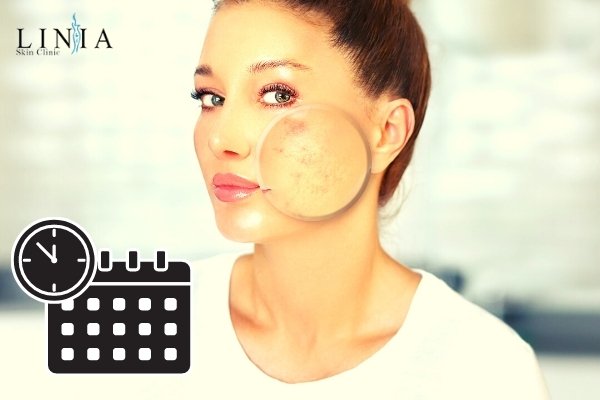
Acne scars are normally caused by inflamed blemishes that develop when skin pores have excessive bacteria, dead skin cells and oils. As the pores swell, they break the follicle walls.
Types of acne scars
There are various types of acne scarring. It will be helpful to have your acne scars properly identified when trying to find the right type of treatment.
Depressed Scars
Depressed, or atrophic scars occur when collagen is not produced as the skin heals Within this category of scars, you can have:
- Ice pick scars
- Boxcar scars
- Rolling scars
Raised Scars
Raised or hypertrophic scars develop when too much collagen is produced during the healing process after acne.
Can acne scars fade over time?
It would be amazing if it were possible for scars to simply fade out and away over time. However, the reality is that you need to have some kind of treatment for acne scarring to reduce the appearance and get rid of the scars left after severe acne.
How long does it take for acne scars to go away?
If it is simply those brownish or reddish acne marks that are left on your skin after a case of acne, treatment is not necessary. Those marks are not serious acne scars and will face away and heal with time. The more you squeeze and pick at acne, the greater the chance full-blown scars will develop.
Types of treatment for acne scars
There are many acne scar treatments available nowadays. The kind of treatment that will be most effective for your scarring, depends on the type of scars you have and their severity. One note of caution is scar treatment can only be started once the acne has healed.
You have the option of trying either at-home treatments or dermatological treatments. We have highlighted some of the most common below.
Dermatological Treatments
- Microneedling – often referred to as collagen induction therapy, this is a good treatment for depressed scars. The procedure involves a motorised microneedling pen that contains rotating needles being pressed into the depressed scars to stimulate collagen production.
- Resurfacing procedures – chemical peels, microdermabrasion, dermabrasion, and laser therapy are all forms of this treatment. All techniques involve removing skin layers to encourage the body’s natural skin cell regrowth process.
- Fillers – if you have shallow scars, a qualified dermatologist can use your fat or substances like collagen and hyaluronic acid to improve the look and feel of the scars.
- Dermatologic surgery – if you have deep and depressed scars, you may need surgery to raise the tissue or even break it up to reduce the appearance of the scarring.
- Steroid injections – if you have thick and raised scars, having a repeated number of injections containing medicine like corticosteroids, could flatten and soften their appearance.
- Radiotherapy skin tightening – this procedure can be effective if you have boxcar or ice pick scars that are very deep. Radio frequencies are used to tighten your skin and make the scarring less visible.
- Subcision – subcision involves a sterile needle being placed under the skin to disrupt fibrous scar tissue and effectively loosen depressed scars.
At-Home Treatments
It is vital that you check with your medical practitioner or dermatologist before attempting to try any new scar treatments. That being said there are many ingredients used in over-the-counter medications and topical treatments that can improve acne scarring.
When using at-home remedies look for those containing ingredients like:
- Hydroquinone
- Azelaic acid
- Retinoids
- Salicylic acid
- Alpha-hydroxy acids, including citric acid, glycolic acid and lactic acid
Summary
We understand how disconcerting the development of acne scars can be, and it’s likely you will be worried about whether or not you will be stuck with them. With the right kind of treatment, you don’t need to be.