As it reportedly affects around 95% of all adolescents as well as 43% of over-30s, acne is an incredibly common skin condition. Although it is as serious as it is common for teenage boys, it is thought to be even more persistent and common among women.
It is generally found around the face, particularly clustering on the forehead, chin and cheeks, but acne can also break out on the chest and back as those parts of the body are more densely saturated with pilosebaceous units.
In this post, we take you through the different types of acne, how they’re caused and how they are assessed as well as how they’re generally treated. Let’s get started.
Book a Consultation with Dr Zokaie and we’ll be happy to asses your skin and help answer your questions
The main cause of acne is inflammation of these units that leads to the development of non-inflammatory and inflammatory lesions.
Interestingly, acne development involves a few distinct processes –
- Comedones
- Microcomedones
- Papules
- Pustules
- Nodules
If acne is not treated, it can lead to unattractive and unpleasant scars. This is why all practitioners must be able to successfully recognize and diagnose acne during its formative stages to help deal with it and stop it from creating scars.
Any assessment of acne needs to be carried out accurately and all clinicians tasked with this job should feel competent and able to do it.
What Causes Acne?
Pathogenesis, or, acne development occurs inside the pilosebaceous unit, which consists of a skin pore, sebaceous gland and hair follicle.
When keratinocyte proliferation has been altered, it creates a plug of follicular skin cells inside the hair follicle, which is what is known as whiteheads or micro-comedones. These are the lesions that are targeted when acne treatment is used.
Excessive production of sebum can also exacerbate the development of acne by causing dead skin cells to more easily cause clogged pores.
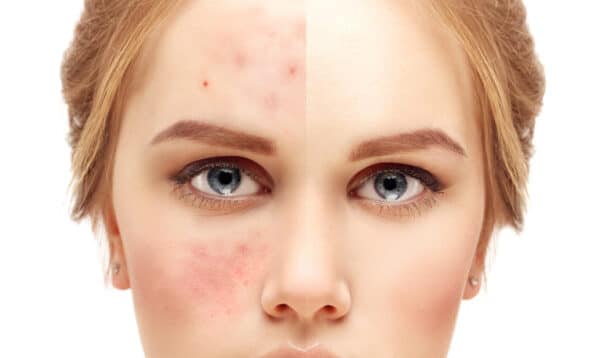
All of which is only made worse by anaerobic Propionibacterium acnes bacterium proliferation which causes more lesions and inflammation to develop in and around the follicles.
In practical terms, drugs, genetics, hormonal changes, excess oil in the skin and even diet have all been cited as being responsible for acne development.
What are the different types of acne?
In its simplest form, acne has two types. Practitioners need to be aware and able to identify the two different kinds of lesions associated with acne. That is:
- Non-inflammatory lesions, like cysts, nodules, pustules and papules
- Inflammatory acne lesions, like comedones that are either closed (whiteheads) or open (blackheads)
What are the 4 grading types for acne?
Interestingly, given how commonplace acne is in all of our lives, there is no way of assessing or grading acne that everyone can agree is the best. Although there are 25 different grading systems used for acne.
This is largely due to the always-changing, complicated and dynamic chronic and acute symptoms of acne. There are four main types of acne assessment currently used:
- Multimodal Imaging involving digital cameras, polarisers, fluorescent lights and UVA lamps
- Subjective Self-Assessment
- Worldwide acne severity grading system
- Lesion Counting
By far the most commonly used methods by clinicians are acne severity grading and lesion counting.
What Are the Currently Used Categories of Acne?
Before we look at some of the methods for acne assessment used, we will look at the different categories of acne. The NICE or National Institute for Health and Care Excellence stipulates that while there is not universally trusted and used scoring system for acne, to make sure people are given the right treatments and those treatments are monitored, the following acne categories are used:
Mild acne
This type of acne consists mainly of non-inflammatory lesions, both closed and open, and a small number of inflammatory lesions
Treatment
- Topical benzoyl peroxide
- Topical salicylic acid or body wash
Moderate acne
this more severe form of acne is spread out more and consists of a higher percentage of pustules and papules filled with pus in addition to the above
Treatment
- Everything used to treat mild acne
- Antibiotics
Severe Acne
The most severe forms of acne involve lots of inflammatory cysts, nodules, pustules and papules and there could also be some visible scarring.
Treatment
- Everything used to treat mild and moderate acne
- Roaccutane treatment
Book a Consultation today with Dr Zokaie for your Roaccutane treatment and we’ll be happy to asses your acne and help answer any questions
Understanding Severity Grading Systems
One form of acne assessment as noted above is severity grading systems, that are designed to observe the most prominent lesions and estimate how extensive the acne is likely to become.
The problem for many experts is that this is considered to be a highly subjective system and is not as altered as it perhaps could be, making it less accurate than alternatives.
However, there are just as many people who think it is a worthwhile assessment within clinical environments because it is quicker.
Several different grading systems are being used. Two of the most popular are:
- Global Acne Grading System
- Leeds Revised Grading System
Formulated in 1998, the Leeds Revised Grading System involves the use of photographs to grade chest, back and face acne. It consists of 8 back and chest grades and 15 face grades.
The grades are established by the use of over 1000 pictures chosen by 4 acne assessors and 3 dermatologists working together.
It is the job of a clinician to compare the images to the acne on patients. It is still a tricky system to use thanks to the different categories within each region and the different ways the severity of acne is represented.
As a result, a more commonplace system is the Comprehensive Acne Severity Scale.
Lesion counting
Acne assessment known as lesion counting is based on, unsurprisingly, the counting of all the different types of lesions to establish the general severity of the acne.
As it is more objective, it is considered the better option, especially when the same clinician performs the assessment every time.
As it is detail-heavy, it takes longer to complete. For that reason, it is often best suited for clinical trials or when you are trying to establish treatment effects on specific lesions.
As in a clinic setting, patients may find it intrusive compared to the use of a grading system noted above.
Other features of acne are considered in this form of assessment too, though, such as erythema, lesion size, distribution and concentration. It also requires that the practitioner can identify and assess lesions with confidence.
One of the most common versions of the lesion counting system is the Combined Acne Severity Classification. This consists of three categories, as outlined below:
- Mild – total lesion count of less than 30, made up of less than 15 of the inflammatory variety and less than 20 comedones
- Moderate – Total lesion count of between 30 and 125, consisting of either 15 to 50 inflammatory lesions or 20 to 100 comedones.
- Severe – Total lesion count of over 1256 or total inflammatory lesions count of over 50 or over 100 comedones or over 5 cysts.
How is cystic acne different from regular acne?
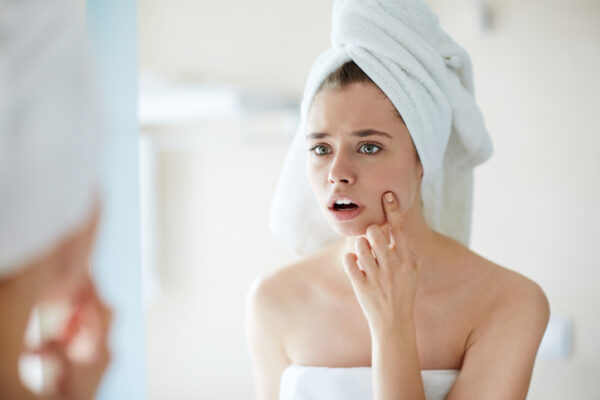
You will have noticed a lot of talk about cysts and other forms of lesions. It’s vital to known the difference between lesion types while assessing acne patients to figure out the best treatments.
While papules and nodules are similar, (though papules are larger at between 5 and 10mm in size), cysts often cause a lot of pain and leave nasty scars and are lined by epithelium and contain keratin, fluid or pus.
Papules, nodules and cysts often occur together in combination.
Psychological assessment
It’s not just the physical side of acne that is important for clinicians to consider. The psychological toll needs to be understood and acknowledged too.
There have been some studies that show even when the acne itself is mild or moderate, sufferers can have suicidal thoughts and severe depression with the effects of acne being similar to chronic diseases like asthma, diabetes and epilepsy.
By assessing the quality of life an acne patient has, it enables the practitioner to appreciate the sufferer’s perception of the disease. Various scales can help with this.
Psychological assessment tools that can be useful include the Acne Quality of Life Scale and the Acne Disability Index.
When acne patients whose quality of life may be impaired are identified early, it allows clinicians to put measures into action to help such as psychological support, as well as medical management, to help improve their psychological and social wellbeing.
Putting it into practice
Although there is no agreed-upon universal method for assessing acne, it is apparent that clinicians should be confident in identifying and distinguishing between different lesions to correctly treat acne.
Clinicians should choose a method of assessment that they are comfortable and confident with. The impact on the quality of life of such patients must be taken into account as psychological support is often needed.
Ultimately, the goal in the management of acne is alleviating symptoms, clearing lesions, limiting disease progression and avoiding scar formation, alongside alleviating any negative impacts on quality of life. Accurate assessment of the condition, therefore, provides the cornerstone for the correct management of acne.
If you’re ready to be rid of your acne once and for all, Book a Consultation today with Dr Zokaie and we’ll be happy to asses your acne and help answer your questions and concerns