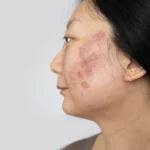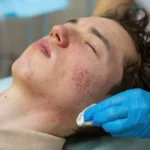

Rolling acne scars are among the most prevalent types of atrophic scarring that can persist long after active acne has cleared. These indented scars create an undulating, wave-like appearance on the skin’s surface, often making the complexion appear uneven and textured. At Linia Skin Clinic, we understand how these scars can impact your confidence, which is why we’ve created this comprehensive guide to help you understand rolling scars and the advanced treatments available to improve their appearance.
What Are Rolling Acne Scars?
Rolling scars are characterised by their broad, shallow depressions with gently sloping edges. Unlike other types of acne scars, they don’t have sharp borders. Instead, they create a rolling or undulating appearance across the skin, which becomes particularly noticeable under certain lighting conditions.
These scars typically measure 4-5mm in width and create a wave-like pattern across the skin’s surface. The rounded, smooth edges differentiate them from boxcar scars (which have more defined edges) and ice pick scars (which are narrow and deep).
What Causes Rolling Acne Scars?
Rolling scars develop through a complex process involving inflammation and subsequent tissue damage:
The Formation Process
When acne becomes inflamed, the body’s immune response can damage the skin’s structural support. Rolling scars form when fibrous bands of tissue develop beneath the skin’s surface, tethering the dermis to deeper subcutaneous structures. This tethering pulls the skin downward, creating the characteristic rolling appearance.
Key Contributing Factors
Inflammatory Acne: Moderate to severe inflammatory acne, including papules, pustules, and cysts, increases the risk of developing rolling scars. The deeper and more inflamed the acne lesion, the greater the likelihood of scarring.
Delayed or Inadequate Treatment: When inflammatory acne isn’t treated promptly or effectively, prolonged inflammation increases tissue damage and scarring risk.
Picking or Squeezing Spots: Manipulating acne lesions can worsen inflammation, introduce bacteria deeper into the skin, and increase the likelihood of scarring.
Genetic Predisposition: Some individuals are more prone to developing acne scars due to their genetic makeup and how their skin heals.
Skin Type: Whilst acne scars can affect all skin types, certain individuals may be more susceptible to particular types of scarring.
Identifying Rolling Scars: Key Characteristics
Understanding the specific features of rolling scars helps differentiate them from other types of acne scarring:
- Appearance: Broad, shallow depressions with smooth, undulating edges
- Width: Generally wider than other atrophic scars (4-5mm or more)
- Depth: Shallow to moderate depth compared to ice pick or boxcar scars
- Texture: Creates a wave-like or rolling texture across the skin
- Visibility: Often most noticeable in angled or harsh lighting
- Location: Commonly found on the cheeks and can extend to the temples and jawline
The Psychological Impact of Rolling Scars
The visible nature of facial scarring can significantly affect quality of life. Many individuals with rolling scars report:
- Reduced self-confidence in social situations
- Self-consciousness about their appearance
- Reluctance to be photographed
- Anxiety about their skin’s texture and appearance
- Impact on professional and personal relationships
At Linia Skin Clinic, we recognise that treating rolling scars isn’t just about improving skin texture—it’s about restoring confidence and helping you feel comfortable in your own skin.
Professional Treatment Options for Rolling Acne Scars
Modern aesthetic medicine offers several highly effective treatments for rolling scars. The key to successful treatment lies in selecting the appropriate modality or combination of treatments based on scar severity, skin type, and individual goals.
Subcision
Subcision is considered one of the gold-standard treatments specifically for rolling scars. This minor surgical procedure involves:
How It Works: A specialised needle or cannula is inserted beneath the scar to break up the fibrous bands tethering the skin downward. This releases the depression and allows the skin to lift naturally.
The Process: Performed under local anaesthetic, the procedure takes 30-60 minutes depending on the treatment area.
Results: As the fibrous bands are released, new collagen forms in the treated area, gradually lifting the depressed scars. Multiple sessions (typically 2-4) may be needed for optimal results.
Recovery: Bruising and swelling are common but typically resolve within 1-2 weeks.
Dermal Fillers
Injectable dermal fillers can provide immediate improvement for rolling scars by literally filling the depression from beneath.
How They Work: Hyaluronic acid-based fillers are carefully injected beneath the scar to raise the depressed area to the level of surrounding skin.
Advantages: Immediate visible results with minimal downtime.
Considerations: Results are temporary (typically lasting 6-18 months) and require maintenance treatments. However, some studies suggest that fillers may stimulate collagen production, providing some lasting benefit.
Best Candidates: Individuals with shallow to moderate rolling scars who desire quick results.
Microneedling and Radiofrequency Microneedling
Microneedling treatments stimulate the skin’s natural healing response to improve scar appearance.
Traditional Microneedling: Fine needles create controlled micro-injuries in the skin, triggering collagen and elastin production. Multiple sessions (4-6) are typically recommended.
RF Microneedling: Combines microneedling with radiofrequency energy, which heats the deeper layers of skin to further stimulate collagen remodelling and tightening.
Benefits: Improves overall skin texture, reduces scar depth, and enhances skin quality. Suitable for all skin types with proper protocols.
Recovery: Minimal downtime with redness lasting 24-48 hours.

Laser Treatments
Various laser technologies can effectively address rolling scars through different mechanisms.
Fractional CO2 Laser: Creates microscopic columns of controlled damage in the skin, stimulating significant collagen remodelling. Offers dramatic results but requires more downtime (5-7 days).
Fractional Erbium Laser: A gentler alternative to CO2, suitable for more superficial scars with less downtime.
Non-Ablative Fractional Lasers: Heat the deeper layers without damaging the surface, promoting collagen production with minimal downtime.
Treatment Course: Typically 3-5 sessions spaced 4-6 weeks apart for optimal results.
Chemical Peels
Whilst chemical peels alone may not dramatically improve deep rolling scars, they can be valuable as part of a comprehensive treatment plan.
Medium to Deep Peels: TCA (trichloroacetic acid) peels can improve skin texture and may offer some improvement for shallow rolling scars.
Benefits: Enhances overall skin quality, reduces hyperpigmentation, and can complement other treatments.
Combination Therapy: The Most Effective Approach
Research and clinical experience suggest that combining treatments often yields superior results compared to single-modality approaches. A typical treatment plan might include:
- Initial subcision to release tethered scars
- Dermal filler to provide immediate lift and volume
- Microneedling or laser treatments to stimulate collagen and improve overall texture
- Chemical peels to enhance skin quality and address pigmentation
At-Home Care and Prevention Strategies
Whilst professional treatments are essential for existing rolling scars, proper at-home care supports treatment results and helps prevent new scarring.
Skincare for Scar-Prone Skin
Retinoids: Topical retinoids (retinol or prescription tretinoin) promote cell turnover and collagen production, gradually improving skin texture.
Vitamin C Serums: Antioxidant protection and collagen synthesis support can enhance skin healing and brightness.
Niacinamide: This versatile ingredient helps improve skin barrier function and can reduce inflammation.
Sunscreen: Daily broad-spectrum SPF 30+ is non-negotiable. UV exposure can worsen scar appearance and cause hyperpigmentation.
Gentle Cleansing: Avoid harsh scrubs or aggressive cleansing that can irritate skin and worsen inflammation.
Preventing New Acne Scars
Early Treatment: Address active acne promptly with appropriate medical treatment to minimise inflammation.
Hands Off: Resist the urge to pick, squeeze, or manipulate acne lesions.
Professional Extraction: If extractions are necessary, have them performed by a qualified professional.
Anti-Inflammatory Approaches: Manage inflammation through appropriate skincare and, when necessary, medical treatment.
What to Expect: Realistic Outcomes and Timelines
Setting realistic expectations is crucial when embarking on a treatment journey for rolling scars.
Results Timeline
- Immediate: Dermal fillers provide instant visible improvement
- 2-4 weeks: Initial improvements from subcision become noticeable as swelling subsides
- 2-3 months: Collagen remodelling from microneedling or laser treatments begins to show
- 6-12 months: Full results from most treatments become apparent as collagen continues to mature
Degree of Improvement
Whilst significant improvement is achievable, it’s important to understand that:
- Complete elimination of scars is rarely possible
- Most patients achieve 50-80% improvement with comprehensive treatment
- Multiple sessions are typically required
- Maintenance treatments may be necessary
- Individual results vary based on scar severity, skin type, and healing response
Choosing the Right Treatment Plan at Linia Skin Clinic
At Linia Skin Clinic, we believe in personalised treatment approaches tailored to your unique skin concerns and goals.
Your Consultation Journey
Comprehensive Assessment: We carefully evaluate your scars, skin type, medical history, and aesthetic goals.
Personalised Treatment Plan: Based on your assessment, we create a bespoke treatment protocol that may combine multiple modalities for optimal results.
Realistic Expectations: We discuss anticipated outcomes, treatment timelines, and any potential risks or side effects.
Ongoing Support: Your journey doesn’t end after your first treatment. We provide continuous monitoring and adjust your treatment plan as needed.
Why Professional Treatment Matters
Rolling scars involve structural changes beneath the skin’s surface that cannot be adequately addressed with over-the-counter products alone. Professional treatments work at the deeper dermal levels where scarring occurs, making them essential for meaningful improvement.
Additionally, treatments like subcision and laser therapy require specialised training and expertise to perform safely and effectively. At Linia Skin Clinic, our experienced practitioners utilise advanced techniques and technologies to deliver optimal results whilst prioritising your safety and comfort.
Living with Rolling Scars: You’re Not Alone
If you’re struggling with rolling acne scars, know that you’re far from alone. These scars are incredibly common, affecting millions of people worldwide. The good news is that modern aesthetic medicine offers more effective solutions than ever before.
The journey to smoother skin requires patience, but with the right treatment approach and expert guidance, significant improvement is within reach. Rolling scars that may have affected your confidence for years can be dramatically reduced, revealing smoother, more even-textured skin.