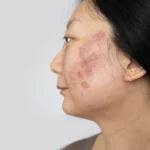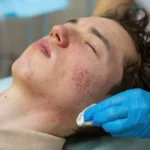

Boxcar acne scars are amongst the most common yet challenging types of acne scarring that affect millions of people worldwide. At Linia Skin Clinic in London, we understand the profound impact these scars can have on one’s confidence and quality of life. This comprehensive guide explores everything you need to know about boxcar scars, from their causes to the most effective treatment options available.
What Are Boxcar Acne Scars?
Boxcar scars are a type of atrophic (depressed) acne scar characterised by their distinctive appearance: round or oval depressions with sharply defined, almost vertical edges. Unlike rolling scars which have sloped edges, boxcar scars resemble the shape of a box or rectangular container, hence their name.
These scars typically measure between 1.5 to 4 millimetres in width and can vary significantly in depth. They may appear shallow, medium, or deep, with deeper scars generally proving more resistant to treatment. Boxcar scars most commonly develop on areas of the face with thicker skin, particularly the cheeks and temples.
What Causes Boxcar Acne Scars?
Boxcar scars form as a direct result of inflammatory acne that damages the skin’s collagen structure. When inflammatory acne lesions such as papules, pustules, nodules, or cysts penetrate deep into the skin, they destroy collagen fibres and other supporting tissue. As the lesion heals, the skin attempts to repair this damage, but the loss of underlying structural support causes the surface to sink, creating the characteristic boxcar depression.
Several factors contribute to the development of boxcar scars:
Delayed or inadequate acne treatment allows inflammation to persist longer, increasing the likelihood and severity of scarring. The longer inflammatory acne remains active, the more extensive the collagen damage becomes.
Picking, squeezing, or manipulating acne lesions significantly worsens inflammation and drives infection deeper into the skin, substantially increasing the risk of permanent scarring. This physical trauma compounds the damage already caused by the acne itself.
Severe inflammatory acne, particularly cystic or nodular acne, carries a much higher risk of causing boxcar scars due to the depth and intensity of inflammation involved. These deeper lesions affect more layers of skin and supporting tissue.
Genetic predisposition plays an important role, as some individuals are simply more prone to scarring than others due to their genetic makeup and how their skin responds to injury and inflammation.
Skin type and tone can influence scarring patterns, with certain skin types showing a higher tendency towards specific scar formations, though boxcar scars can affect all skin types and tones.
Who Is Most Affected by Boxcar Acne Scars?
Whilst boxcar scars can develop in anyone who has experienced inflammatory acne, certain groups face a higher risk:
Individuals with a history of moderate to severe acne, particularly those who experienced cystic or nodular breakouts during adolescence or adulthood, are significantly more likely to develop boxcar scarring.
People who delayed seeking professional acne treatment or who attempted to manage severe acne without medical supervision often find themselves dealing with more extensive scarring.
Those with a family history of acne scarring may be genetically predisposed to developing boxcar scars, as the tendency to scar runs in families.
Individuals who picked or squeezed their acne consistently, whether consciously or as a nervous habit, typically experience worse scarring outcomes.
Men and women equally can develop boxcar scars, though patterns may differ slightly due to hormonal influences and skin characteristics.
The Psychological Impact of Boxcar Scars
The presence of boxcar acne scars extends far beyond the physical. Many individuals report significant impacts on their self-esteem, social confidence, and overall mental wellbeing. The visible nature of facial scarring can lead to anxiety in social situations, reluctance to be photographed, and even affect professional opportunities.
At Linia Skin Clinic, we recognise that treating boxcar scars isn’t simply about improving skin texture—it’s about restoring confidence and helping our patients feel comfortable in their own skin again.
How Boxcar Scars Differ from Other Acne Scars
Understanding the distinction between boxcar scars and other types of acne scarring is essential for determining the most appropriate treatment approach.
Ice pick scars are narrow, deep, and V-shaped, resembling small puncture wounds. They tend to be smaller in diameter than boxcar scars but penetrate more deeply into the skin.
Rolling scars create wave-like undulations across the skin’s surface due to fibrous bands tethering the skin to deeper structures. They have sloped, rounded edges rather than the sharp, defined borders of boxcar scars.
Hypertrophic and keloid scars are raised rather than depressed, formed by excess collagen production during the healing process. These represent the opposite problem to boxcar scars.
Many individuals actually present with a combination of scar types, which is why a comprehensive assessment at a specialist clinic like Linia Skin Clinic is so valuable for developing an effective treatment plan.
Prevention: The Best First Step
Whilst this guide focuses on treating existing boxcar scars, prevention remains the most effective strategy. If you’re currently experiencing acne, taking proactive steps now can significantly reduce your risk of developing permanent scarring:
Seek professional treatment early when acne first becomes inflammatory or persistent. Don’t wait for it to become severe before consulting a dermatologist or skin specialist.
Never pick, squeeze, or manipulate acne lesions, no matter how tempting it may be. This simple rule can prevent a significant amount of scarring.
Follow your prescribed acne treatment regimen consistently and completely, even after visible improvement begins.
Protect your skin from sun exposure during and after acne breakouts, as UV damage can worsen scarring and hyperpigmentation.
Maintain a gentle skincare routine that doesn’t irritate or inflame your skin further.

Treatment Options for Boxcar Acne Scars
The encouraging news is that modern dermatology offers numerous effective treatments for boxcar acne scars. The optimal approach typically depends on the scar’s depth, your skin type, your goals, and other individual factors. At Linia Skin Clinic, we offer comprehensive treatment options tailored to each patient’s unique situation.
Microneedling
Microneedling, also known as collagen induction therapy, involves using fine needles to create controlled micro-injuries in the skin. This triggers the body’s natural wound-healing process, stimulating collagen and elastin production.
For boxcar scars, microneedling can be particularly effective for shallow to moderate depth scars. The treatment gradually builds new collagen beneath the scarred area, helping to elevate the depressed tissue and smooth the skin’s surface. Multiple sessions, typically spaced four to six weeks apart, are usually required for optimal results.
Advanced techniques such as radiofrequency microneedling combine traditional microneedling with radiofrequency energy, delivering heat deep into the dermis to further enhance collagen production and tightening.
Chemical Peels
Chemical peels utilise various acids to remove the outer layers of skin, promoting cellular turnover and stimulating collagen remodelling. For boxcar scars, medium to deep peels (such as TCA peels) can be particularly beneficial.
The treatment works by encouraging the skin to regenerate with improved texture and reduced scar depth. Chemical peels can also address associated concerns such as hyperpigmentation and uneven skin tone that often accompany acne scarring.
Multiple peel sessions may be necessary, with the specific type and strength of peel carefully selected based on your skin type, scar severity, and treatment goals.
Laser Resurfacing
Laser treatments represent some of the most advanced options for treating boxcar scars, with different laser types offering distinct benefits.
Ablative lasers such as CO2 and Erbium:YAG lasers remove the outer layers of skin with precision, triggering significant collagen remodelling. These powerful treatments can produce dramatic improvements, particularly for deeper boxcar scars, though they require longer recovery times.
Non-ablative lasers work beneath the skin’s surface without removing the outer layer, stimulating collagen production with minimal downtime. Whilst results may be more subtle and gradual compared to ablative lasers, these treatments offer an excellent option for those who cannot accommodate extended recovery periods.
Fractional lasers treat only a fraction of the skin at a time, creating microscopic treatment zones surrounded by untreated tissue. This approach speeds healing and reduces side effects whilst still delivering impressive results for boxcar scars.
Subcision
Subcision is a minor surgical procedure particularly effective for tethered or bound-down boxcar scars. The technique involves inserting a small needle beneath the scar to break up the fibrous tissue that pulls the skin downward.
Once these tethering bands are released, the depressed area can rise closer to the surrounding skin level. Subcision is often combined with other treatments such as dermal fillers or laser therapy for enhanced results.
Dermal Fillers
Injectable dermal fillers can provide immediate improvement for certain boxcar scars by physically raising the depressed area to match the surrounding skin level. Hyaluronic acid fillers are commonly used for this purpose.
Whilst fillers offer quick results, they are temporary, typically lasting six months to two years depending on the product used and individual factors. However, repeated filler treatments may stimulate some natural collagen production over time.
Fillers work best for broader, shallow to moderate depth boxcar scars and are often used in combination with other treatments for comprehensive improvement.
TCA CROSS (Chemical Reconstruction of Skin Scars)
TCA CROSS is a specialised technique involving the precise application of high-concentration trichloroacetic acid directly into individual boxcar scars. This targeted approach triggers collagen production specifically within the scar, gradually elevating and filling the depression from within.
This treatment is particularly effective for deeper, well-defined boxcar scars and can be repeated every four to six weeks until satisfactory improvement is achieved. The technique requires considerable expertise to perform safely and effectively.
Punch Techniques
For particularly deep or resistant boxcar scars, punch techniques may be recommended. These minor surgical procedures include:
Punch excision involves surgically removing the entire scar and closing the wound with sutures, replacing a depressed scar with a much less noticeable flat or slightly raised scar.
Punch elevation removes only the base of the scar and repositions it level with the surrounding skin, leaving the scar tissue in place but eliminating the depression.
Punch grafting replaces the scarred tissue with a small skin graft taken from another area of the body, typically behind the ear.
These techniques are often combined with subsequent resurfacing treatments for optimal aesthetic outcomes.
Combination Treatments: The Gold Standard
Research and clinical experience have shown that combining multiple treatment modalities often produces superior results compared to any single treatment alone. At Linia Skin Clinic, we frequently develop personalised combination treatment plans that might include:
- Subcision followed by dermal fillers
- TCA CROSS combined with fractional laser resurfacing
- Microneedling with chemical peels
- Punch techniques followed by laser therapy
This strategic approach addresses boxcar scars from multiple angles, maximising improvement whilst minimising the number of sessions required.
What to Expect During Treatment
Understanding the treatment process helps set realistic expectations and ensures you’re fully prepared for your journey to smoother skin.
Initial consultation: Your treatment journey begins with a thorough assessment of your scars, skin type, medical history, and aesthetic goals. We’ll discuss the most appropriate options for your specific situation and develop a customised treatment plan.
Treatment sessions: The number of sessions required varies considerably depending on the chosen treatment and scar severity. Some patients see significant improvement after three to four sessions, whilst others may require more extensive treatment.
Recovery and downtime: This varies significantly by treatment type. Microneedling might require three to five days of redness and mild swelling, whilst ablative laser resurfacing could necessitate one to two weeks of healing time. We’ll ensure you have clear aftercare instructions for each procedure.
Results timeline: Patience is essential when treating boxcar scars. Initial improvements may be visible within weeks, but optimal results typically develop over several months as new collagen forms and remodels. Most treatments require three to six months to show their full effect.
Maintenance: Depending on your treatment, periodic maintenance sessions may help preserve and enhance your results over time.
Skincare for Boxcar Scars
Whilst professional treatments provide the most significant improvements, an appropriate home skincare routine can support your results and maintain skin health:
Retinoids (vitamin A derivatives) promote cell turnover and collagen production, gradually improving skin texture. Prescription-strength retinoids offer the most potent benefits, though over-the-counter retinol can also be helpful.
Vitamin C serums provide antioxidant protection and support collagen synthesis whilst brightening the skin and reducing hyperpigmentation.
Alpha hydroxy acids (AHAs) such as glycolic acid gently exfoliate the skin, improving texture and tone over time.
Sunscreen is absolutely essential, as UV exposure can worsen scarring and hyperpigmentation. Use a broad-spectrum SPF 30 or higher daily, even on cloudy days.
Gentle cleansing and moisturising maintain skin barrier health, which is crucial for healing and overall skin appearance.
Realistic Expectations
Honesty about treatment outcomes is fundamental to patient satisfaction. Whilst modern treatments can produce remarkable improvements in boxcar scars, it’s important to understand that:
- Complete elimination of deep boxcar scars may not be possible, though significant improvement certainly is
- Multiple treatment sessions are typically necessary for optimal results
- Results vary between individuals based on factors like age, skin type, scar characteristics, and healing capacity
- Patience is essential, as improvements develop gradually over months
- Maintenance treatments may be needed to preserve results
At Linia Skin Clinic, we’re committed to setting realistic expectations whilst working diligently to achieve the best possible outcomes for each patient.